I am writing this with legs that currently refuse to function and a heart that is completely full.
This past Saturday, we didn't sign up for an organized race. There were no crowds, no medals, no cheering sections, and no safety nets. We just opened the front door and ran. We called it the inaugural "LeBarathon."
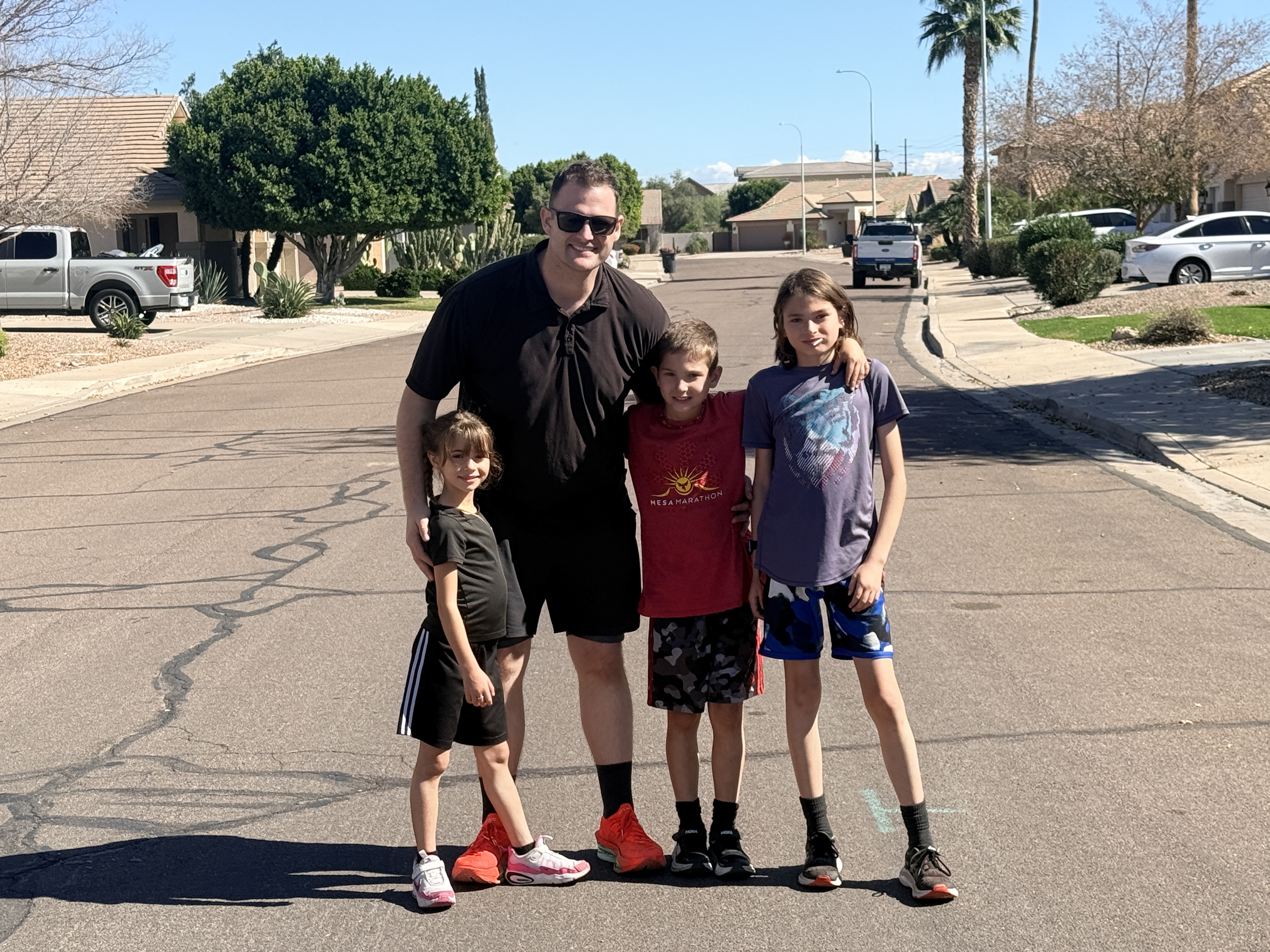
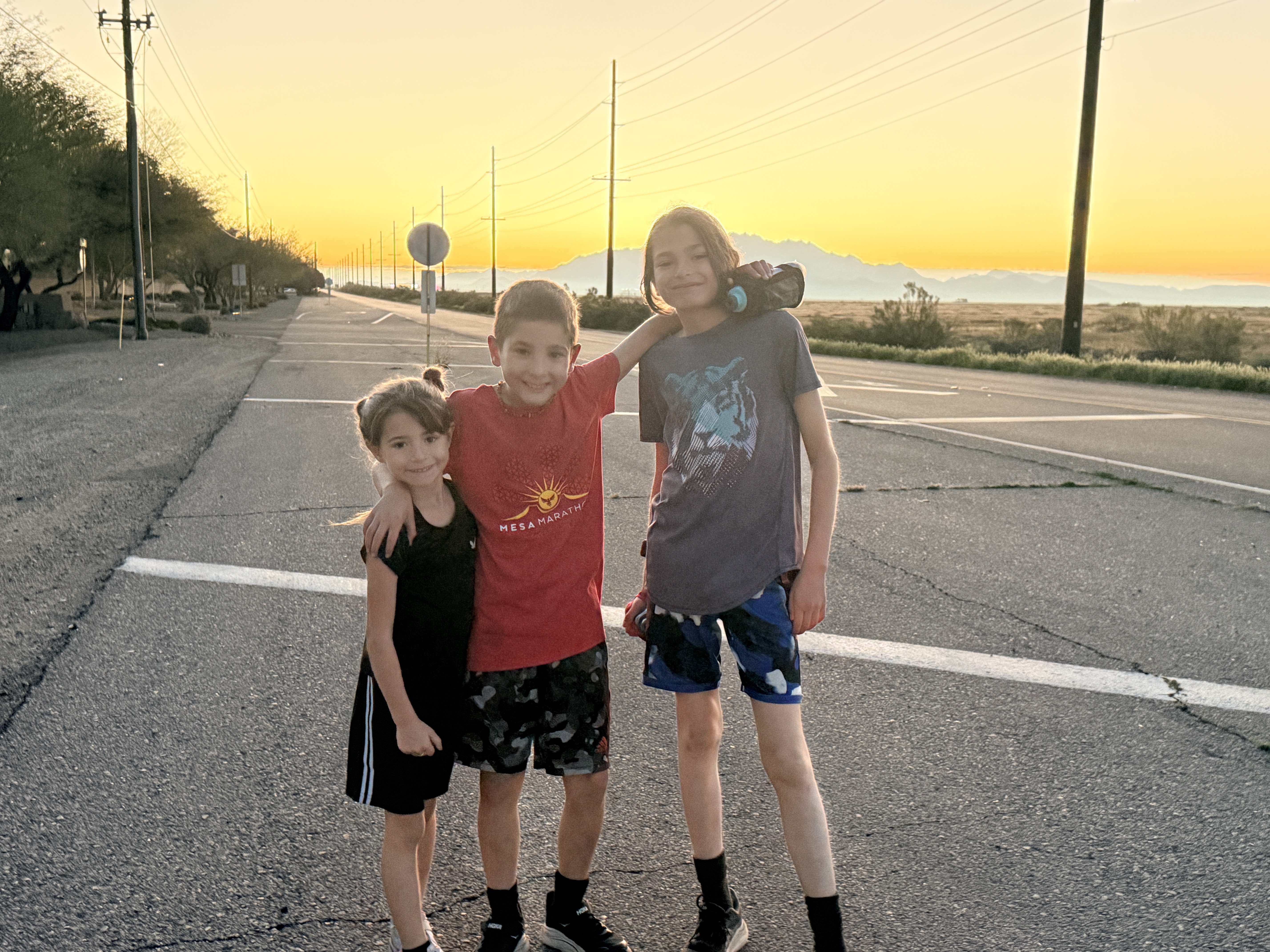
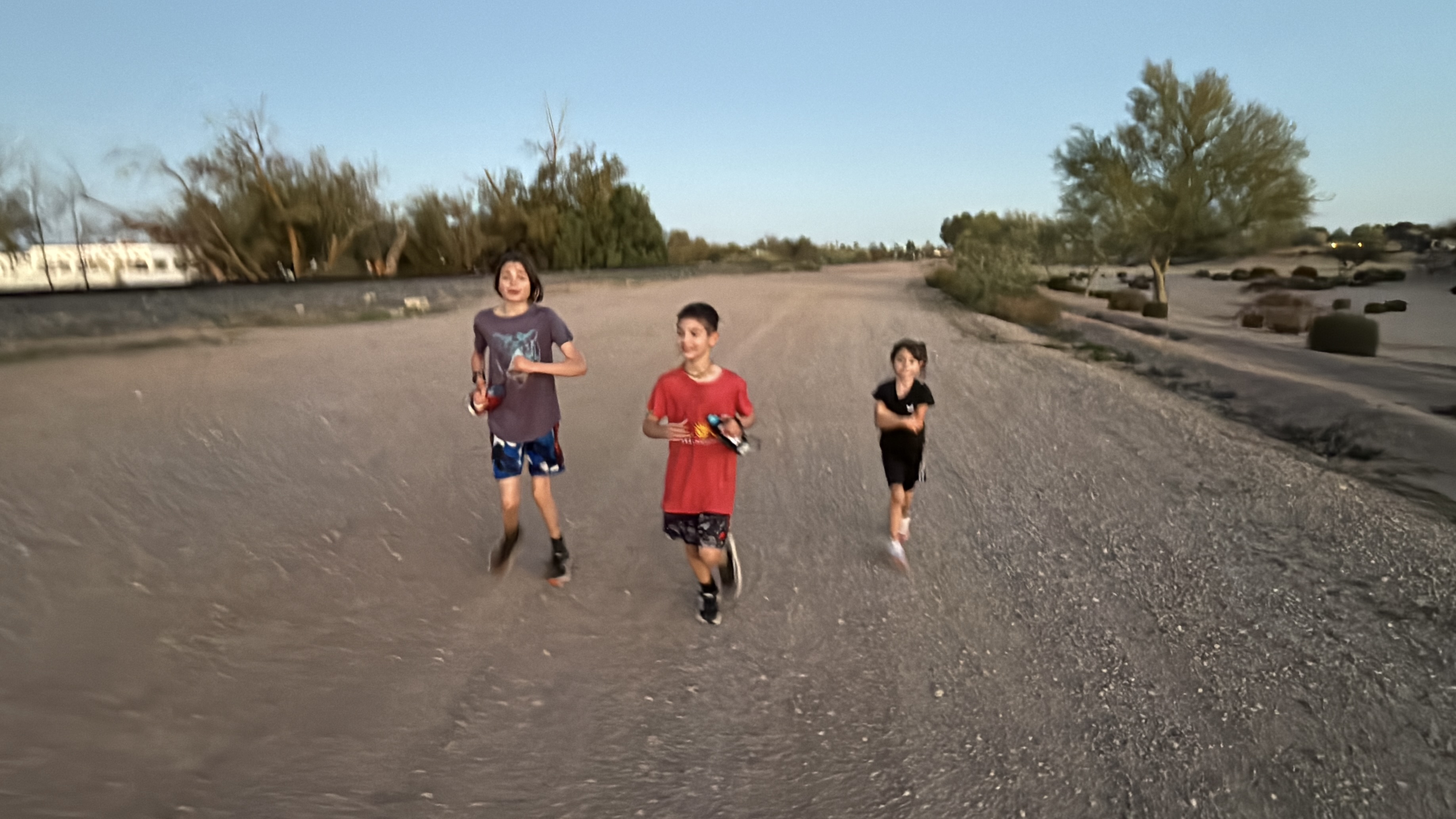
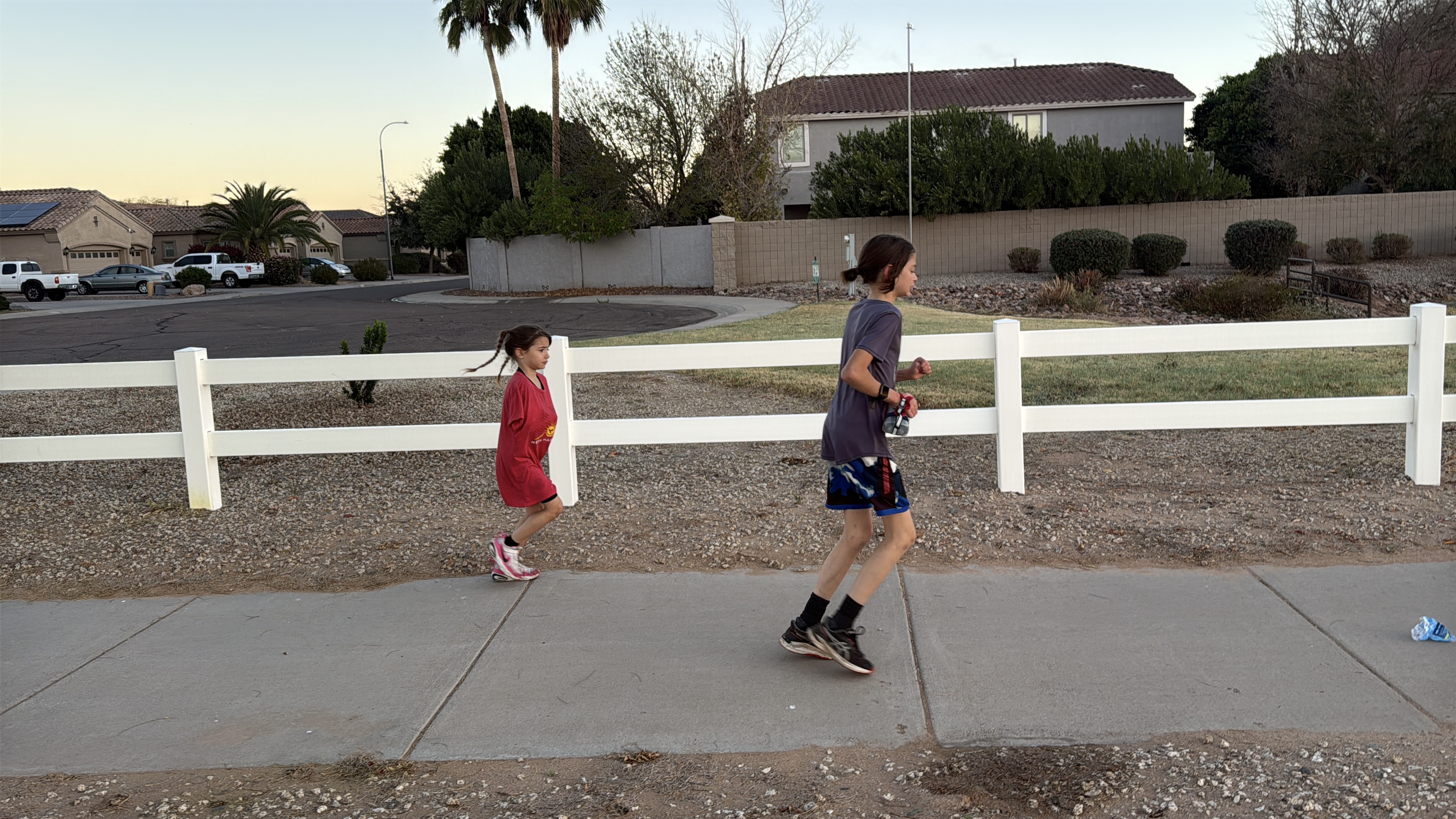
The lineup was my son Asa (12), Atlas (10), myself, and — perhaps most surprisingly — my six-year-old daughter, Sage.
We clocked 26.72 miles at a 10:44 pace. But the story isn't about the distance; it's about the cold, the sun, and the math of fatherhood.
The Cold on Hunt Highway
We started way too fast. Adrenaline is a liar; it tells you that you can sprint forever. We held a strong pace for the first eight or nine miles, but eventually, the reality of a full marathon set in.
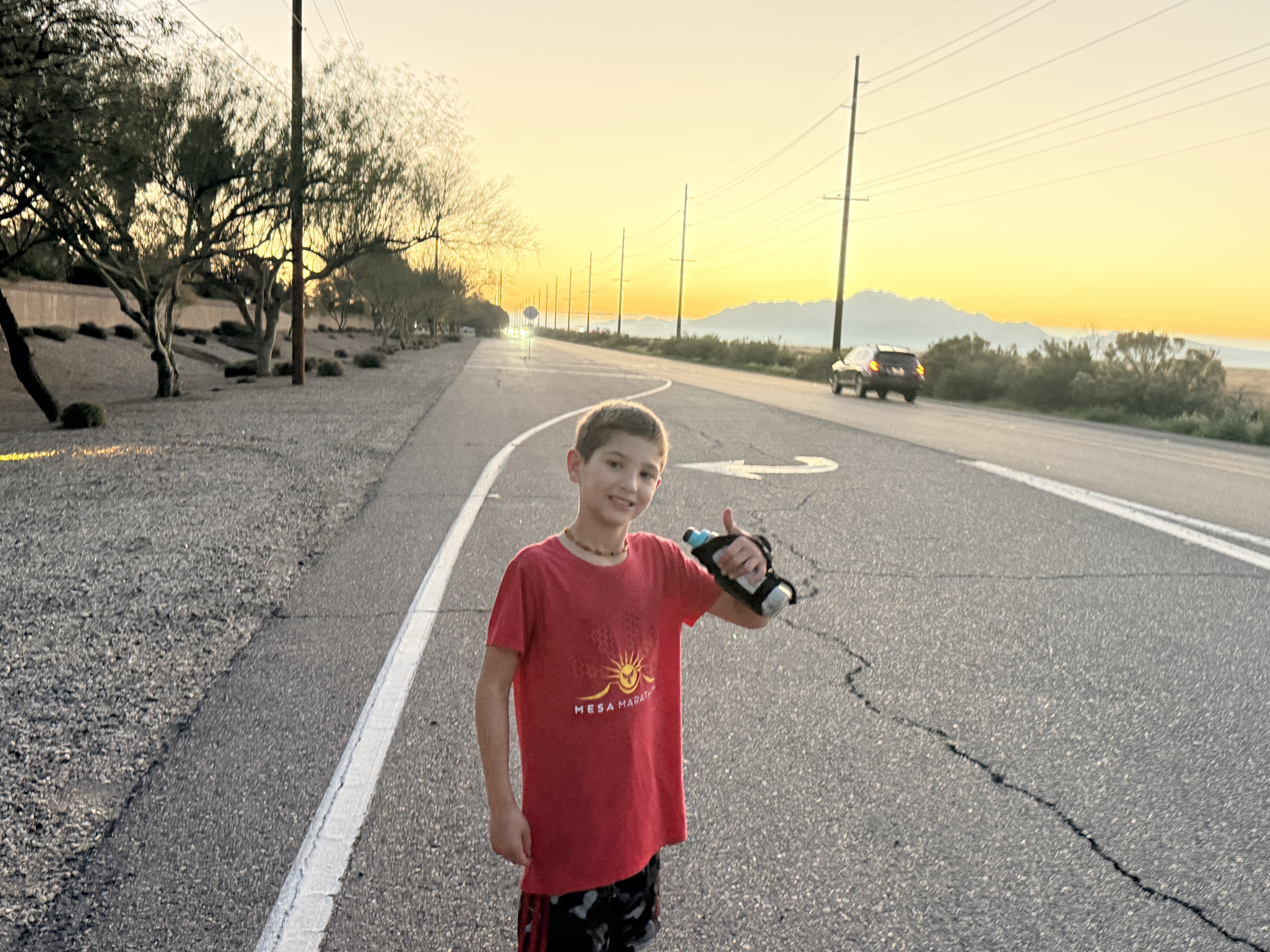
It was freezing. We were running eastward down Hunt Highway in a rural, suburban stretch of the valley. We hadn't packed sweaters, and the desert morning chill was cutting right through our t-shirts.
For miles, we stared at the horizon. We watched the bright morning sun trying to claw its way over the jagged peaks of the Santan Mountains. It was right there. You could see the glow, you could feel that the warmth was imminent, but it just wouldn't peek over the edge.
We were practically begging it to rise. We needed that warmth. But the mountain wouldn't move, and the sun wouldn't hurry.
The Will vs. The Wait
This standoff with the sun reminded me of a conversation I had with Sage during our training. She is only six, and naturally, she was nervous. I kept telling her:
When we are no longer able to change a situation, we are challenged to change ourselves.
— Viktor Frankl
"Sage, you can do anything you will your mind to do. If you prepare for it, you can do it."
And she proved it. Her attitude was unbreakable. We stopped exactly once — at a gas station to grab a refill on electrolytes and a protein cookie — and then she got right back to work.
But watching that sun struggle to rise taught me the other half of the lesson.
As Viktor Frankl wrote, "When we are no longer able to change a situation, we are challenged to change ourselves."
You have to be patient. Eventually, just like that sun, the breakthrough will rise. It will warm you up. But you have to endure the chill to get there.
Think you know the facts behind the headlines?
4 questions · ~2 min
The Math of Time (Why You Should Be Scared)
Crossing that finish line was a high, but the physical aftermath at 35 is a brutal reality check. It made me think about time.
There is a famous breakdown of time by writer Tim Urban called "The Tail End." It contains a statistic that stops me in my tracks every time I read it:
By the time your child graduates from high school, you have already spent 93% of the in-person time you will ever have with them.
Let that sink in.
The first 18 years: 93% of your time together.
The rest of your life: The remaining 7%.
Once they leave your house, the relationship changes. You go from seeing them every day to seeing them maybe 10 days a year. If you live until 90, that isn't decades of time — that is a handful of visits.
I looked at Sage (6), Atlas (10), and Asa (12) running beside me. I realized we aren't just "running a marathon." We are burning through that 93%.
We are in the thick of it right now.
This is why we have to do hard things together. We can't just coexist in the same house, staring at screens. We have to struggle together. We have to freeze on Hunt Highway together. We have to overcome something difficult together.
Because when that 93% is gone, all we will have left are the stories of what we did when we had the chance.
The Future of Care: Dignity in the "Tail End"
My soreness today is temporary, but it made me think of those who live with this physical reality every day — our aging generation, including the growing number of solo agers with no built-in caregiver network. They are in their own "Tail End."
And just like I want my kids to have a childhood filled with dignity and adventure, I want our parents to have an old age filled with the same.
This is why I am so obsessed with Scattered Site Senior Housing.
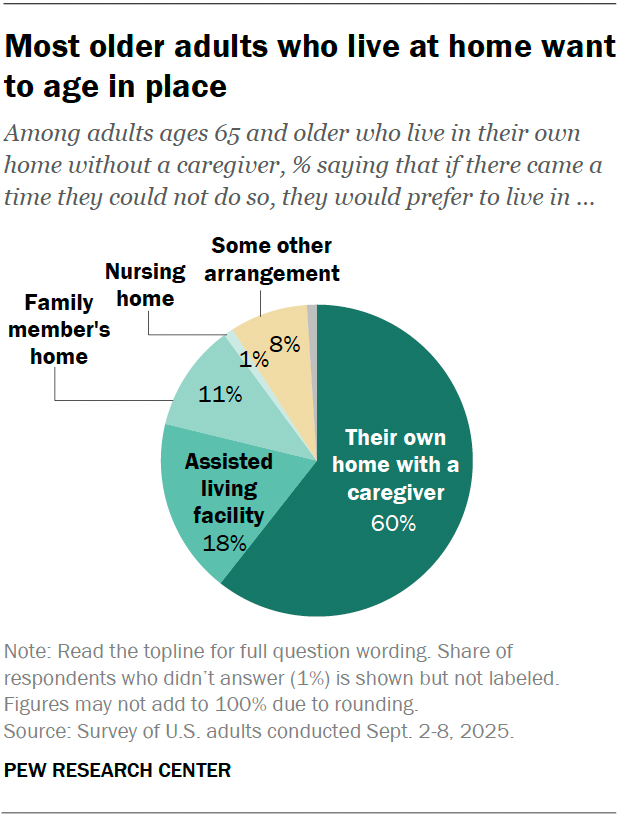
We are approaching a future where the concept of a "nursing home" will be obsolete. Nobody wants to live in a facility. The future isn't institutional; it is residential.
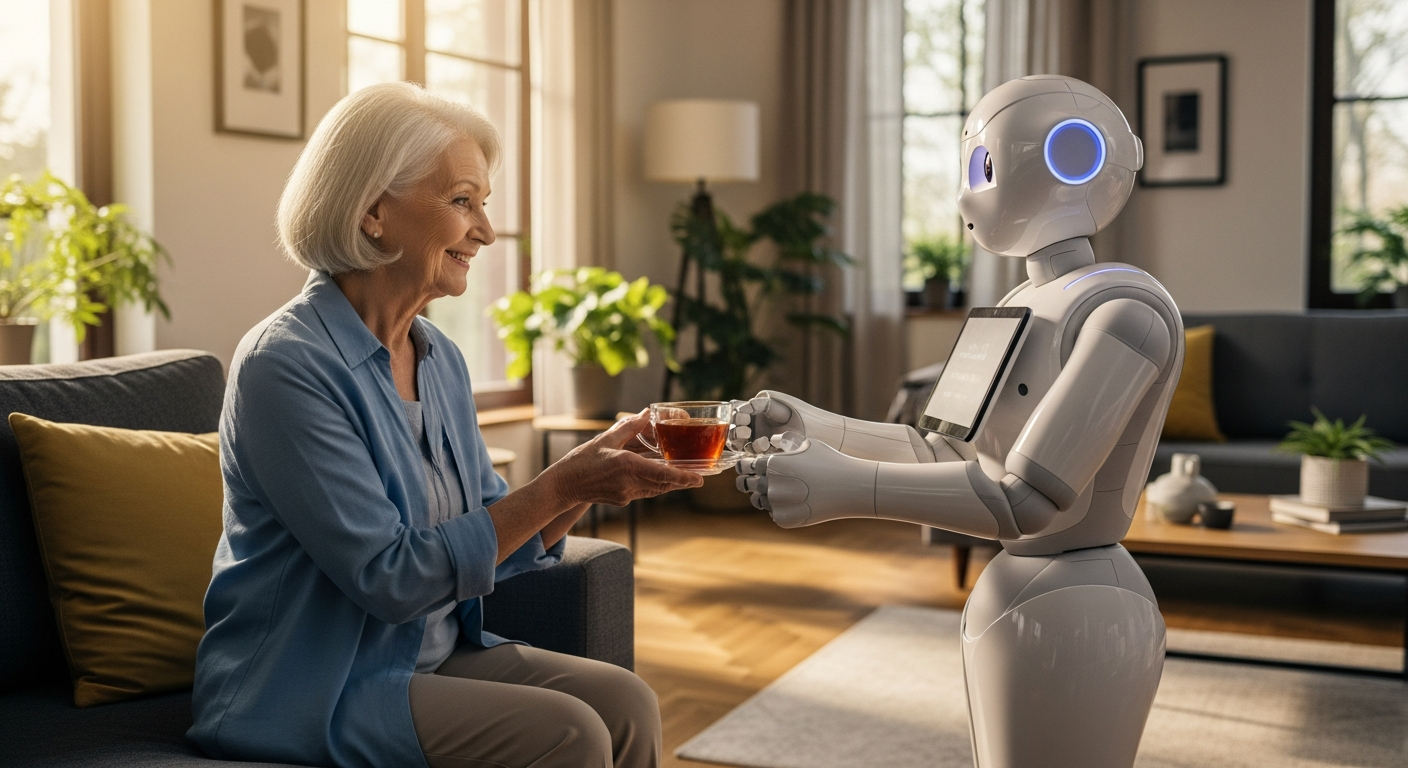
With the rapid advancement of AI, robotics, and autonomous systems, the home itself will become the caregiver.
AI Monitoring: Systems that predict health events — falls, heart issues — before they happen, removing the need for constant invasive checks.
Robotics: Autonomous assistance for mobility and daily tasks, drastically reducing the need for constant human labor.
Privacy: High-level care without the intrusion of a facility staff rotation.
We are moving toward a world where our elderly can age in place, in a beautiful home in a regular neighborhood, supported by technology that protects their dignity rather than stripping it away.
The Challenge: Do Something Hard
If there is one takeaway from this weekend, it isn't about real estate or investment. It's about not taking this life for granted.
We live in a world of comfort, but we grow in the cold.
Take a moment this week to do something incredibly hard. Do something you truly don't believe you can accomplish. Because when you cross that finish line — whether it's a marathon or a difficult project — your mind expands. You realize you are capable of more, and you become ready for the next challenge.
And while you're at it, pick up the phone. Call your mom. Call your dad. Hug your kids.
That 93% is burning faster than you think.
P.S. I am currently vetting opportunities in this tech-enabled, residential senior housing space. If you are interested in where this asset class is heading and how we can capitalize on it while solving a massive human need, let's have a conversation.
I am writing this with legs that currently refuse to function and a heart that is completely full.
This past Saturday, we didn't sign up for an organized race. There were no crowds, no medals, no cheering sections, and no safety nets. We just opened the front door and ran. We called it the inaugural "LeBarathon."
The lineup was my son Asa (12), Atlas (10), myself, and — perhaps most surprisingly — my six-year-old daughter, Sage.
We clocked 26.72 miles at a 10:44 pace. But the story isn't about the distance; it's about the cold, the sun, and the math of fatherhood.
The Cold on Hunt Highway
We started way too fast. Adrenaline is a liar; it tells you that you can sprint forever. We held a strong pace for the first eight or nine miles, but eventually, the reality of a full marathon set in.
It was freezing. We were running eastward down Hunt Highway in a rural, suburban stretch of the valley. We hadn't packed sweaters, and the desert morning chill was cutting right through our t-shirts.
For miles, we stared at the horizon. We watched the bright morning sun trying to claw its way over the jagged peaks of the Santan Mountains. It was right there. You could see the glow, you could feel that the warmth was imminent, but it just wouldn't peek over the edge.
We were practically begging it to rise. We needed that warmth. But the mountain wouldn't move, and the sun wouldn't hurry.
The Will vs. The Wait
This standoff with the sun reminded me of a conversation I had with Sage during our training. She is only six, and naturally, she was nervous. I kept telling her:
When we are no longer able to change a situation, we are challenged to change ourselves.
— Viktor Frankl
"Sage, you can do anything you will your mind to do. If you prepare for it, you can do it."
And she proved it. Her attitude was unbreakable. We stopped exactly once — at a gas station to grab a refill on electrolytes and a protein cookie — and then she got right back to work.
But watching that sun struggle to rise taught me the other half of the lesson.
As Viktor Frankl wrote, "When we are no longer able to change a situation, we are challenged to change ourselves."
You have to be patient. Eventually, just like that sun, the breakthrough will rise. It will warm you up. But you have to endure the chill to get there.
Think you know the facts behind the headlines?
4 questions · ~2 min
The Math of Time (Why You Should Be Scared)
Crossing that finish line was a high, but the physical aftermath at 35 is a brutal reality check. It made me think about time.
There is a famous breakdown of time by writer Tim Urban called "The Tail End." It contains a statistic that stops me in my tracks every time I read it:
By the time your child graduates from high school, you have already spent 93% of the in-person time you will ever have with them.
Let that sink in.
The first 18 years: 93% of your time together.
The rest of your life: The remaining 7%.
Once they leave your house, the relationship changes. You go from seeing them every day to seeing them maybe 10 days a year. If you live until 90, that isn't decades of time — that is a handful of visits.
I looked at Sage (6), Atlas (10), and Asa (12) running beside me. I realized we aren't just "running a marathon." We are burning through that 93%.
We are in the thick of it right now.
This is why we have to do hard things together. We can't just coexist in the same house, staring at screens. We have to struggle together. We have to freeze on Hunt Highway together. We have to overcome something difficult together.
Because when that 93% is gone, all we will have left are the stories of what we did when we had the chance.
The Future of Care: Dignity in the "Tail End"
My soreness today is temporary, but it made me think of those who live with this physical reality every day — our aging generation, including the growing number of solo agers with no built-in caregiver network. They are in their own "Tail End."
And just like I want my kids to have a childhood filled with dignity and adventure, I want our parents to have an old age filled with the same.
This is why I am so obsessed with Scattered Site Senior Housing.
We are approaching a future where the concept of a "nursing home" will be obsolete. Nobody wants to live in a facility. The future isn't institutional; it is residential.
With the rapid advancement of AI, robotics, and autonomous systems, the home itself will become the caregiver.
AI Monitoring: Systems that predict health events — falls, heart issues — before they happen, removing the need for constant invasive checks.
Robotics: Autonomous assistance for mobility and daily tasks, drastically reducing the need for constant human labor.
Privacy: High-level care without the intrusion of a facility staff rotation.
We are moving toward a world where our elderly can age in place, in a beautiful home in a regular neighborhood, supported by technology that protects their dignity rather than stripping it away.
The Challenge: Do Something Hard
If there is one takeaway from this weekend, it isn't about real estate or investment. It's about not taking this life for granted.
We live in a world of comfort, but we grow in the cold.
Take a moment this week to do something incredibly hard. Do something you truly don't believe you can accomplish. Because when you cross that finish line — whether it's a marathon or a difficult project — your mind expands. You realize you are capable of more, and you become ready for the next challenge.
And while you're at it, pick up the phone. Call your mom. Call your dad. Hug your kids.
That 93% is burning faster than you think.
P.S. I am currently vetting opportunities in this tech-enabled, residential senior housing space. If you are interested in where this asset class is heading and how we can capitalize on it while solving a massive human need, let's have a conversation.
Test Your Knowledge
How well do you know this topic?
Andrew LeBaron