TL;DR
Steel and aluminum tariffs started at 25% in February and jumped to 50% by June 2025, impacting more than 400 product categories used in construction. Overall construction costs have risen 3-5% across all project types. Office construction has collapsed to 82% below Q1 2020 levels with just 22 million square feet under construction nationally. Retail completions hit their lowest level in a decade at 4.5 million square feet in Q1. The new cost reality is making adaptive reuse the smartest play in commercial real estate.
The Tariff Impact
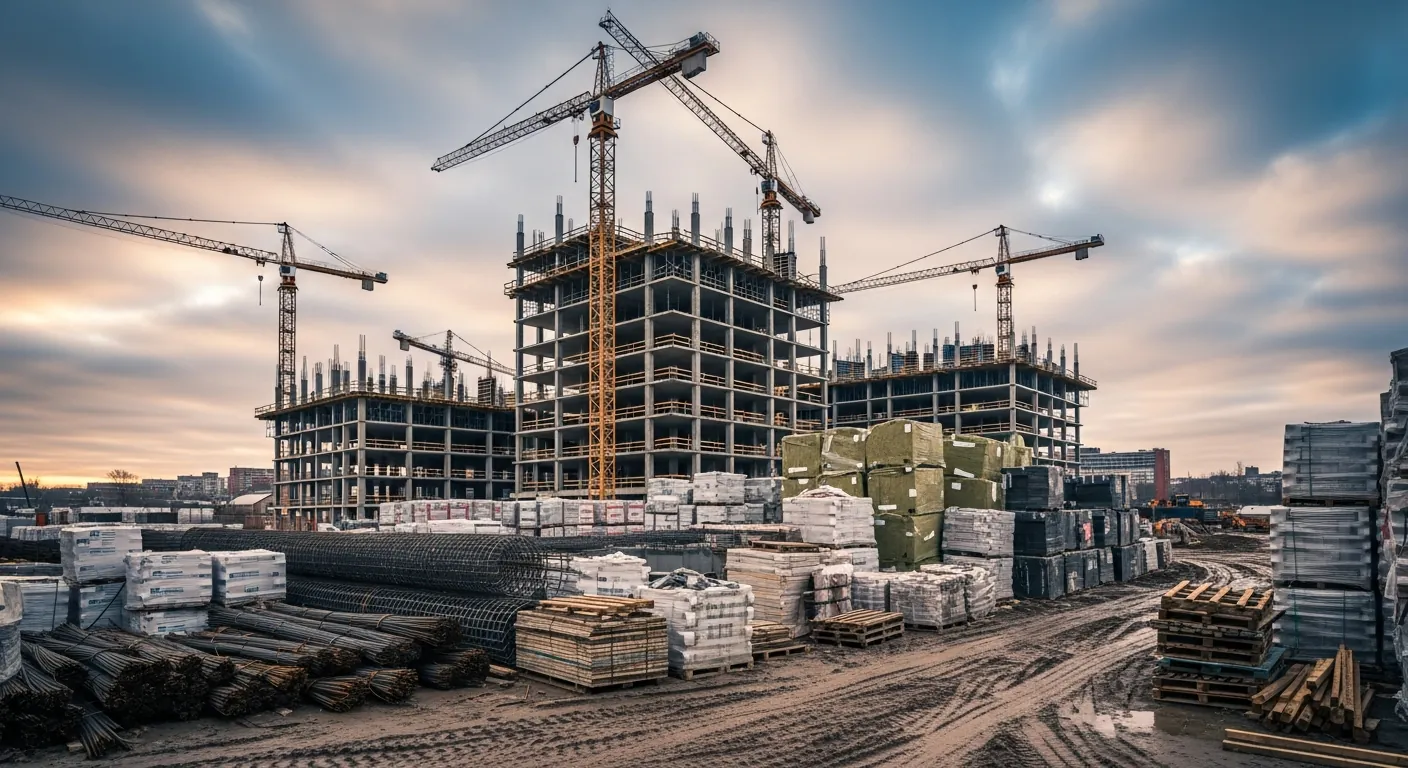
Let's talk numbers because the scale of what's happening in construction costs is something every CRE investor needs to understand. The steel and aluminum tariffs that began at 25% in February 2025 escalated to 50% by June, and the ripple effects have been immediate and widespread.
More than 400 product categories are now affected — everything from structural steel and rebar to HVAC equipment, electrical components, and finishing materials. The direct cost increase on steel-intensive projects is running 8-12%, while the broader impact across all construction types is settling in at 3-5%.
For a $50 million multifamily development, that's an additional $1.5 to $2.5 million in hard costs. For institutional-scale projects, the numbers get staggering quickly. And unlike interest rate changes that can be hedged or structured around, material cost increases are baked into every bid from every contractor.
U.S. Construction Cost Index (2019–2026)
Construction costs have climbed over 40% since 2019, dramatically raising the bar for new development feasibility and making adaptive reuse increasingly competitive.
Think you know the real numbers behind these deals?
5 questions · ~3 min
Construction Pipeline Collapse
The tariff shock comes on top of a construction pipeline that was already contracting. The numbers paint a stark picture:
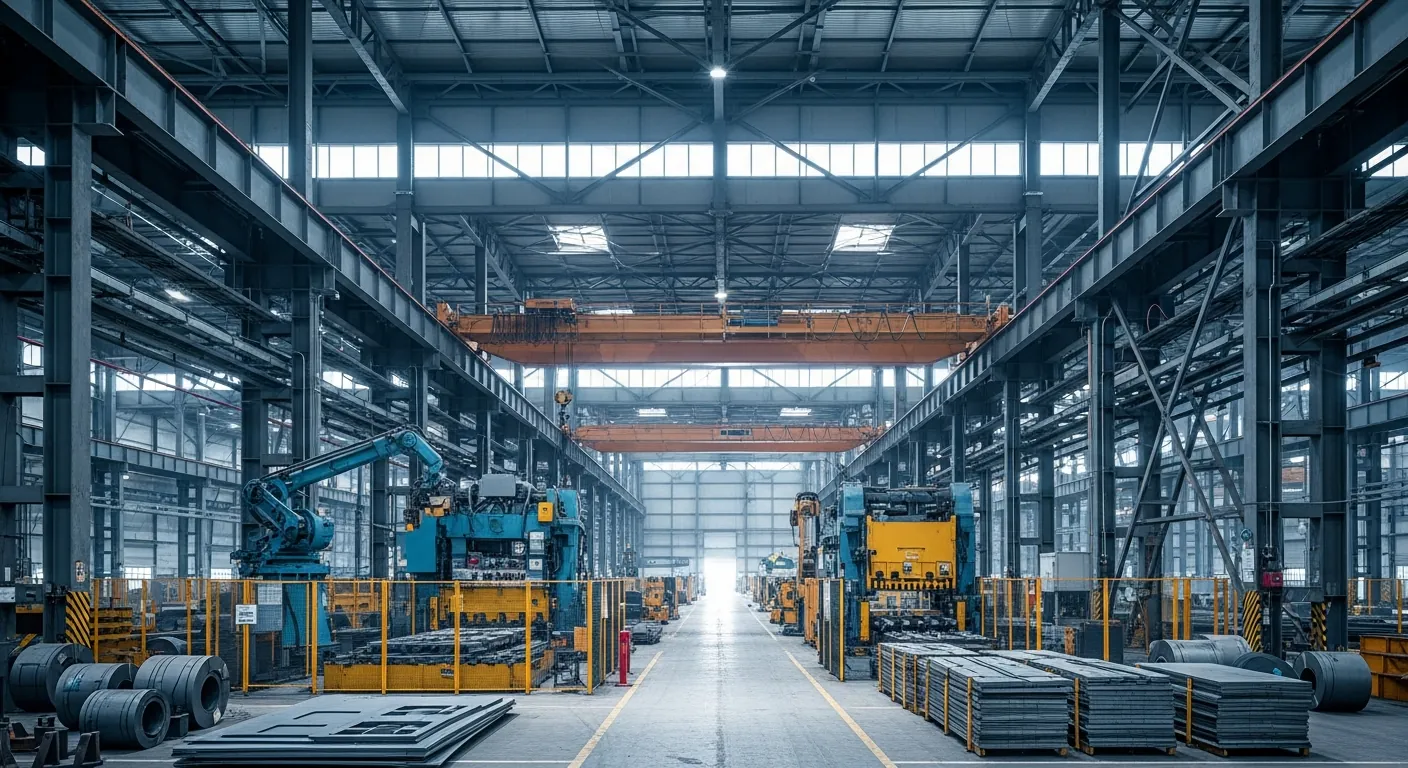
- Office construction is 82% below Q1 2020 levels, with just 22 million square feet under construction nationally. That's not a slowdown — it's a near-complete halt.
- Retail completions hit their lowest level in a decade at 4.5 million square feet in Q1 2025.
- Multifamily starts have pulled back significantly as developers re-underwrite projects at higher cost bases.
The practical effect is a supply constraint that will take years to unwind. Fewer projects starting today means fewer deliveries in 2027 and 2028, which means the existing built environment becomes more valuable as replacement costs climb and cap rates reset.
This is a dynamic I've watched play out multiple times in my career. Periods of reduced construction activity create the conditions for the next cycle of rent growth and asset appreciation. The question is always whether you're positioned to benefit from that cycle or watching from the sidelines.
U.S. Office Construction Under Way (M SF, 2019–2026)
New office construction has plummeted as developers respond to record vacancy and uncertain demand, setting the stage for eventual supply-side tightening.
The Adaptive Reuse Advantage
Here's where the tariff story connects directly to our investment thesis at F6 Partners. When new construction costs rise 3-5% or more, the economics of adaptive reuse improve proportionally.
Converting an existing hotel, office building, or retail property into residential use avoids the majority of steel and material cost increases because the structural shell already exists. You're working with existing foundations, framing, and building envelopes. The tariff impact on a conversion project is a fraction of what it is on ground-up construction.
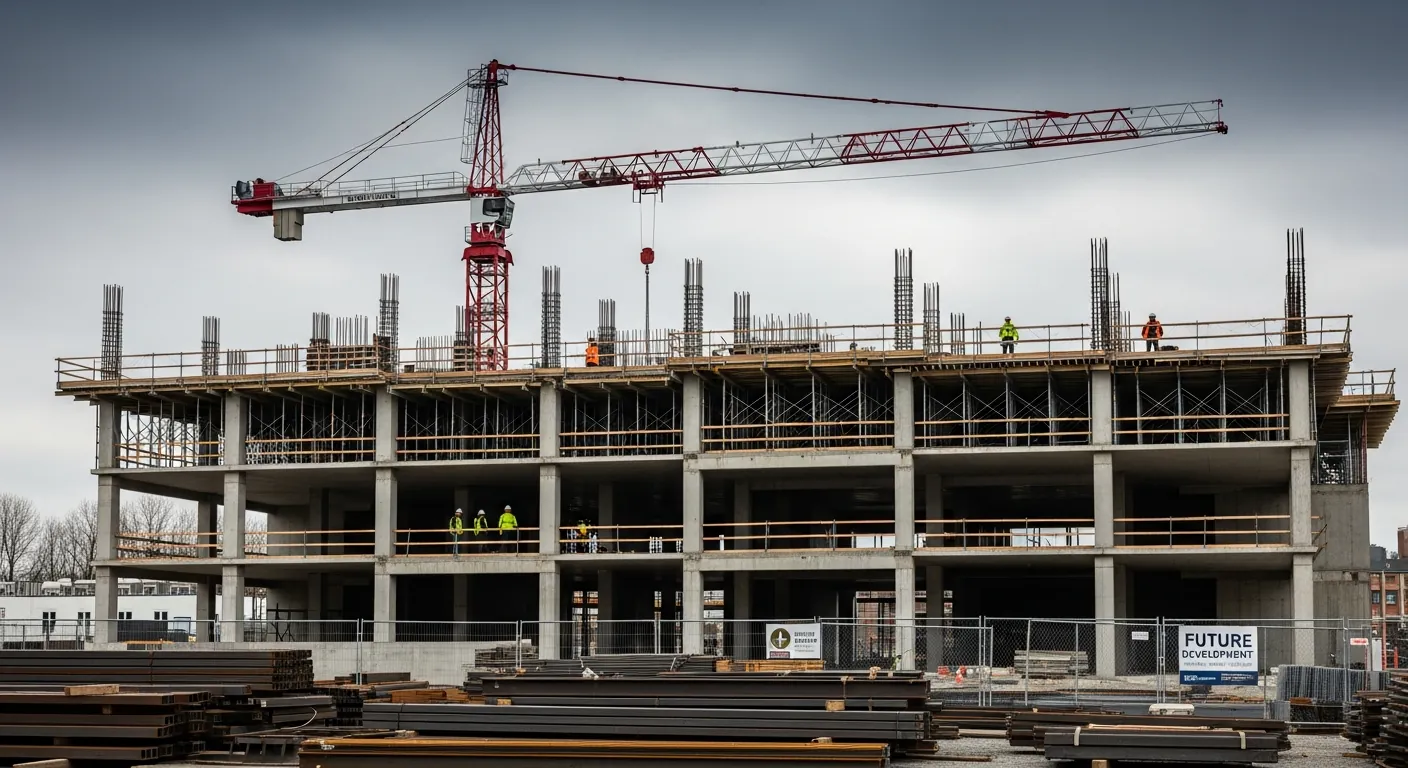
Think about it this way: if it now costs $250 per square foot to build new multifamily and you can convert an existing structure for $120 per square foot, the spread has widened. That wider spread translates directly into better returns for investors and more feasible project economics for developers.
The tariff environment has made every adaptive reuse project in our pipeline more attractive relative to its ground-up competition. That's not wishful thinking — it's arithmetic.
New Construction vs Adaptive Reuse Cost per SF (2019–2026)
The cost gap between new construction and adaptive reuse has widened sharply, making building conversions increasingly attractive compared to ground-up development.
Positioning for the Future
I believe we're entering a period where the operators who thrive will be the ones who adapt their strategies to the new cost reality rather than waiting for tariffs to be rolled back. Trade policy is unpredictable — as Liberation Day demonstrated — but the structural advantages of adaptive reuse are permanent.
At F6 Partners, we're doubling down on conversion opportunities — hotels to apartments, obsolete offices to residential, underutilized retail to mixed-use. Every one of these projects benefits from the tariff-driven widening of the cost gap between new construction and adaptive reuse.
For investors, the takeaway is clear: the tariffs have raised the floor under existing asset values while making new supply harder to deliver. If you own well-located real estate, your replacement cost advantage just got bigger. If you're looking to deploy capital, adaptive reuse offers the best risk-adjusted path to creating housing in a higher-cost environment.
The market rewards those who see disruption as opportunity. Steel tariffs and sticker shock are real — but so is the adaptive reuse advantage.
TL;DR
Steel and aluminum tariffs started at 25% in February and jumped to 50% by June 2025, impacting more than 400 product categories used in construction. Overall construction costs have risen 3-5% across all project types. Office construction has collapsed to 82% below Q1 2020 levels with just 22 million square feet under construction nationally. Retail completions hit their lowest level in a decade at 4.5 million square feet in Q1. The new cost reality is making adaptive reuse the smartest play in commercial real estate.
The Tariff Impact
Let's talk numbers because the scale of what's happening in construction costs is something every CRE investor needs to understand. The steel and aluminum tariffs that began at 25% in February 2025 escalated to 50% by June, and the ripple effects have been immediate and widespread.
More than 400 product categories are now affected — everything from structural steel and rebar to HVAC equipment, electrical components, and finishing materials. The direct cost increase on steel-intensive projects is running 8-12%, while the broader impact across all construction types is settling in at 3-5%.
For a $50 million multifamily development, that's an additional $1.5 to $2.5 million in hard costs. For institutional-scale projects, the numbers get staggering quickly. And unlike interest rate changes that can be hedged or structured around, material cost increases are baked into every bid from every contractor.
U.S. Construction Cost Index (2019–2026)
Construction costs have climbed over 40% since 2019, dramatically raising the bar for new development feasibility and making adaptive reuse increasingly competitive.
Think you know the real numbers behind these deals?
5 questions · ~3 min
Construction Pipeline Collapse
The tariff shock comes on top of a construction pipeline that was already contracting. The numbers paint a stark picture:
- Office construction is 82% below Q1 2020 levels, with just 22 million square feet under construction nationally. That's not a slowdown — it's a near-complete halt.
- Retail completions hit their lowest level in a decade at 4.5 million square feet in Q1 2025.
- Multifamily starts have pulled back significantly as developers re-underwrite projects at higher cost bases.
The practical effect is a supply constraint that will take years to unwind. Fewer projects starting today means fewer deliveries in 2027 and 2028, which means the existing built environment becomes more valuable as replacement costs climb and cap rates reset.
This is a dynamic I've watched play out multiple times in my career. Periods of reduced construction activity create the conditions for the next cycle of rent growth and asset appreciation. The question is always whether you're positioned to benefit from that cycle or watching from the sidelines.
U.S. Office Construction Under Way (M SF, 2019–2026)
New office construction has plummeted as developers respond to record vacancy and uncertain demand, setting the stage for eventual supply-side tightening.
The Adaptive Reuse Advantage
Here's where the tariff story connects directly to our investment thesis at F6 Partners. When new construction costs rise 3-5% or more, the economics of adaptive reuse improve proportionally.
Converting an existing hotel, office building, or retail property into residential use avoids the majority of steel and material cost increases because the structural shell already exists. You're working with existing foundations, framing, and building envelopes. The tariff impact on a conversion project is a fraction of what it is on ground-up construction.
Think about it this way: if it now costs $250 per square foot to build new multifamily and you can convert an existing structure for $120 per square foot, the spread has widened. That wider spread translates directly into better returns for investors and more feasible project economics for developers.
The tariff environment has made every adaptive reuse project in our pipeline more attractive relative to its ground-up competition. That's not wishful thinking — it's arithmetic.
New Construction vs Adaptive Reuse Cost per SF (2019–2026)
The cost gap between new construction and adaptive reuse has widened sharply, making building conversions increasingly attractive compared to ground-up development.
Positioning for the Future
I believe we're entering a period where the operators who thrive will be the ones who adapt their strategies to the new cost reality rather than waiting for tariffs to be rolled back. Trade policy is unpredictable — as Liberation Day demonstrated — but the structural advantages of adaptive reuse are permanent.
At F6 Partners, we're doubling down on conversion opportunities — hotels to apartments, obsolete offices to residential, underutilized retail to mixed-use. Every one of these projects benefits from the tariff-driven widening of the cost gap between new construction and adaptive reuse.
For investors, the takeaway is clear: the tariffs have raised the floor under existing asset values while making new supply harder to deliver. If you own well-located real estate, your replacement cost advantage just got bigger. If you're looking to deploy capital, adaptive reuse offers the best risk-adjusted path to creating housing in a higher-cost environment.
The market rewards those who see disruption as opportunity. Steel tariffs and sticker shock are real — but so is the adaptive reuse advantage.
Test Your Knowledge
How well do you know commercial real estate?

Andrew LeBaron