TL;DR
New York City is converting 12+ former migrant shelter hotels into more than 1,100 apartments. Hotels are faster and cheaper to convert than office buildings because they already have individual bathrooms, plumbing stacks, and natural light in every unit. Sage Investment Group has delivered 13 hotel-to-apartment conversions in 2025, primarily targeting workforce studios from 1970s-1990s era properties. The economics are compelling, and the pipeline is growing.
The Economics of Conversion
Let me break down why hotel conversions are having their moment. The math is straightforward: a typical hotel room already has a bathroom, HVAC, a window, and a door that locks. Converting that room into a studio apartment requires adding a kitchenette — not rebuilding an entire floor plate.
The cost differential is dramatic. Where an office-to-residential conversion can run $200-$400 per square foot depending on the market, hotel conversions typically come in at $80-$150 per square foot. That's not a marginal improvement — it's a fundamentally different investment thesis.
In New York City, the city government has identified 12+ former migrant shelter hotels for conversion into permanent affordable housing, targeting more than 1,100 apartment units. These properties were already being used as temporary housing, so the transition to permanent residential use is both logical and politically popular.
Hotel vs Office Conversion Cost per SF (2019–2025)
Converting hotels to housing costs significantly less per square foot than office conversions, making obsolete hotels an increasingly attractive adaptive reuse target.
Think you know the facts behind the headlines?
5 questions · ~3 min
Why Hotels Beat Offices
I get asked all the time why we're so bullish on hotel conversions at F6 Partners when office conversions get all the headlines. The answer is structural.
Office buildings were designed for open floor plans with centralized bathrooms and mechanical systems. Converting them to residential means adding hundreds of individual bathrooms, rerouting plumbing, and often cutting new windows — if the floor plate even allows it. Many office buildings are simply too deep for residential use because you can't get natural light to interior units.
Hotels don't have any of these problems. Every room already has: - Individual bathrooms with plumbing roughed in - Windows providing natural light and ventilation - HVAC systems designed for individual room control - Sound insulation between units - Corridor layouts that work for residential use
The 1970s through 1990s vintage hotels are the sweet spot. They're old enough that the hotel business model has deteriorated, but new enough that the structural systems are sound. Many of these properties are in excellent locations — near transit, employment centers, and amenities — because that's where hotels were built.
Real Projects Real Results
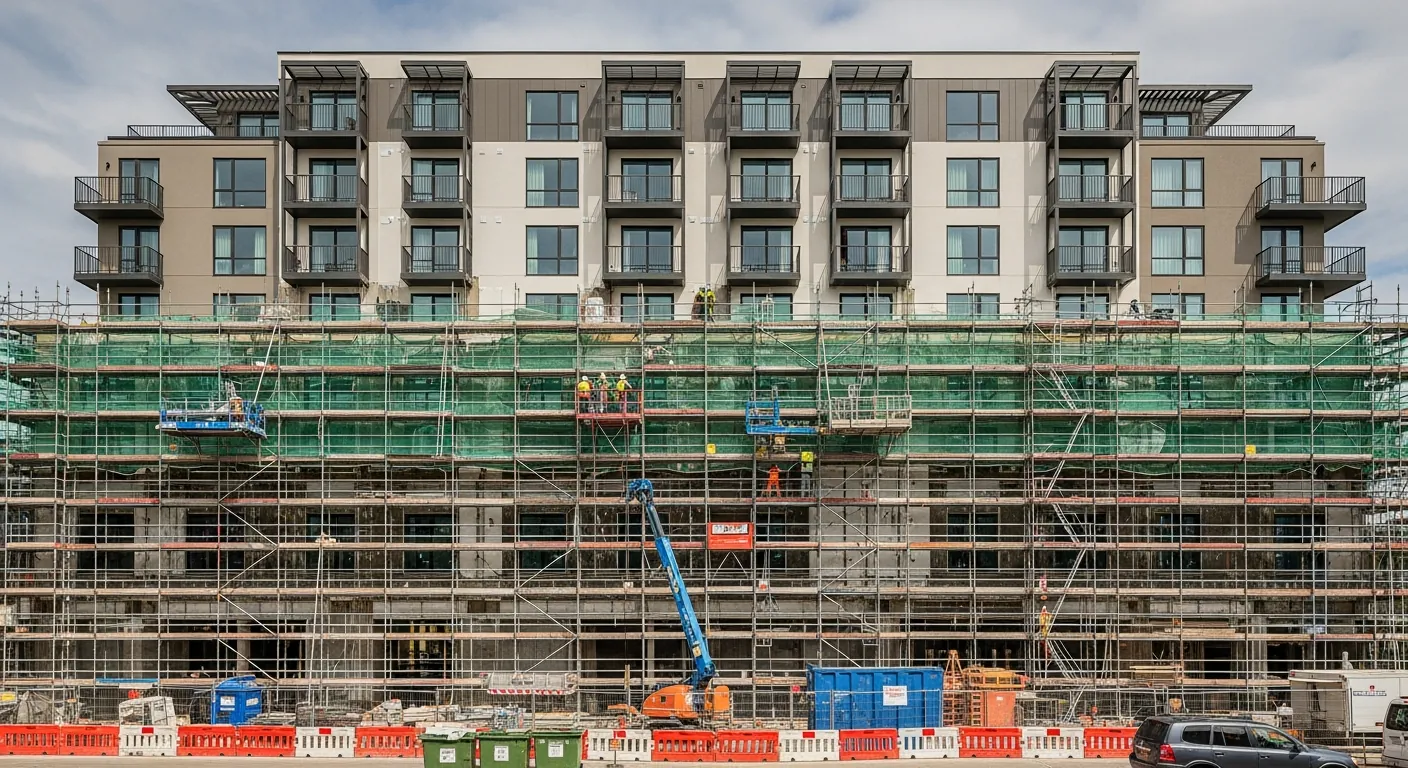
Sage Investment Group has been the leader in this space, delivering 13 hotel-to-apartment conversions in 2025. Their model targets workforce studios for essential workers who need affordable, well-located housing.
The results speak for themselves. Conversion timelines are running 12-18 months from acquisition to lease-up, compared to 24-36 months for ground-up construction. Occupancy rates at completed conversions are exceeding 95% within six months of opening, driven by the combination of competitive rents and desirable locations.
What I love about this model — and this is where my faith in doing well by doing good comes through — is that it addresses a genuine human need. These aren't luxury condos. They're homes for teachers, nurses, and first responders who've been priced out of the markets where they work. At F6 Partners, we believe that profitable investing and positive community impact aren't mutually exclusive. Hotel conversions prove that thesis every day.
U.S. Budget & Midscale Hotel Occupancy (2019–2026)
Budget and midscale hotel occupancy has recovered from pandemic lows but remains below 2019 levels, making some properties prime conversion candidates.
The Opportunity Ahead
The pipeline for hotel conversions is only growing. Across the country, thousands of older hotels are operating at occupancy levels that don't support their current use. The pandemic permanently reduced demand for budget and midscale hotel rooms in many markets, creating a structural oversupply that the hotel industry won't absorb.
For investors, the opportunity is clear: acquire underperforming hotel assets at a discount to replacement cost, convert them to residential use at a fraction of new construction costs, and deliver workforce housing into markets with insatiable demand. The basis is low, the execution risk is manageable, and the demand is real.
We're actively evaluating hotel conversion opportunities through F6 Partners, and I expect this asset class to be one of the defining investment themes of the next several years. If you're not looking at hotel conversions, you're missing the most efficient path to workforce housing creation in the market today.
U.S. Hotel-to-Residential Conversion Units (2019–2026)
Hotel-to-residential conversions have surged as struggling properties find new life as apartments, particularly in markets with strong housing demand and weak tourism.
TL;DR
New York City is converting 12+ former migrant shelter hotels into more than 1,100 apartments. Hotels are faster and cheaper to convert than office buildings because they already have individual bathrooms, plumbing stacks, and natural light in every unit. Sage Investment Group has delivered 13 hotel-to-apartment conversions in 2025, primarily targeting workforce studios from 1970s-1990s era properties. The economics are compelling, and the pipeline is growing.
The Economics of Conversion
Let me break down why hotel conversions are having their moment. The math is straightforward: a typical hotel room already has a bathroom, HVAC, a window, and a door that locks. Converting that room into a studio apartment requires adding a kitchenette — not rebuilding an entire floor plate.
The cost differential is dramatic. Where an office-to-residential conversion can run $200-$400 per square foot depending on the market, hotel conversions typically come in at $80-$150 per square foot. That's not a marginal improvement — it's a fundamentally different investment thesis.
In New York City, the city government has identified 12+ former migrant shelter hotels for conversion into permanent affordable housing, targeting more than 1,100 apartment units. These properties were already being used as temporary housing, so the transition to permanent residential use is both logical and politically popular.
Hotel vs Office Conversion Cost per SF (2019–2025)
Converting hotels to housing costs significantly less per square foot than office conversions, making obsolete hotels an increasingly attractive adaptive reuse target.
Think you know the facts behind the headlines?
5 questions · ~3 min
Why Hotels Beat Offices
I get asked all the time why we're so bullish on hotel conversions at F6 Partners when office conversions get all the headlines. The answer is structural.
Office buildings were designed for open floor plans with centralized bathrooms and mechanical systems. Converting them to residential means adding hundreds of individual bathrooms, rerouting plumbing, and often cutting new windows — if the floor plate even allows it. Many office buildings are simply too deep for residential use because you can't get natural light to interior units.
Hotels don't have any of these problems. Every room already has: - Individual bathrooms with plumbing roughed in - Windows providing natural light and ventilation - HVAC systems designed for individual room control - Sound insulation between units - Corridor layouts that work for residential use
The 1970s through 1990s vintage hotels are the sweet spot. They're old enough that the hotel business model has deteriorated, but new enough that the structural systems are sound. Many of these properties are in excellent locations — near transit, employment centers, and amenities — because that's where hotels were built.
Real Projects Real Results
Sage Investment Group has been the leader in this space, delivering 13 hotel-to-apartment conversions in 2025. Their model targets workforce studios for essential workers who need affordable, well-located housing.
The results speak for themselves. Conversion timelines are running 12-18 months from acquisition to lease-up, compared to 24-36 months for ground-up construction. Occupancy rates at completed conversions are exceeding 95% within six months of opening, driven by the combination of competitive rents and desirable locations.
What I love about this model — and this is where my faith in doing well by doing good comes through — is that it addresses a genuine human need. These aren't luxury condos. They're homes for teachers, nurses, and first responders who've been priced out of the markets where they work. At F6 Partners, we believe that profitable investing and positive community impact aren't mutually exclusive. Hotel conversions prove that thesis every day.
U.S. Budget & Midscale Hotel Occupancy (2019–2026)
Budget and midscale hotel occupancy has recovered from pandemic lows but remains below 2019 levels, making some properties prime conversion candidates.
The Opportunity Ahead
The pipeline for hotel conversions is only growing. Across the country, thousands of older hotels are operating at occupancy levels that don't support their current use. The pandemic permanently reduced demand for budget and midscale hotel rooms in many markets, creating a structural oversupply that the hotel industry won't absorb.
For investors, the opportunity is clear: acquire underperforming hotel assets at a discount to replacement cost, convert them to residential use at a fraction of new construction costs, and deliver workforce housing into markets with insatiable demand. The basis is low, the execution risk is manageable, and the demand is real.
We're actively evaluating hotel conversion opportunities through F6 Partners, and I expect this asset class to be one of the defining investment themes of the next several years. If you're not looking at hotel conversions, you're missing the most efficient path to workforce housing creation in the market today.
U.S. Hotel-to-Residential Conversion Units (2019–2026)
Hotel-to-residential conversions have surged as struggling properties find new life as apartments, particularly in markets with strong housing demand and weak tourism.
Test Your Knowledge
How well do you know hotel conversion projects?

Andrew LeBaron