TL;DR
Cap rates are stabilizing after peaking in 2023-2024. CBRE's H1 2025 data shows the all-property cap rate declined by 9 basis points, signaling that the worst of the repricing is behind us. Multifamily cap rates sit at 5.0-7.0%, industrial at 4.5-5.5%, and office at a wide 7.0-9.0%+. Despite stabilization, 71% of investors surveyed in Q2 2025 report they're "holding tight" rather than transacting aggressively. The reset has happened. The question now is who's positioned to capitalize on it.
The New Cap Rate Landscape
Let's be direct: the cap rate environment of 2025 is fundamentally different from anything we experienced between 2015 and 2022. The era of sub-4% cap rates for core multifamily and industrial is over. What we have now is a market that's repriced to reflect a higher interest rate reality, and that repricing is actually healthy.
CBRE's H1 2025 all-property cap rate ticked down by 9 basis points — modest compression that tells us the market has found its floor. After 18 months of expansion (rising cap rates, declining values), we're now in a stabilization phase. This is the boring but productive part of the cycle where smart investors build positions.
Here's the current landscape by property type:
- Multifamily: 5.0-7.0%. Core stabilized assets in primary markets trade at the low end; value-add opportunities in secondary markets sit closer to 6.5-7.0%.
- Industrial: 4.5-5.5%. Still the tightest caps in CRE, reflecting the sector's strong fundamentals, though the spread over multifamily has narrowed.
- Office: 7.0-9.0%+. The widest range reflects the bifurcation between Class A trophy assets and everything else. Some distressed office trades have implied cap rates above 10%.

All-Property Cap Rate Trend (%)
Cap rates across all property types have begun compressing after a sharp rise in 2022–2023, reflecting growing investor appetite and improving fundamentals.
Think you know the real numbers behind these deals?
5 questions · ~3 min
What the Numbers Tell Us
The 9 basis point decline in the all-property cap rate is significant not because of its magnitude but because of its direction. After nearly two years of cap rate expansion, any compression signals a shift in market sentiment. Sellers and buyers are finding common ground on pricing, and transaction volumes are recovering accordingly.
But let's not get carried away. A 9-point decline doesn't mean we're racing back to 2021 pricing. What it means is that the market has absorbed the interest rate shock and is recalibrating around a new normal. Underwriting today requires realistic growth assumptions and conservative leverage, which is exactly how good CRE investing should work.
The 71% of investors reporting they're "holding tight" in Q2 2025 is both a caution flag and an opportunity signal. When the majority of the market is on the sidelines, competition for deals is reduced. The investors who are transacting — including private equity firms deploying committed capital — are doing so with less bidding pressure and more negotiating leverage.
Cap Rates by Property Type — 2025 (%)
Industrial and multifamily properties command the lowest cap rates in 2025, while office remains elevated — a clear signal of where institutional capital sees the best risk-adjusted returns.
The best vintage years in real estate investing typically begin when most participants are still hesitant. The data tells us the bottom is in, but sentiment lags reality. That gap between data and sentiment is where returns are made.
— Howard Marks, Co-Chairman, Oaktree Capital Management
The Opportunity in Transition
Here's where my attention is focused: the transition zone between cap rate stabilization and the next phase of compression. We're not fully in compression yet, but the direction is clear. For investors who buy at today's stabilized cap rates and hold through the next 3-5 years, the return profile is attractive.
Consider a multifamily asset purchased at a 6.5% cap rate today. If cap rates compress 50-75 basis points over the next three years (which is reasonable given the historical pattern after rate hiking cycles), the value appreciation alone generates meaningful returns before you even factor in NOI growth.
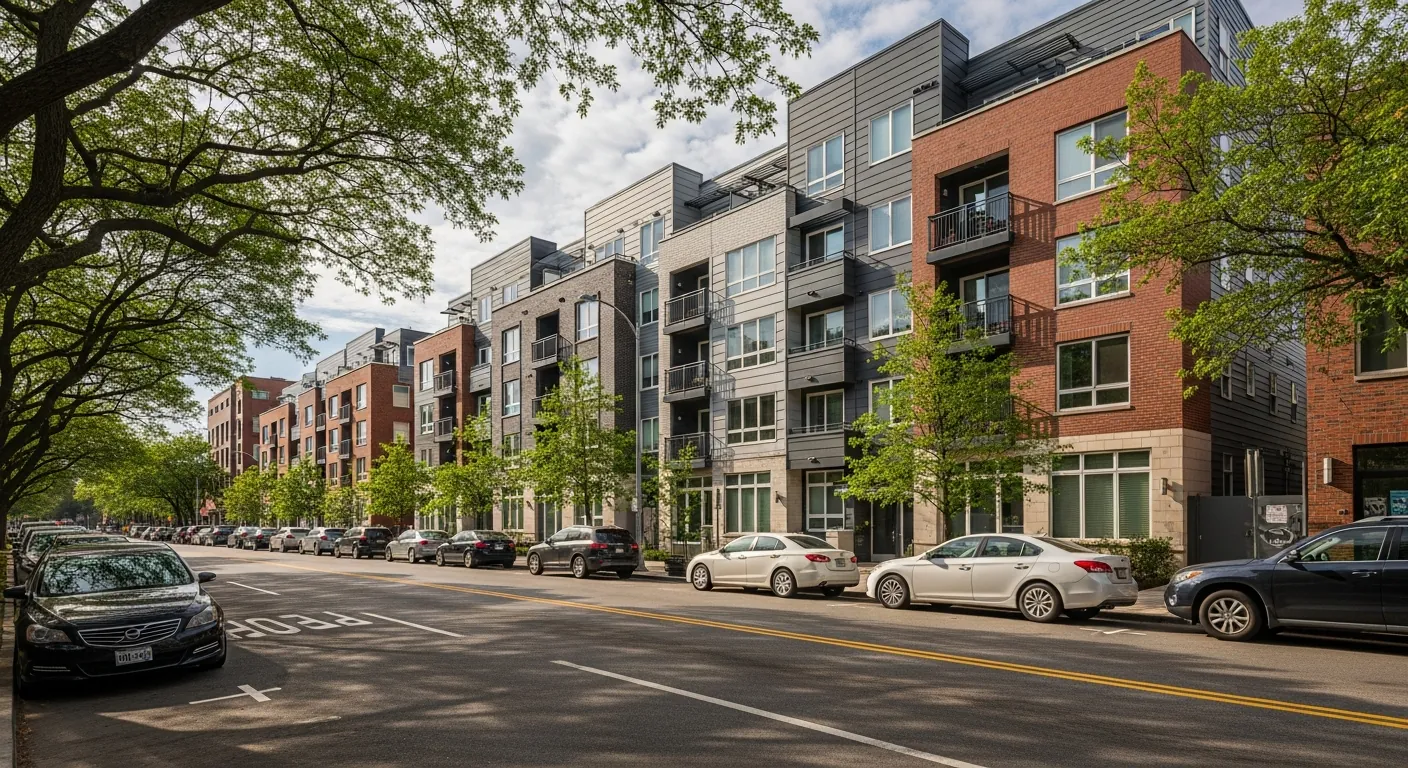
The key is buying the right assets in the right markets. Not everything benefits equally from cap rate compression. The sectors and markets with the strongest fundamental demand — student housing near major universities, senior housing in supply-constrained markets, workforce multifamily in growing metros — will compress fastest because institutional capital will flow there first.
CRE Transaction Volume ($B)
After plunging 45% from their 2021 peak, CRE transaction volumes are recovering, with 2025 on pace to approach $400 billion as capital comes off the sidelines.
My Advice
If you're an investor watching from the sidelines, I understand the caution. The last two years were painful for many CRE participants. But markets don't ring a bell at the bottom, and the data is telling us that the bottom has passed.
My advice is threefold:
- Get specific. The "all-property" cap rate is an average. Your returns will be determined by the specific asset, market, and operator you choose. Broad CRE exposure is less important than targeted positioning in sectors with structural demand.
- Focus on basis. In a higher-rate environment, your entry basis matters more than ever. Every dollar saved on acquisition is a dollar of built-in equity protection.
- Extend your hold period. If your underwriting requires a 2-3 year exit to generate returns, you're probably too aggressive on leverage or acquisition price. The best risk-adjusted returns in this market come from 5-7 year holds that allow you to capture both NOI growth and cap rate compression.
At F6 Partners, we're actively acquiring in this environment because the math works. We don't need cap rates to compress to generate strong returns — but if they do, it's gravy.
TL;DR
Cap rates are stabilizing after peaking in 2023-2024. CBRE's H1 2025 data shows the all-property cap rate declined by 9 basis points, signaling that the worst of the repricing is behind us. Multifamily cap rates sit at 5.0-7.0%, industrial at 4.5-5.5%, and office at a wide 7.0-9.0%+. Despite stabilization, 71% of investors surveyed in Q2 2025 report they're "holding tight" rather than transacting aggressively. The reset has happened. The question now is who's positioned to capitalize on it.
The New Cap Rate Landscape
Let's be direct: the cap rate environment of 2025 is fundamentally different from anything we experienced between 2015 and 2022. The era of sub-4% cap rates for core multifamily and industrial is over. What we have now is a market that's repriced to reflect a higher interest rate reality, and that repricing is actually healthy.
CBRE's H1 2025 all-property cap rate ticked down by 9 basis points — modest compression that tells us the market has found its floor. After 18 months of expansion (rising cap rates, declining values), we're now in a stabilization phase. This is the boring but productive part of the cycle where smart investors build positions.
Here's the current landscape by property type:
- Multifamily: 5.0-7.0%. Core stabilized assets in primary markets trade at the low end; value-add opportunities in secondary markets sit closer to 6.5-7.0%.
- Industrial: 4.5-5.5%. Still the tightest caps in CRE, reflecting the sector's strong fundamentals, though the spread over multifamily has narrowed.
- Office: 7.0-9.0%+. The widest range reflects the bifurcation between Class A trophy assets and everything else. Some distressed office trades have implied cap rates above 10%.
All-Property Cap Rate Trend (%)
Cap rates across all property types have begun compressing after a sharp rise in 2022–2023, reflecting growing investor appetite and improving fundamentals.
Think you know the real numbers behind these deals?
5 questions · ~3 min
What the Numbers Tell Us
The 9 basis point decline in the all-property cap rate is significant not because of its magnitude but because of its direction. After nearly two years of cap rate expansion, any compression signals a shift in market sentiment. Sellers and buyers are finding common ground on pricing, and transaction volumes are recovering accordingly.
But let's not get carried away. A 9-point decline doesn't mean we're racing back to 2021 pricing. What it means is that the market has absorbed the interest rate shock and is recalibrating around a new normal. Underwriting today requires realistic growth assumptions and conservative leverage, which is exactly how good CRE investing should work.
The 71% of investors reporting they're "holding tight" in Q2 2025 is both a caution flag and an opportunity signal. When the majority of the market is on the sidelines, competition for deals is reduced. The investors who are transacting — including private equity firms deploying committed capital — are doing so with less bidding pressure and more negotiating leverage.
Cap Rates by Property Type — 2025 (%)
Industrial and multifamily properties command the lowest cap rates in 2025, while office remains elevated — a clear signal of where institutional capital sees the best risk-adjusted returns.
The best vintage years in real estate investing typically begin when most participants are still hesitant. The data tells us the bottom is in, but sentiment lags reality. That gap between data and sentiment is where returns are made.
— Howard Marks, Co-Chairman, Oaktree Capital Management
The Opportunity in Transition
Here's where my attention is focused: the transition zone between cap rate stabilization and the next phase of compression. We're not fully in compression yet, but the direction is clear. For investors who buy at today's stabilized cap rates and hold through the next 3-5 years, the return profile is attractive.
Consider a multifamily asset purchased at a 6.5% cap rate today. If cap rates compress 50-75 basis points over the next three years (which is reasonable given the historical pattern after rate hiking cycles), the value appreciation alone generates meaningful returns before you even factor in NOI growth.
The key is buying the right assets in the right markets. Not everything benefits equally from cap rate compression. The sectors and markets with the strongest fundamental demand — student housing near major universities, senior housing in supply-constrained markets, workforce multifamily in growing metros — will compress fastest because institutional capital will flow there first.
CRE Transaction Volume ($B)
After plunging 45% from their 2021 peak, CRE transaction volumes are recovering, with 2025 on pace to approach $400 billion as capital comes off the sidelines.
My Advice
If you're an investor watching from the sidelines, I understand the caution. The last two years were painful for many CRE participants. But markets don't ring a bell at the bottom, and the data is telling us that the bottom has passed.
My advice is threefold:
- Get specific. The "all-property" cap rate is an average. Your returns will be determined by the specific asset, market, and operator you choose. Broad CRE exposure is less important than targeted positioning in sectors with structural demand.
- Focus on basis. In a higher-rate environment, your entry basis matters more than ever. Every dollar saved on acquisition is a dollar of built-in equity protection.
- Extend your hold period. If your underwriting requires a 2-3 year exit to generate returns, you're probably too aggressive on leverage or acquisition price. The best risk-adjusted returns in this market come from 5-7 year holds that allow you to capture both NOI growth and cap rate compression.
At F6 Partners, we're actively acquiring in this environment because the math works. We don't need cap rates to compress to generate strong returns — but if they do, it's gravy.
Test Your Knowledge
How well do you know commercial real estate?

Andrew LeBaron