TL;DR
Retail real estate has the lowest vacancy rate of any commercial real estate sector entering 2025. Q1 2025 completions came in at just 4.5 million square feet — the lowest in a decade. Demand is growing strongest in suburban and Sun Belt locations. Net lease retail cap rates are running 6.0-8.0%, with grocers and drugstores at the low end. After years of "retail apocalypse" headlines, this sector has quietly become one of the most compelling stories in CRE.
The Comeback Nobody Expected
I'll be honest — if you told me five years ago that retail would have the tightest vacancy rate of any commercial real estate sector in 2025, I would have been skeptical. The narrative around retail has been dominated by e-commerce disruption, store closures, and the so-called "retail apocalypse" for the better part of a decade.
But here we are. Retail vacancy rates are at historic lows, and the construction pipeline has essentially dried up. Q1 2025 saw just 4.5 million square feet of retail completions nationally — the lowest figure in ten years. Developers stopped building retail because the narrative said it was dying. Now the data says the opposite, and there's almost no new supply coming.
This is the kind of contrarian opportunity that I get excited about at F6 Partners. When the market narrative and the market data diverge this dramatically, there's money to be made for investors who follow the fundamentals.
U.S. Retail Completions (2019–2026)
New retail construction has fallen to historically low levels, creating a supply-constrained environment that benefits existing well-located retail properties.
U.S. Retail Vacancy Rate (2019–2026)
Retail vacancy has dropped to its lowest level in over a decade as minimal new construction and tenant demand for physical space tighten the market.
Think you know the real numbers behind these deals?
5 questions · ~3 min
Where the Demand Is
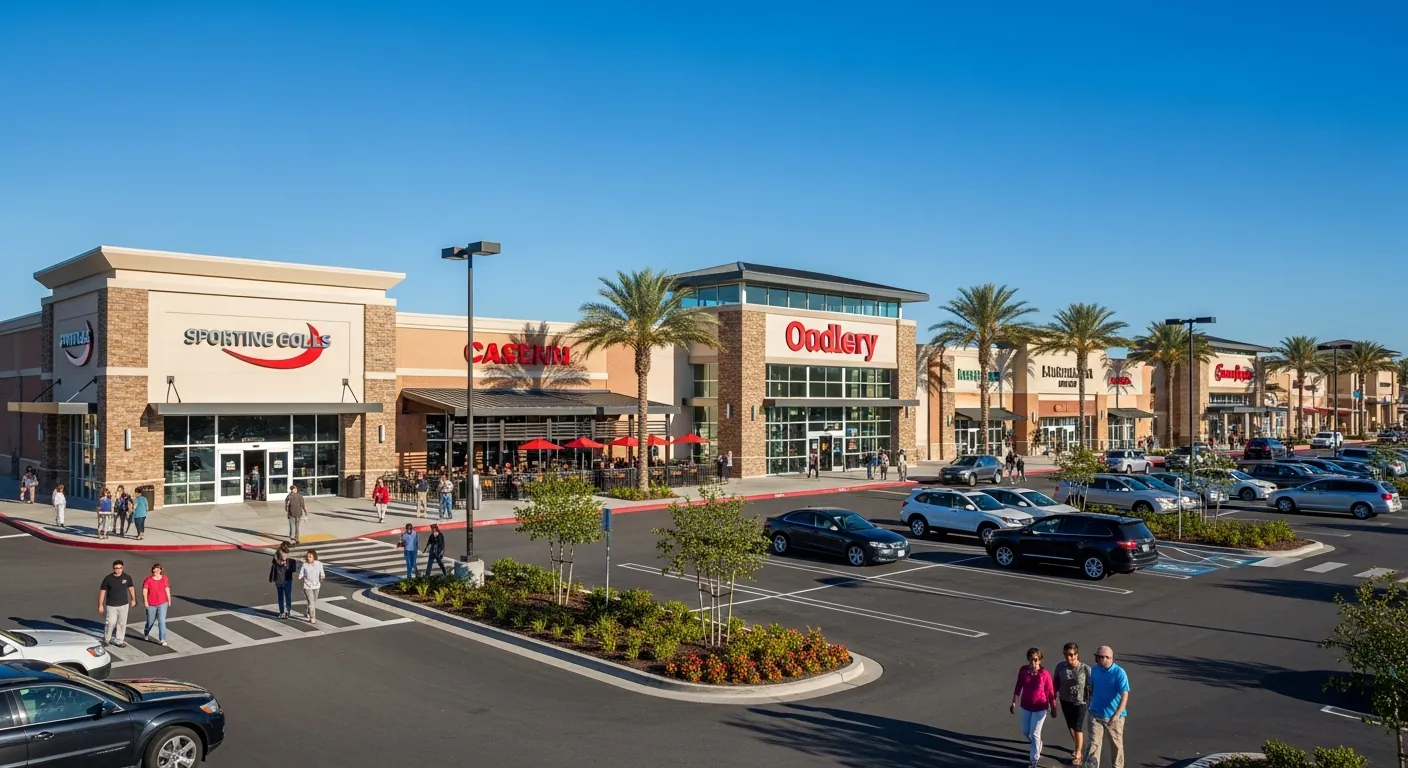
The retail comeback isn't happening everywhere equally. Suburban locations and Sun Belt markets are driving the strongest demand. Population migration patterns that accelerated during the pandemic have created new retail demand centers in places like Phoenix, Austin, Nashville, and the Carolinas.
These aren't speculative bets on future growth — they're markets where population has already arrived and spending power is established. Retailers are following the rooftops, and in many of these suburban growth markets, they're competing for limited available space.
The tenant mix is also shifting in important ways. Essential retail — grocers, drugstores, medical clinics, and service-oriented businesses — is dominating leasing activity. These tenants provide stable, long-term cash flows that make their properties attractive to income-focused investors.
Net lease retail cap rates are running in the 6.0-8.0% range, depending on tenant quality and lease terms — a spread that's particularly attractive in the context of the broader cap rate reset reshaping CRE in 2025. Grocery-anchored and drugstore-anchored properties trade at the lower end of that range, reflecting their credit quality and essential nature. Single-tenant properties with shorter lease terms or weaker credits offer higher cap rates for investors willing to accept more active management.
Net Lease Retail Cap Rates (2019–2026)
Net lease retail cap rates have compressed as investors seek the asset class's bond-like income stream, particularly from investment-grade tenants on long-term leases.
Tenants Gaining Leverage
Here's an interesting dynamic that's worth watching: despite the tight vacancy environment, tenants are actually gaining leverage in certain negotiations. How is that possible?
The answer is that many landlords are competing to attract the strongest credit tenants — national grocers, pharmacy chains, and medical users — who provide the most reliable income streams. These tenants know their value and are negotiating harder on rent escalations, tenant improvement allowances, and lease flexibility.
For smaller, local tenants, the environment is tougher. They're facing higher rents and fewer concessions as landlords prioritize credit quality. This bifurcation in the retail market is creating different investment strategies depending on your risk appetite and management capability.
My Take on Retail
While our primary focus at F6 Partners remains on student and senior housing, I'd be remiss not to acknowledge what's happening in retail. The supply-demand fundamentals are as strong as I've seen in any CRE sector right now.
For income-focused investors who want predictable cash flows with inflation protection through contractual rent escalations — the kind we explored in generating cashflow in a higher rate world — net lease retail deserves serious consideration. Investors weighing the trade-offs between REITs and private real estate for portfolio allocation will find net lease retail attractive in both vehicles. The 6.0-8.0% cap rate range offers a meaningful spread over Treasury yields, and the limited construction pipeline means vacancy rates should remain favorable for the foreseeable future.
The retail apocalypse was always overstated. What actually happened was a healthy rationalization — weak concepts and poorly located properties closed, while strong operators and essential retailers thrived. What's left is a leaner, more resilient retail sector that's delivering results nobody expected.
TL;DR
Retail real estate has the lowest vacancy rate of any commercial real estate sector entering 2025. Q1 2025 completions came in at just 4.5 million square feet — the lowest in a decade. Demand is growing strongest in suburban and Sun Belt locations. Net lease retail cap rates are running 6.0-8.0%, with grocers and drugstores at the low end. After years of "retail apocalypse" headlines, this sector has quietly become one of the most compelling stories in CRE.
The Comeback Nobody Expected
I'll be honest — if you told me five years ago that retail would have the tightest vacancy rate of any commercial real estate sector in 2025, I would have been skeptical. The narrative around retail has been dominated by e-commerce disruption, store closures, and the so-called "retail apocalypse" for the better part of a decade.
But here we are. Retail vacancy rates are at historic lows, and the construction pipeline has essentially dried up. Q1 2025 saw just 4.5 million square feet of retail completions nationally — the lowest figure in ten years. Developers stopped building retail because the narrative said it was dying. Now the data says the opposite, and there's almost no new supply coming.
This is the kind of contrarian opportunity that I get excited about at F6 Partners. When the market narrative and the market data diverge this dramatically, there's money to be made for investors who follow the fundamentals.
U.S. Retail Completions (2019–2026)
New retail construction has fallen to historically low levels, creating a supply-constrained environment that benefits existing well-located retail properties.
U.S. Retail Vacancy Rate (2019–2026)
Retail vacancy has dropped to its lowest level in over a decade as minimal new construction and tenant demand for physical space tighten the market.
Think you know the real numbers behind these deals?
5 questions · ~3 min
Where the Demand Is
The retail comeback isn't happening everywhere equally. Suburban locations and Sun Belt markets are driving the strongest demand. Population migration patterns that accelerated during the pandemic have created new retail demand centers in places like Phoenix, Austin, Nashville, and the Carolinas.
These aren't speculative bets on future growth — they're markets where population has already arrived and spending power is established. Retailers are following the rooftops, and in many of these suburban growth markets, they're competing for limited available space.
The tenant mix is also shifting in important ways. Essential retail — grocers, drugstores, medical clinics, and service-oriented businesses — is dominating leasing activity. These tenants provide stable, long-term cash flows that make their properties attractive to income-focused investors.
Net lease retail cap rates are running in the 6.0-8.0% range, depending on tenant quality and lease terms — a spread that's particularly attractive in the context of the broader cap rate reset reshaping CRE in 2025. Grocery-anchored and drugstore-anchored properties trade at the lower end of that range, reflecting their credit quality and essential nature. Single-tenant properties with shorter lease terms or weaker credits offer higher cap rates for investors willing to accept more active management.
Net Lease Retail Cap Rates (2019–2026)
Net lease retail cap rates have compressed as investors seek the asset class's bond-like income stream, particularly from investment-grade tenants on long-term leases.
Tenants Gaining Leverage
Here's an interesting dynamic that's worth watching: despite the tight vacancy environment, tenants are actually gaining leverage in certain negotiations. How is that possible?
The answer is that many landlords are competing to attract the strongest credit tenants — national grocers, pharmacy chains, and medical users — who provide the most reliable income streams. These tenants know their value and are negotiating harder on rent escalations, tenant improvement allowances, and lease flexibility.
For smaller, local tenants, the environment is tougher. They're facing higher rents and fewer concessions as landlords prioritize credit quality. This bifurcation in the retail market is creating different investment strategies depending on your risk appetite and management capability.
My Take on Retail
While our primary focus at F6 Partners remains on student and senior housing, I'd be remiss not to acknowledge what's happening in retail. The supply-demand fundamentals are as strong as I've seen in any CRE sector right now.
For income-focused investors who want predictable cash flows with inflation protection through contractual rent escalations — the kind we explored in generating cashflow in a higher rate world — net lease retail deserves serious consideration. Investors weighing the trade-offs between REITs and private real estate for portfolio allocation will find net lease retail attractive in both vehicles. The 6.0-8.0% cap rate range offers a meaningful spread over Treasury yields, and the limited construction pipeline means vacancy rates should remain favorable for the foreseeable future.
The retail apocalypse was always overstated. What actually happened was a healthy rationalization — weak concepts and poorly located properties closed, while strong operators and essential retailers thrived. What's left is a leaner, more resilient retail sector that's delivering results nobody expected.
Test Your Knowledge
How well do you know commercial real estate?

Andrew LeBaron