TL;DR
CBRE forecasts a 5-10% reduction in industrial leasing activity for 2025 driven by tariff uncertainty and shifting trade patterns. Industrial net absorption dropped 42% year-over-year to 114 million square feet, and vacancy has risen to 7.0%. Port cities are facing headwinds as import volumes decline, while inland hubs like Dallas-Fort Worth, Indianapolis, and Atlanta are seeing gains from reshoring activity. The industrial sector is being reshuffled, not destroyed — and knowing where to position makes all the difference.
The Industrial Slowdown
Industrial real estate was the darling of CRE for nearly a decade. E-commerce growth, supply chain expansion, and just-in-time logistics drove vacancy rates below 4% and pushed rents to record highs. But the tariff environment has introduced a level of uncertainty that's forcing a recalibration.
The numbers tell the story clearly. Net absorption dropped 42% year-over-year to 114 million square feet. That's still positive absorption — companies are still leasing industrial space — but the pace has slowed dramatically. Vacancy has ticked up to 7.0%, a level we haven't seen since before the pandemic-era industrial boom.
CBRE's forecast of a 5-10% reduction in industrial leasing for 2025 reflects the reality that companies simply don't know what their supply chains will look like in 12-18 months. (The Liberation Day tariffs accelerated this uncertainty dramatically.) When you don't know where your products are coming from or how much they'll cost at the border, you hesitate before signing a 10-year warehouse lease.
That hesitation is the headache. It's not that demand for industrial space has disappeared — it's that decision-making has frozen in the face of policy uncertainty.
U.S. Industrial Vacancy Rate (2019–2026)
Industrial vacancy has ticked up from its historically tight 2022 low but remains well below long-term averages, supporting continued rent growth in key logistics markets.
Think you know the real numbers behind these deals?
5 questions · ~3 min
Port Cities vs Inland Hubs
The most important story within the industrial slowdown is the geographic divergence. Not all industrial markets are created equal in a tariff environment.
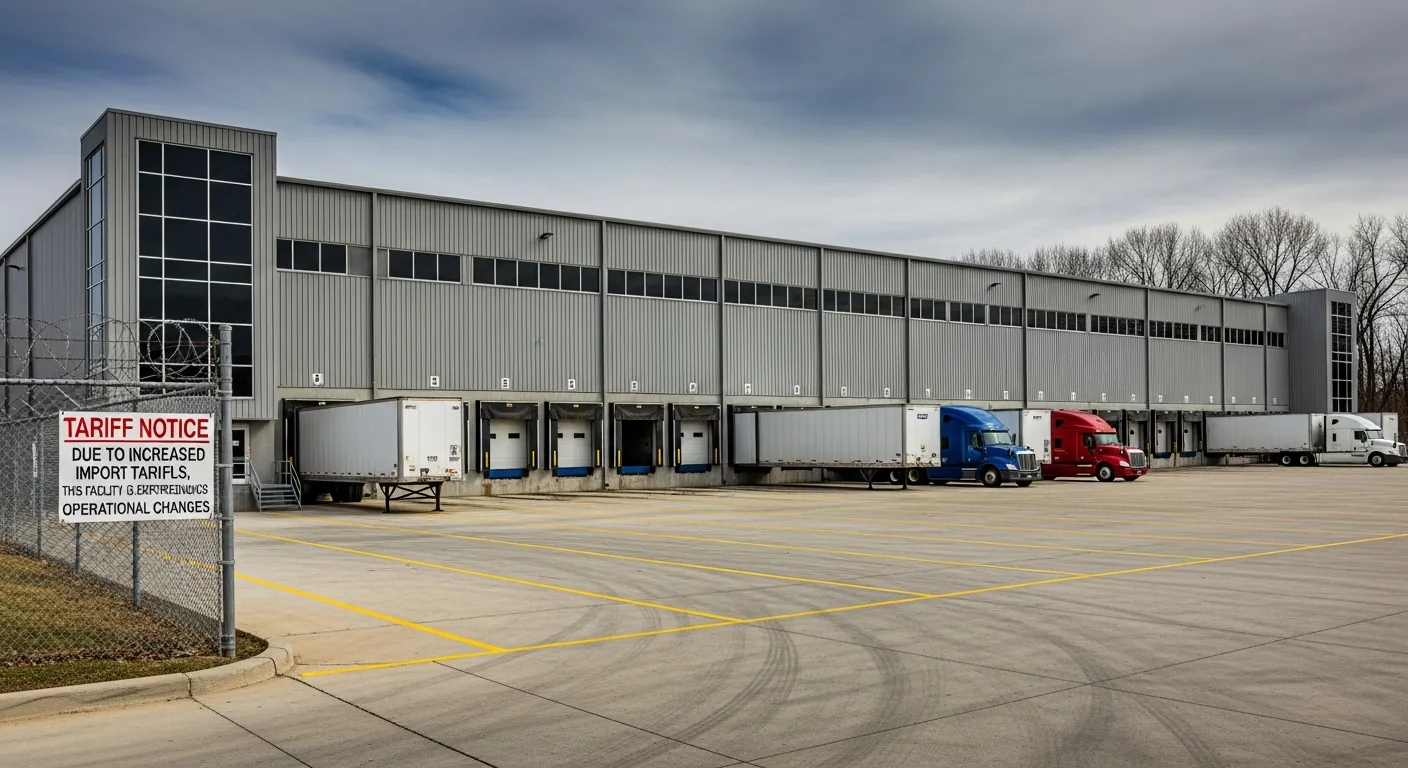
Port cities — Los Angeles, Long Beach, Newark, Savannah — are facing meaningful headwinds. These markets thrived on imported goods flowing through ports and into distribution networks. When tariffs reduce import volumes or reroute supply chains, the warehouses closest to ports feel it first.
The contrast with inland hubs is striking. Markets like Dallas-Fort Worth, Indianapolis, and Atlanta are actually seeing increased leasing activity driven by reshoring. When manufacturers decide to produce domestically rather than importing, they need production facilities and distribution centers in the heartland, not at the ports.
This geographic reshuffling creates both risk and opportunity: - Port-adjacent industrial assets face near-term occupancy and rent pressure as tenants downsize or relocate - Inland logistics hubs benefit from reshoring demand and growing domestic manufacturing activity - Last-mile facilities in major population centers remain resilient regardless of trade policy because local delivery demand continues growing
Industrial Net Absorption (M SF, 2019–2026)
Industrial net absorption has bounced back strongly as e-commerce expansion and reshoring activity fuel sustained demand for modern warehouse and distribution space.
The Reshoring Wildcard
Reshoring is the most interesting variable in the industrial equation. If tariffs persist — and I believe some version of elevated tariffs is here to stay regardless of which party holds power — the incentive to manufacture domestically increases year over year.
Every factory that comes back to American soil needs warehouse space, distribution capacity, and logistics infrastructure. The markets positioned to capture that reshoring demand — those with available land, favorable tax environments, strong transportation networks, and skilled labor — will outperform.
We're already seeing early evidence in the data. Industrial development in Sun Belt markets with interstate access and proximity to domestic supply chains is holding up far better than coastal markets dependent on international trade. This trend has legs, and I expect it to accelerate as companies make permanent supply chain decisions rather than temporary adjustments.
Reshoring + FDI Job Announcements (Thousands, 2019–2026)
Reshoring announcements have surged to unprecedented levels, driving massive demand for domestic manufacturing and distribution facilities across the industrial sector.
Reading the Tea Leaves
So what does an investor do with this information? At F6 Partners, we approach the industrial market with cautious optimism and geographic selectivity.
We're not abandoning industrial real estate — the long-term fundamentals of e-commerce growth, population expansion, and the need for efficient logistics infrastructure haven't changed. But we are being selective about where and how we deploy capital.
The key principles we're applying: - Favor inland markets with reshoring tailwinds over port-dependent markets facing trade headwinds - Focus on last-mile facilities in growing metropolitan areas where delivery demand is insulated from tariff dynamics - Underwrite conservatively on speculative industrial development given the 42% drop in net absorption and rising steel and material costs - Watch the data — industrial is a sector where the fundamentals can shift quickly, and staying close to the numbers matters more than ever
I've always believed that uncertainty creates opportunity for those willing to do the work. The industrial market is being reshuffled, and the investors who understand the new geography of demand — prioritizing cashflow over speculation — will be the ones who profit. The tariff headache is real, but it's also clarifying — it's showing us where the next decade of industrial demand will come from, and it won't look like the last decade.
TL;DR
CBRE forecasts a 5-10% reduction in industrial leasing activity for 2025 driven by tariff uncertainty and shifting trade patterns. Industrial net absorption dropped 42% year-over-year to 114 million square feet, and vacancy has risen to 7.0%. Port cities are facing headwinds as import volumes decline, while inland hubs like Dallas-Fort Worth, Indianapolis, and Atlanta are seeing gains from reshoring activity. The industrial sector is being reshuffled, not destroyed — and knowing where to position makes all the difference.
The Industrial Slowdown
Industrial real estate was the darling of CRE for nearly a decade. E-commerce growth, supply chain expansion, and just-in-time logistics drove vacancy rates below 4% and pushed rents to record highs. But the tariff environment has introduced a level of uncertainty that's forcing a recalibration.
The numbers tell the story clearly. Net absorption dropped 42% year-over-year to 114 million square feet. That's still positive absorption — companies are still leasing industrial space — but the pace has slowed dramatically. Vacancy has ticked up to 7.0%, a level we haven't seen since before the pandemic-era industrial boom.
CBRE's forecast of a 5-10% reduction in industrial leasing for 2025 reflects the reality that companies simply don't know what their supply chains will look like in 12-18 months. (The Liberation Day tariffs accelerated this uncertainty dramatically.) When you don't know where your products are coming from or how much they'll cost at the border, you hesitate before signing a 10-year warehouse lease.
That hesitation is the headache. It's not that demand for industrial space has disappeared — it's that decision-making has frozen in the face of policy uncertainty.
U.S. Industrial Vacancy Rate (2019–2026)
Industrial vacancy has ticked up from its historically tight 2022 low but remains well below long-term averages, supporting continued rent growth in key logistics markets.
Think you know the real numbers behind these deals?
5 questions · ~3 min
Port Cities vs Inland Hubs
The most important story within the industrial slowdown is the geographic divergence. Not all industrial markets are created equal in a tariff environment.
Port cities — Los Angeles, Long Beach, Newark, Savannah — are facing meaningful headwinds. These markets thrived on imported goods flowing through ports and into distribution networks. When tariffs reduce import volumes or reroute supply chains, the warehouses closest to ports feel it first.
The contrast with inland hubs is striking. Markets like Dallas-Fort Worth, Indianapolis, and Atlanta are actually seeing increased leasing activity driven by reshoring. When manufacturers decide to produce domestically rather than importing, they need production facilities and distribution centers in the heartland, not at the ports.
This geographic reshuffling creates both risk and opportunity: - Port-adjacent industrial assets face near-term occupancy and rent pressure as tenants downsize or relocate - Inland logistics hubs benefit from reshoring demand and growing domestic manufacturing activity - Last-mile facilities in major population centers remain resilient regardless of trade policy because local delivery demand continues growing
Industrial Net Absorption (M SF, 2019–2026)
Industrial net absorption has bounced back strongly as e-commerce expansion and reshoring activity fuel sustained demand for modern warehouse and distribution space.
The Reshoring Wildcard
Reshoring is the most interesting variable in the industrial equation. If tariffs persist — and I believe some version of elevated tariffs is here to stay regardless of which party holds power — the incentive to manufacture domestically increases year over year.
Every factory that comes back to American soil needs warehouse space, distribution capacity, and logistics infrastructure. The markets positioned to capture that reshoring demand — those with available land, favorable tax environments, strong transportation networks, and skilled labor — will outperform.
We're already seeing early evidence in the data. Industrial development in Sun Belt markets with interstate access and proximity to domestic supply chains is holding up far better than coastal markets dependent on international trade. This trend has legs, and I expect it to accelerate as companies make permanent supply chain decisions rather than temporary adjustments.
Reshoring + FDI Job Announcements (Thousands, 2019–2026)
Reshoring announcements have surged to unprecedented levels, driving massive demand for domestic manufacturing and distribution facilities across the industrial sector.
Reading the Tea Leaves
So what does an investor do with this information? At F6 Partners, we approach the industrial market with cautious optimism and geographic selectivity.
We're not abandoning industrial real estate — the long-term fundamentals of e-commerce growth, population expansion, and the need for efficient logistics infrastructure haven't changed. But we are being selective about where and how we deploy capital.
The key principles we're applying: - Favor inland markets with reshoring tailwinds over port-dependent markets facing trade headwinds - Focus on last-mile facilities in growing metropolitan areas where delivery demand is insulated from tariff dynamics - Underwrite conservatively on speculative industrial development given the 42% drop in net absorption and rising steel and material costs - Watch the data — industrial is a sector where the fundamentals can shift quickly, and staying close to the numbers matters more than ever
I've always believed that uncertainty creates opportunity for those willing to do the work. The industrial market is being reshuffled, and the investors who understand the new geography of demand — prioritizing cashflow over speculation — will be the ones who profit. The tariff headache is real, but it's also clarifying — it's showing us where the next decade of industrial demand will come from, and it won't look like the last decade.
Test Your Knowledge
How well do you know commercial real estate?

Andrew LeBaron