TL;DR
The Department of Government Efficiency (DOGE) has slashed thousands of federal jobs and broken hundreds of office leases across the country, with the Washington DC metro area absorbing the greatest impact. National office vacancy stands at 20.4% — the highest in the modern era. But here's the bifurcation story that matters: NYC Midtown has returned to pre-pandemic rent levels, San Francisco is showing genuine signs of turning around, and Class A assets are dramatically outperforming commodity office everywhere. The office market isn't dying — it's splitting into two completely different realities.
The DOGE Impact: DC Takes the Hit
Let me lay out the DOGE situation clearly because the headlines have been both alarmist and incomplete. The Department of Government Efficiency executed its mandate aggressively — cutting thousands of federal positions and terminating hundreds of office leases that had anchored the DC metro commercial real estate market for decades.
The impact on Washington DC has been severe and concentrated. Federal agencies historically occupied millions of square feet across Northern Virginia, suburban Maryland, and downtown DC. When those leases broke, the vacancy shock rippled through the entire metro area. Sublease availability spiked. Direct vacancy in some DC submarkets pushed well past 25%. Landlords who built portfolios around government tenancy found their cash flows impaired almost overnight — though DC's 20-year tax abatement for office-to-residential conversions is now turning some of that distress into development opportunity.
At F6 Partners, we've been warning our investors about government tenant concentration risk for years. The DOGE disruption validates a core principle of our investment philosophy: never build a thesis around a single demand driver, no matter how reliable it appears. Diversification of tenancy isn't just prudent — it's essential.
Office Construction Starts Index (2019=100)
New office construction starts have plummeted to a fraction of 2019 levels, as developers respond to record vacancy by pulling back dramatically from new projects.
Think you know the real numbers behind these deals?
5 questions · ~3 min
20.4% Vacancy: The National Context
The 20.4% national office vacancy is a real number — one that raises the question of whether office CRE has finally found its bottom — and it deserves serious attention. But context is everything. That figure includes everything from trophy towers in gateway cities to Class C suburban office parks in tertiary markets that were struggling before the pandemic ever hit.
The dispersion within the office sector is wider than in any other commercial real estate asset class. The top quartile of office buildings in top-tier markets is performing in an entirely different universe than the bottom quartile. Understanding that spread is the difference between a smart investment and a catastrophic one.
What's often missed in the vacancy discussion is the supply side. Office construction has collapsed — down 82% from Q1 2020 levels. Virtually no new competitive supply is entering the market. That kind of supply-side discipline historically precedes recovery, even in deeply challenged sectors.

U.S. National Office Vacancy Rate (%)
National office vacancy has climbed to record levels as remote work reshapes space demand, though Class A space in walkable urban cores continues to outperform.
NYC Midtown and the Flight to Quality
The counternarrative to the DOGE story is playing out in Manhattan. NYC Midtown asking rents for top-tier space have returned to pre-pandemic levels, driven by financial services firms competing aggressively for premium workplace environments. Goldman Sachs, JPMorgan, and other major employers enforced return-to-office mandates and concentrated their footprints in the best buildings.
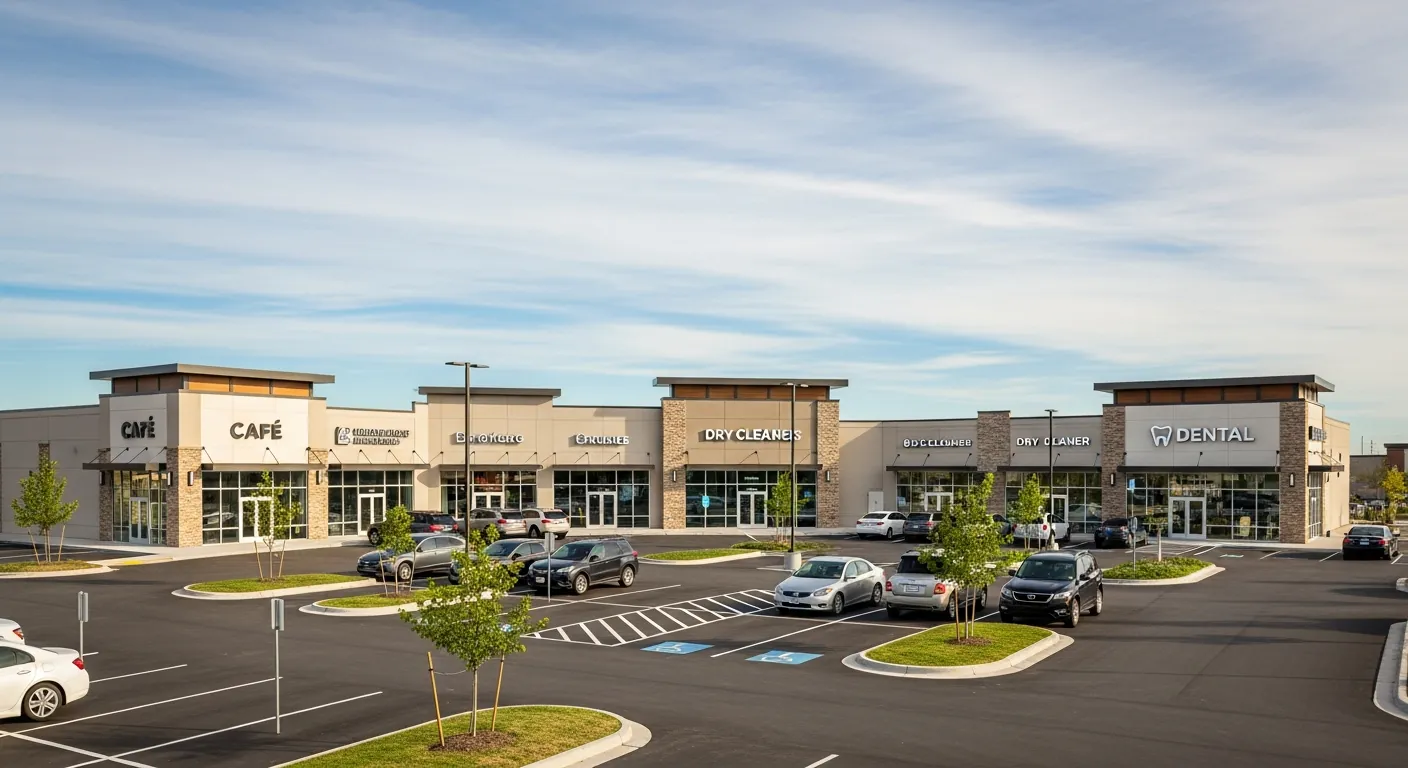
This is the flight-to-quality trade made manifest. When companies do bring employees back, they want the best space in the best location with the best amenities. Trophy Class A buildings with modern mechanical systems, flexible floor plates, and hospitality-grade lobbies are winning. Everything else is losing.
San Francisco is showing early signs of the same dynamic. After years as the poster child for office market distress, SF's best buildings are seeing leasing velocity improve as AI companies and tech firms that survived the downturn expand their footprints. The recovery is still early and concentrated in Class A, but the direction is encouraging.
NYC Midtown Class A Asking Rent ($/SF)
Class A asking rents in Midtown Manhattan have defied the broader office downturn, climbing to record highs as top-tier tenants compete for the best buildings.
What This Means for Investors
At F6 Partners, our core focus remains student and senior housing — asset classes where the demand drivers are demographic, not cyclical. But the office bifurcation creates adjacent opportunities we're watching closely.
The adaptive reuse pipeline is expanding toward 70,700 units nationally as owners of obsolete office buildings explore residential, life sciences, and mixed-use conversions. Cities are streamlining approvals. Tax incentives are proliferating. The buildings that can't compete as offices are finding second lives as housing — and that trend directly intersects with our conversion expertise.
The office market isn't dead. It's restructuring violently. The winners are Class A assets in gateway cities with diversified tenancy. The losers are commodity buildings in markets dependent on single demand drivers. Understanding that distinction is everything.
TL;DR
The Department of Government Efficiency (DOGE) has slashed thousands of federal jobs and broken hundreds of office leases across the country, with the Washington DC metro area absorbing the greatest impact. National office vacancy stands at 20.4% — the highest in the modern era. But here's the bifurcation story that matters: NYC Midtown has returned to pre-pandemic rent levels, San Francisco is showing genuine signs of turning around, and Class A assets are dramatically outperforming commodity office everywhere. The office market isn't dying — it's splitting into two completely different realities.
The DOGE Impact: DC Takes the Hit
Let me lay out the DOGE situation clearly because the headlines have been both alarmist and incomplete. The Department of Government Efficiency executed its mandate aggressively — cutting thousands of federal positions and terminating hundreds of office leases that had anchored the DC metro commercial real estate market for decades.
The impact on Washington DC has been severe and concentrated. Federal agencies historically occupied millions of square feet across Northern Virginia, suburban Maryland, and downtown DC. When those leases broke, the vacancy shock rippled through the entire metro area. Sublease availability spiked. Direct vacancy in some DC submarkets pushed well past 25%. Landlords who built portfolios around government tenancy found their cash flows impaired almost overnight — though DC's 20-year tax abatement for office-to-residential conversions is now turning some of that distress into development opportunity.
At F6 Partners, we've been warning our investors about government tenant concentration risk for years. The DOGE disruption validates a core principle of our investment philosophy: never build a thesis around a single demand driver, no matter how reliable it appears. Diversification of tenancy isn't just prudent — it's essential.
Office Construction Starts Index (2019=100)
New office construction starts have plummeted to a fraction of 2019 levels, as developers respond to record vacancy by pulling back dramatically from new projects.
Think you know the real numbers behind these deals?
5 questions · ~3 min
20.4% Vacancy: The National Context
The 20.4% national office vacancy is a real number — one that raises the question of whether office CRE has finally found its bottom — and it deserves serious attention. But context is everything. That figure includes everything from trophy towers in gateway cities to Class C suburban office parks in tertiary markets that were struggling before the pandemic ever hit.
The dispersion within the office sector is wider than in any other commercial real estate asset class. The top quartile of office buildings in top-tier markets is performing in an entirely different universe than the bottom quartile. Understanding that spread is the difference between a smart investment and a catastrophic one.
What's often missed in the vacancy discussion is the supply side. Office construction has collapsed — down 82% from Q1 2020 levels. Virtually no new competitive supply is entering the market. That kind of supply-side discipline historically precedes recovery, even in deeply challenged sectors.
U.S. National Office Vacancy Rate (%)
National office vacancy has climbed to record levels as remote work reshapes space demand, though Class A space in walkable urban cores continues to outperform.
NYC Midtown and the Flight to Quality
The counternarrative to the DOGE story is playing out in Manhattan. NYC Midtown asking rents for top-tier space have returned to pre-pandemic levels, driven by financial services firms competing aggressively for premium workplace environments. Goldman Sachs, JPMorgan, and other major employers enforced return-to-office mandates and concentrated their footprints in the best buildings.
This is the flight-to-quality trade made manifest. When companies do bring employees back, they want the best space in the best location with the best amenities. Trophy Class A buildings with modern mechanical systems, flexible floor plates, and hospitality-grade lobbies are winning. Everything else is losing.
San Francisco is showing early signs of the same dynamic. After years as the poster child for office market distress, SF's best buildings are seeing leasing velocity improve as AI companies and tech firms that survived the downturn expand their footprints. The recovery is still early and concentrated in Class A, but the direction is encouraging.
NYC Midtown Class A Asking Rent ($/SF)
Class A asking rents in Midtown Manhattan have defied the broader office downturn, climbing to record highs as top-tier tenants compete for the best buildings.
What This Means for Investors
At F6 Partners, our core focus remains student and senior housing — asset classes where the demand drivers are demographic, not cyclical. But the office bifurcation creates adjacent opportunities we're watching closely.
The adaptive reuse pipeline is expanding toward 70,700 units nationally as owners of obsolete office buildings explore residential, life sciences, and mixed-use conversions. Cities are streamlining approvals. Tax incentives are proliferating. The buildings that can't compete as offices are finding second lives as housing — and that trend directly intersects with our conversion expertise.
The office market isn't dead. It's restructuring violently. The winners are Class A assets in gateway cities with diversified tenancy. The losers are commodity buildings in markets dependent on single demand drivers. Understanding that distinction is everything.
Test Your Knowledge
How well do you know commercial real estate?

Andrew LeBaron