TL;DR
Nearly 50,000 job cuts have been publicly attributed to AI in 2025, and that's the conservative count based on announced layoffs explicitly citing automation and AI as drivers. Broader estimates range from 50,000 to 4 million jobs potentially displaced over the next 18 months. For commercial real estate, AI-driven job displacement poses risk for select office and retail segments while creating tailwinds for residential in markets with deep talent pools. Labor market reconcentration is expected to benefit gateway cities and tech hubs. And data centers are experiencing what industry reports call "voracious demand" that continues to outpace supply.
50,000 Is the Floor, Not the Ceiling
Let me be clear about what the 50,000 number represents and what it doesn't. That figure counts publicly announced layoffs where companies explicitly cited AI, automation, or artificial intelligence as a primary factor. It includes cuts at major tech companies, financial services firms, media organizations, and professional services companies.
The real number is almost certainly higher. Many companies are reducing headcount through attrition, hiring freezes, and contractor terminations that never appear in layoff announcements. When a company decides not to replace the 200 customer service representatives who quit this year because an AI chatbot handles those inquiries now, that's AI displacement that never gets counted.
The range of estimates — from 50,000 confirmed to 4 million projected — reflects genuine uncertainty about the pace and breadth of AI adoption across industries. At F6 Partners, we don't need to know the exact number to understand the direction. AI is reducing headcount in knowledge-work sectors, and that has direct implications for commercial real estate.
Cumulative AI-Attributed Job Cuts (Thousands)
AI-driven job displacement has accelerated sharply, reshaping workforce dynamics and creating ripple effects in office space demand and commercial real estate.
Think you know the facts behind the headlines?
5 questions · ~3 min
Risk for Office and Retail
The CRE impact of AI-driven job displacement concentrates in two sectors. First, office — because fewer knowledge workers means less demand for office space, compounding the 20% vacancy crisis already gripping the sector. The sectors most exposed are those where AI handles tasks that previously required human headcount: customer service, data entry, basic legal and accounting work, content generation, and routine coding.
The impact isn't uniform. Companies at the frontier of AI adoption are often simultaneously expanding their AI engineering and research teams, partially offsetting the headcount reductions in other departments. Net office demand in AI-forward companies may be roughly neutral. But companies in traditional industries that are adopting AI purely as a cost-cutting tool — banks, insurance companies, media conglomerates — are likely to reduce their office footprints permanently.
Second, retail faces indirect pressure as AI-displaced workers reduce their discretionary spending during transition periods. Any sustained increase in unemployment or underemployment in white-collar professions could soften retail demand in markets dependent on that spending.
Tailwind for Residential
Here's the counterintuitive CRE play that most analysts are underweighting: AI-driven labor market reconcentration is a potential tailwind for residential real estate in the right markets.
When AI displaces workers in distributed locations, many of those workers eventually reconcentrate in markets with the deepest talent pools and the most AI-related job opportunities. San Francisco, Austin, New York, Seattle, and Boston are the primary beneficiaries. Workers displaced from remote roles at companies in secondary markets often relocate to these hubs where the next generation of AI companies is hiring.

That reconcentration drives residential demand in gateway cities and tech hubs — exactly the markets where multifamily, student housing (feeding the talent pipeline), and senior housing (where AI is already reshaping assisted living operations) have the strongest fundamentals.
At F6 Partners, we view AI as a force that accelerates existing real estate trends rather than creating entirely new ones. Markets with deep talent pools, strong universities, and diversified economies — the same markets where student and senior housing are emerging as CRE powerhouses — will absorb AI disruption and come out stronger. Markets dependent on routine knowledge work without replacement industries will struggle.
Data Centers: Voracious Demand
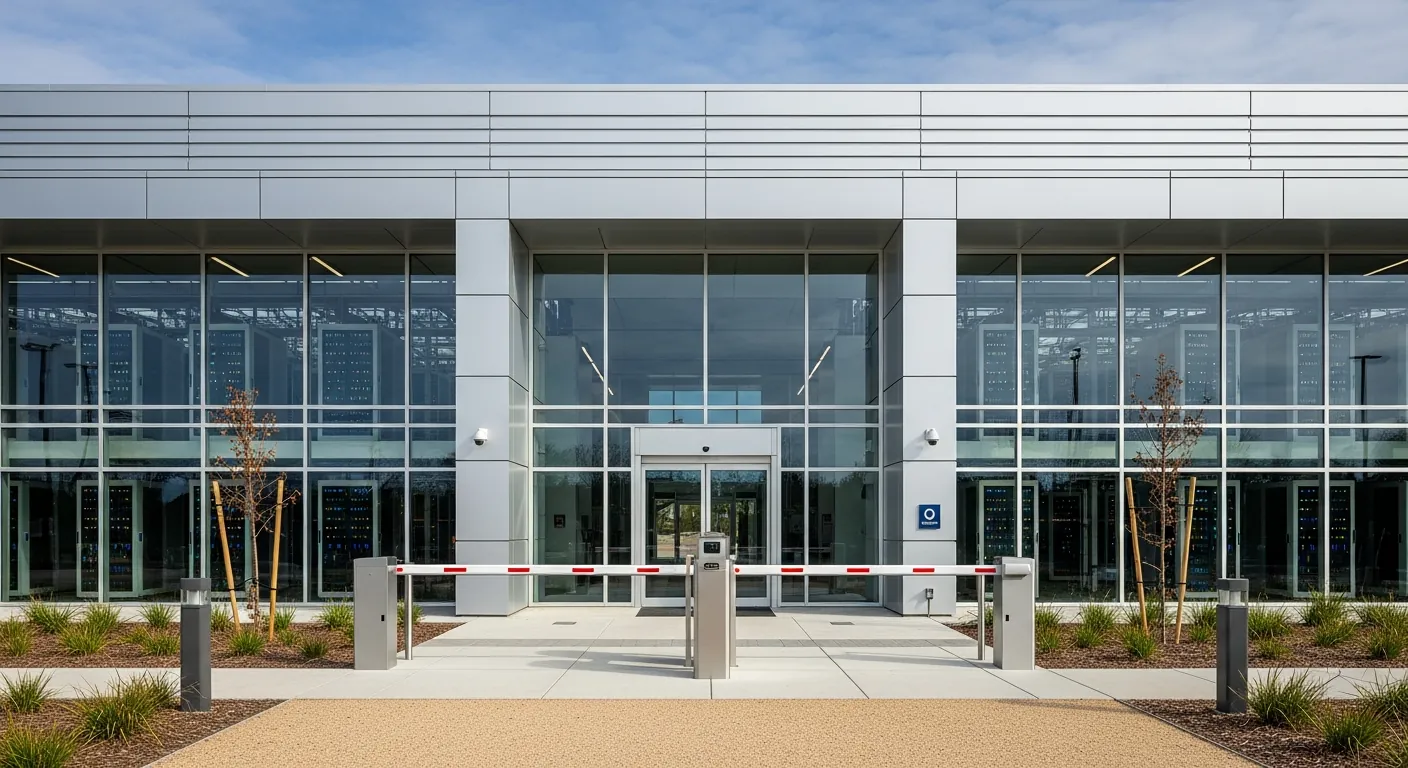
The most direct CRE beneficiary of AI is the data center sector. The compute infrastructure required to train and run large language models, image generators, and enterprise AI tools demands massive amounts of purpose-built real estate. Industry reports consistently describe demand as "voracious" and supply as insufficient.
Data center construction is booming, but the specialized nature of these facilities — massive power requirements, advanced cooling systems, fiber connectivity, and proximity to electrical substations — limits where they can be built and how quickly supply can respond. The mismatch between AI compute demand and available data center capacity is likely to persist for years.
While data centers aren't our core focus at F6 Partners, we recognize the indirect benefits. Markets that attract major data center campuses also attract the engineers, construction workers, and support staff who need housing — feeding demand in the residential sectors we target.
Data Center Demand Index (2019=100)
Data center demand has surged over 300% since 2019, fueled by AI workloads, cloud computing expansion, and the relentless digitization of the global economy.
TL;DR
Nearly 50,000 job cuts have been publicly attributed to AI in 2025, and that's the conservative count based on announced layoffs explicitly citing automation and AI as drivers. Broader estimates range from 50,000 to 4 million jobs potentially displaced over the next 18 months. For commercial real estate, AI-driven job displacement poses risk for select office and retail segments while creating tailwinds for residential in markets with deep talent pools. Labor market reconcentration is expected to benefit gateway cities and tech hubs. And data centers are experiencing what industry reports call "voracious demand" that continues to outpace supply.
50,000 Is the Floor, Not the Ceiling
Let me be clear about what the 50,000 number represents and what it doesn't. That figure counts publicly announced layoffs where companies explicitly cited AI, automation, or artificial intelligence as a primary factor. It includes cuts at major tech companies, financial services firms, media organizations, and professional services companies.
The real number is almost certainly higher. Many companies are reducing headcount through attrition, hiring freezes, and contractor terminations that never appear in layoff announcements. When a company decides not to replace the 200 customer service representatives who quit this year because an AI chatbot handles those inquiries now, that's AI displacement that never gets counted.
The range of estimates — from 50,000 confirmed to 4 million projected — reflects genuine uncertainty about the pace and breadth of AI adoption across industries. At F6 Partners, we don't need to know the exact number to understand the direction. AI is reducing headcount in knowledge-work sectors, and that has direct implications for commercial real estate.
Cumulative AI-Attributed Job Cuts (Thousands)
AI-driven job displacement has accelerated sharply, reshaping workforce dynamics and creating ripple effects in office space demand and commercial real estate.
Think you know the facts behind the headlines?
5 questions · ~3 min
Risk for Office and Retail
The CRE impact of AI-driven job displacement concentrates in two sectors. First, office — because fewer knowledge workers means less demand for office space, compounding the 20% vacancy crisis already gripping the sector. The sectors most exposed are those where AI handles tasks that previously required human headcount: customer service, data entry, basic legal and accounting work, content generation, and routine coding.
The impact isn't uniform. Companies at the frontier of AI adoption are often simultaneously expanding their AI engineering and research teams, partially offsetting the headcount reductions in other departments. Net office demand in AI-forward companies may be roughly neutral. But companies in traditional industries that are adopting AI purely as a cost-cutting tool — banks, insurance companies, media conglomerates — are likely to reduce their office footprints permanently.
Second, retail faces indirect pressure as AI-displaced workers reduce their discretionary spending during transition periods. Any sustained increase in unemployment or underemployment in white-collar professions could soften retail demand in markets dependent on that spending.
Tailwind for Residential
Here's the counterintuitive CRE play that most analysts are underweighting: AI-driven labor market reconcentration is a potential tailwind for residential real estate in the right markets.
When AI displaces workers in distributed locations, many of those workers eventually reconcentrate in markets with the deepest talent pools and the most AI-related job opportunities. San Francisco, Austin, New York, Seattle, and Boston are the primary beneficiaries. Workers displaced from remote roles at companies in secondary markets often relocate to these hubs where the next generation of AI companies is hiring.
That reconcentration drives residential demand in gateway cities and tech hubs — exactly the markets where multifamily, student housing (feeding the talent pipeline), and senior housing (where AI is already reshaping assisted living operations) have the strongest fundamentals.
At F6 Partners, we view AI as a force that accelerates existing real estate trends rather than creating entirely new ones. Markets with deep talent pools, strong universities, and diversified economies — the same markets where student and senior housing are emerging as CRE powerhouses — will absorb AI disruption and come out stronger. Markets dependent on routine knowledge work without replacement industries will struggle.
Data Centers: Voracious Demand
The most direct CRE beneficiary of AI is the data center sector. The compute infrastructure required to train and run large language models, image generators, and enterprise AI tools demands massive amounts of purpose-built real estate. Industry reports consistently describe demand as "voracious" and supply as insufficient.
Data center construction is booming, but the specialized nature of these facilities — massive power requirements, advanced cooling systems, fiber connectivity, and proximity to electrical substations — limits where they can be built and how quickly supply can respond. The mismatch between AI compute demand and available data center capacity is likely to persist for years.
While data centers aren't our core focus at F6 Partners, we recognize the indirect benefits. Markets that attract major data center campuses also attract the engineers, construction workers, and support staff who need housing — feeding demand in the residential sectors we target.
Data Center Demand Index (2019=100)
Data center demand has surged over 300% since 2019, fueled by AI workloads, cloud computing expansion, and the relentless digitization of the global economy.
Test Your Knowledge
How well do you know AI in real estate?

Andrew LeBaron