I remember the exact moment I realized I was chasing ghosts.
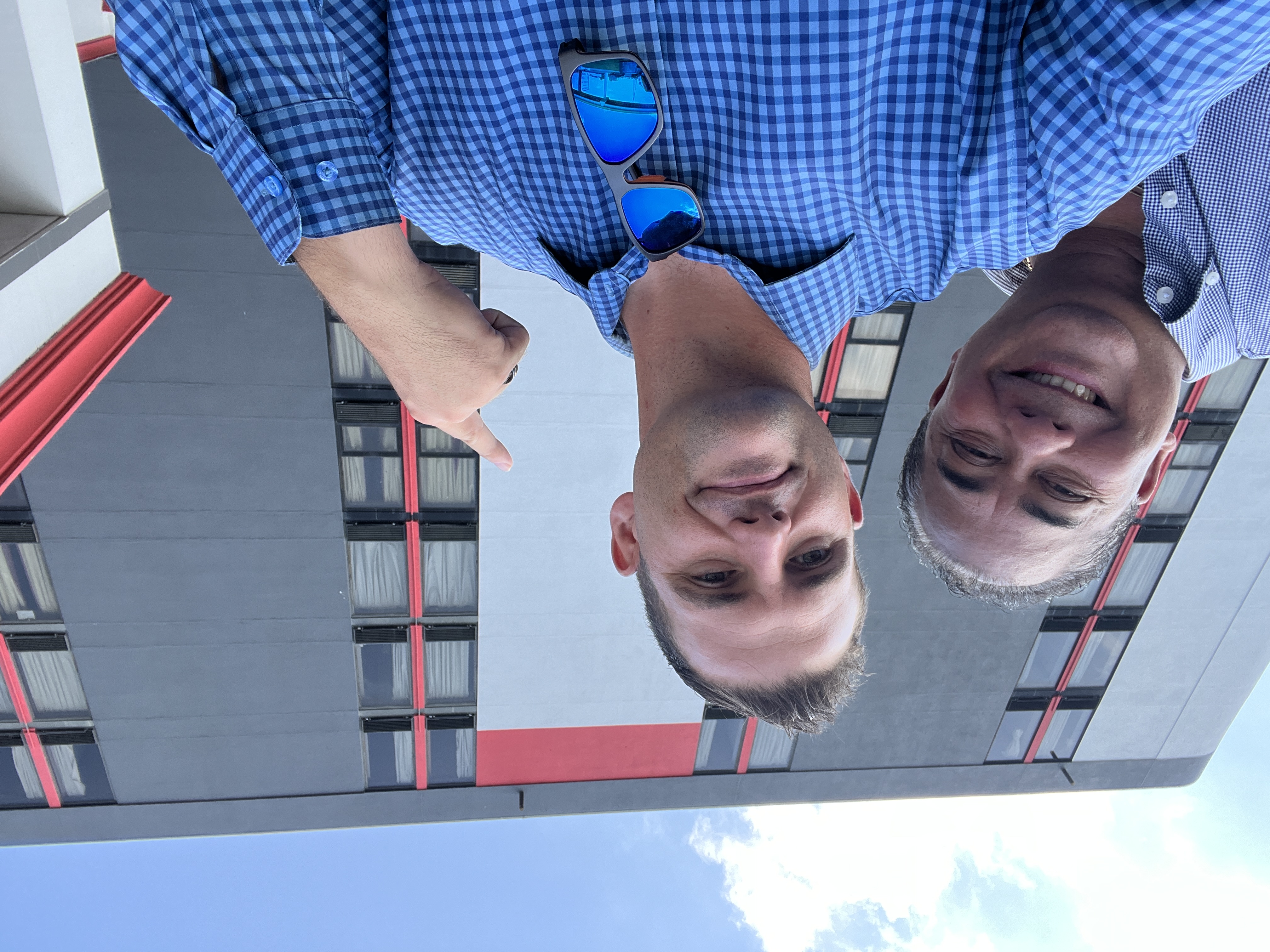
I was standing in the lobby of a former high-end hotel near the Galleria in Houston. You know the type — the kind of place where the air smells like expensive bergamot and the chandeliers cost more than my first car. For context, my first car was a jalapeño-green Hyundai Elantra that squealed like a stuck pig every time I turned left. It was technically worth $1,500, though the squeal suggested otherwise.
We were touring this Houston landmark because it was being converted into "luxury multifamily." On paper, it was the ultimate trophy: faux Italian marble, 12-foot ceilings, and a location so "prime" it felt like a sin to ever sell it. It was the kind of project you lead with in a pitch deck. It was the kind of project that makes you feel like a "real" developer.
But as I walked through the gut-renovation of the third floor, past the exposed piping and the ghost-white dust of demolished hotel suites, the "success" started to look like a liability. I didn't see a trophy.
I saw a ticking clock.

The $1.8 Trillion Monster Under the Bed
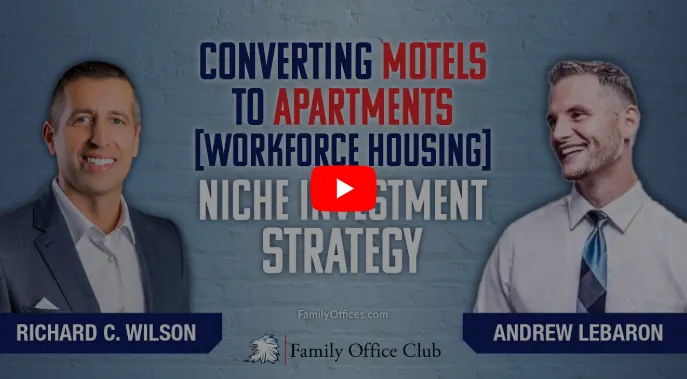
I'm old enough to remember when hotel conversions were the "no-brainer" investment thesis. I remember an interview with Richard Wilson, head of the Family Office Club, where the room was buzzing about this exact strategy. Back then, the math was almost too easy.
But we aren't in that world anymore.
According to the Mortgage Bankers Association (MBA), the commercial real estate industry is currently staring down a massive $1.8 trillion "Maturity Wall" hitting between 2025 and the end of 2026.
The Data: Estimates show $957 billion in maturities for 2025 and $875 billion for 2026. Many of these are loans that already used up their 1-year extensions from 2023. There is no more "extend and pretend" left.
Source: [MBA 2024 Commercial Real Estate/Multifamily Survey](https://www.mba.org/news-and-research/research-and-economics)
This Houston project I toured is a perfect microcosm of the danger. The developer showed me the upgrades with a sense of pride that, in retrospect, felt like a brave face on a sinking ship:
- Quartz countertops replacing old hotel desks.
- A luxury pet manicure and wash station (because apparently, in 2026, Fido needs a spa day).
- Massive floorplan rearrangements to accommodate ADA and multifamily requirements.
- High-end luxury vinyl plank flooring — the thick stuff that looks and feels like Teak.
- A "state-of-the-art" fitness center that used to be a conference ballroom.
It was beautiful. It was also a capital-intensive nightmare.
CRE Debt Maturities by Year ($B)
The 2025-2026 maturity wall represents the peak of CRE debt coming due. Many of these loans already used their 1-year extensions from 2023 — there is no more 'extend and pretend' left.
The "Free Money" Hangover
The problem is that most of these "trophy" conversions were underwritten when money was effectively free. For institutional capital tied to seasoned operators, the 2021 playbook was simple, elegant, and — in hindsight — dangerous:
The Buy: Snag a distressed hotel operator's nightmare in the thick of COVID at a 13% cap.
The Glow-Up: Spend millions on beautification and adaptation.
The Hike: Jack up the rents to "luxury" levels.
The Exit: Refinance at a 3% commercial mortgage rate with a new 9% cap valuation in year three. Wait another year or two for a 2-3X multiple and an arbitraged liquidity event.
The Result: Secure a 33% IRR and move on to the next trophy.
Yes... this was real life. It worked. Until it didn't.
Now, that same developer is staring at a 7% refinance rate. The math that made sense at 3% interest is a bloodbath at 7%. If they tried to repeat that same model today, the renovation costs alone ($15M+) would eat the entire profit margin before the first tenant even moved in.
Standing in that Galleria-lite lobby, surrounded by the smell of bergamot and the sound of hammers, I realized something: I've got to get over the "shiny" stuff.
Commercial Mortgage Refinance Rate Impact
Commercial mortgage rates have more than doubled since the 'free money' era of 2020-2021, fundamentally breaking the math on trophy conversion projects that were underwritten at 3%.
Falling in Love with the "Boring"
While the industry sweats over $100M hotel-to-multifamily conversions, I've been spending my time in much less glamorous places. I'm talking about scattered-site Student and Senior Housing and Build-to-Rent (BTR) communities.
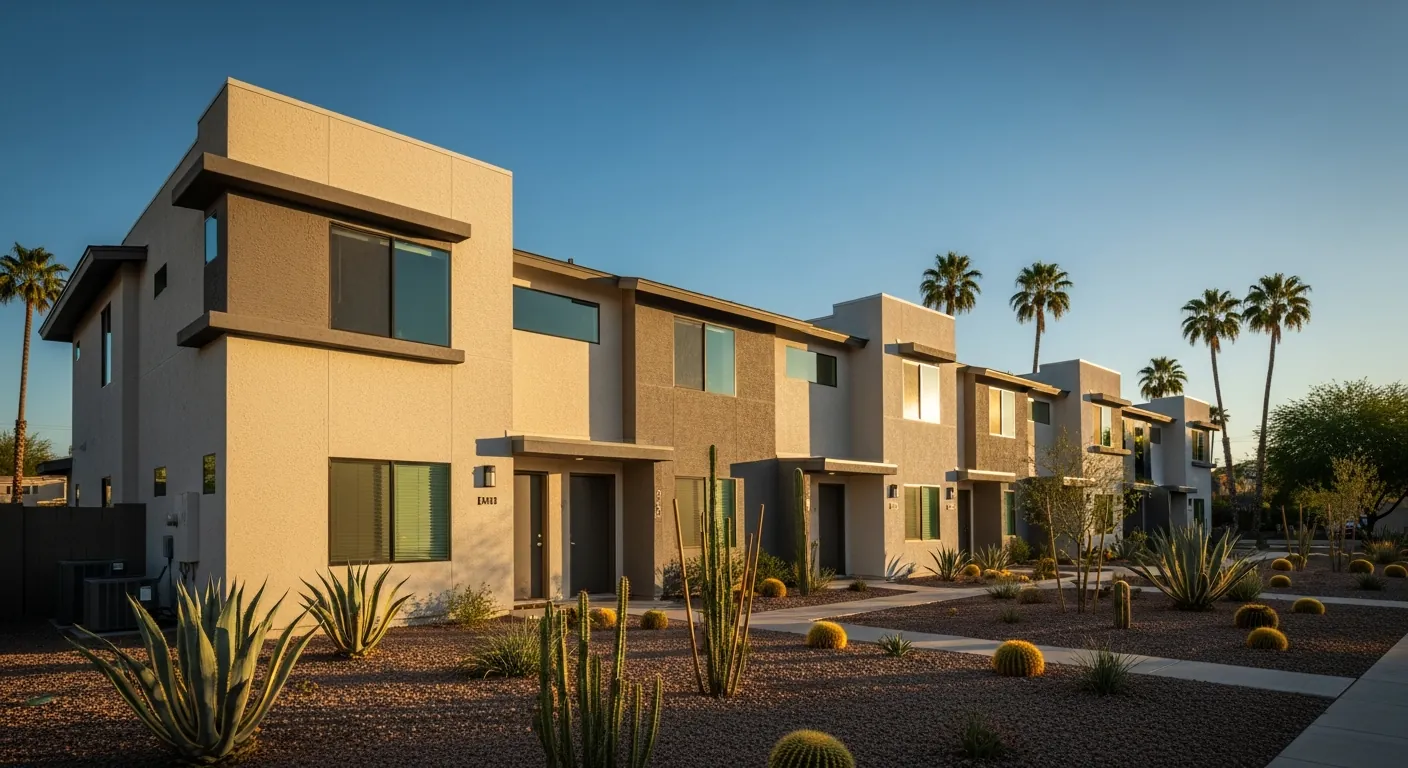
If you want to feel cool at a cocktail party, tell people you're converting a Houston landmark. But if you want to protect your investors' legacy and actually build wealth that survives a $1.8 trillion wall, you buy 50 duplexes within walking distance of Arizona State University at a 7% cap when the market is trading at 4.6-5.4%.
If you want to feel cool at a cocktail party, tell people you're converting a Houston landmark. But if you want to protect your investors' legacy and actually build wealth, you buy 50 duplexes near ASU at a 7% cap.
— Andrew LeBaron
It's Boring... but Beautiful.
These properties don't have marble. They don't have pet manicurists. But they are Class A in the ways that actually matter:
Functional Plumbing: No 50-year-old hotel pipes waiting to burst.
Durable Flooring: Designed for life, not for a brochure.
Essential Real Estate: This is the key. Students still need to live near campus. Families priced out of 7% mortgages still need a backyard for their dog.
When you invest in "Boring," you get multiple exit strategies and a much larger buyer pool. You aren't hunting for that one specific institutional buyer who needs a Galleria hotel conversion to round out their portfolio. You're holding assets that everyone wants — from local 1031-exchange investors to massive aggregators. And most importantly? It still offers a healthy profit margin.

Think you know the real numbers behind these deals?
5 questions · ~3 min
The Era of "Rescue Capital"
In a $1.8 trillion crisis, the most valuable person in the room isn't the guy who found the complicated project that draws eyes. It's the guy who can build the Rescue Capital bridge.
Traditional banks have retreated to their bunkers. They aren't lending on "vision" anymore; they are barely lending on "fact." This has created a massive opportunity for what I call "quasi-institutions": family offices, RIAs, and ultra-high-net-worth individuals (UHNWIs) who have the flexibility that the big banks lack.
We aren't looking for "deals" in the traditional sense. We are looking for structured solutions.
We provide the Preferred Equity that saves the asset. When a developer has a great building but a "broken" capital stack because of that maturity wall, we are the ones building the bridge over it. We are "solution-engineering" a new capital stack.
The 2026 Playbook: How to Survive the Wall
If you want to thrive in the next 24 months, you need to change your lens. Here is my personal 2026 Playbook:
1. Stop Chasing the Trophy
Glass towers and marble lobbies are for egos. Cash flow and upside equity are for legacies. If you can't explain the value of an asset without mentioning the "prestige" of the zip code, you're probably overpaying. Look for the assets that serve a fundamental human need.
2. Respect the Wall
If you don't know the debt maturity date of every asset in your orbit, you don't know the deal. Period. The winners of this cycle will be like Larry Fink — they will make a name for themselves through debt reform and debt modification with new equity players. You need to be a capital architect as much as a real estate operator.
3. Trust the "Boring"
If it's essential to daily life, it's usually worth a conversation. Senior housing isn't "sexy," but the silver tsunami is real. Student housing isn't "glamorous," but education is a non-negotiable for the middle class. BTR isn't "innovative," but families wanting a home without a 30-year shackle certainly is.
The iPhone Reality
I'm not a "suit" in a glass tower. I'm a guy with an iPhone, a capital structure that actually works, and the realization that the greatest opportunity of our lifetime is hidden in the stuff that most people walk past without a second glance.
I'm currently vetting opportunities in the tech-enabled, residential senior housing space. This is the frontier where "Boring" meets "Essential" meets "Scale." We are finding ways to use technology to drive better outcomes for seniors while maintaining the intimacy of residential-scale living. It's the ultimate "Boring but Beautiful" play.

Let's Have a Conversation
The $1.8 trillion wall is coming for everyone, but it doesn't have to be a disaster. For those of us willing to do the unglamorous work of "solution-engineering," it's a gold mine.
I want to know what you're seeing out there.
Are you an operator with a great asset but a maturing loan?
Are you a Family Office looking for a "Rescue Capital" bridge?
Are you just tired of the "shiny" stuff and ready to look at the math of the "boring"?
If you are interested in where these asset classes — Senior Housing, Student Housing, and BTR — are heading, let's talk.
Reply to this or reach out if you'd like to discuss what you are in need of in CRE, portfolio acquisitions, or liquidations. I've spent my career building a network of the "smartest quietest people" in the room, and I want to know who I can connect you with.
The ghosts of the "Trophy" era are fading. It's time to start building something real.
I remember the exact moment I realized I was chasing ghosts.
I was standing in the lobby of a former high-end hotel near the Galleria in Houston. You know the type — the kind of place where the air smells like expensive bergamot and the chandeliers cost more than my first car. For context, my first car was a jalapeño-green Hyundai Elantra that squealed like a stuck pig every time I turned left. It was technically worth $1,500, though the squeal suggested otherwise.
We were touring this Houston landmark because it was being converted into "luxury multifamily." On paper, it was the ultimate trophy: faux Italian marble, 12-foot ceilings, and a location so "prime" it felt like a sin to ever sell it. It was the kind of project you lead with in a pitch deck. It was the kind of project that makes you feel like a "real" developer.
But as I walked through the gut-renovation of the third floor, past the exposed piping and the ghost-white dust of demolished hotel suites, the "success" started to look like a liability. I didn't see a trophy.
I saw a ticking clock.
The $1.8 Trillion Monster Under the Bed
I'm old enough to remember when hotel conversions were the "no-brainer" investment thesis. I remember an interview with Richard Wilson, head of the Family Office Club, where the room was buzzing about this exact strategy. Back then, the math was almost too easy.
But we aren't in that world anymore.
According to the Mortgage Bankers Association (MBA), the commercial real estate industry is currently staring down a massive $1.8 trillion "Maturity Wall" hitting between 2025 and the end of 2026.
The Data: Estimates show $957 billion in maturities for 2025 and $875 billion for 2026. Many of these are loans that already used up their 1-year extensions from 2023. There is no more "extend and pretend" left.
Source: [MBA 2024 Commercial Real Estate/Multifamily Survey](https://www.mba.org/news-and-research/research-and-economics)
This Houston project I toured is a perfect microcosm of the danger. The developer showed me the upgrades with a sense of pride that, in retrospect, felt like a brave face on a sinking ship:
- Quartz countertops replacing old hotel desks.
- A luxury pet manicure and wash station (because apparently, in 2026, Fido needs a spa day).
- Massive floorplan rearrangements to accommodate ADA and multifamily requirements.
- High-end luxury vinyl plank flooring — the thick stuff that looks and feels like Teak.
- A "state-of-the-art" fitness center that used to be a conference ballroom.
It was beautiful. It was also a capital-intensive nightmare.
CRE Debt Maturities by Year ($B)
The 2025-2026 maturity wall represents the peak of CRE debt coming due. Many of these loans already used their 1-year extensions from 2023 — there is no more 'extend and pretend' left.
The "Free Money" Hangover
The problem is that most of these "trophy" conversions were underwritten when money was effectively free. For institutional capital tied to seasoned operators, the 2021 playbook was simple, elegant, and — in hindsight — dangerous:
The Buy: Snag a distressed hotel operator's nightmare in the thick of COVID at a 13% cap.
The Glow-Up: Spend millions on beautification and adaptation.
The Hike: Jack up the rents to "luxury" levels.
The Exit: Refinance at a 3% commercial mortgage rate with a new 9% cap valuation in year three. Wait another year or two for a 2-3X multiple and an arbitraged liquidity event.
The Result: Secure a 33% IRR and move on to the next trophy.
Yes... this was real life. It worked. Until it didn't.
Now, that same developer is staring at a 7% refinance rate. The math that made sense at 3% interest is a bloodbath at 7%. If they tried to repeat that same model today, the renovation costs alone ($15M+) would eat the entire profit margin before the first tenant even moved in.
Standing in that Galleria-lite lobby, surrounded by the smell of bergamot and the sound of hammers, I realized something: I've got to get over the "shiny" stuff.
Commercial Mortgage Refinance Rate Impact
Commercial mortgage rates have more than doubled since the 'free money' era of 2020-2021, fundamentally breaking the math on trophy conversion projects that were underwritten at 3%.
Falling in Love with the "Boring"
While the industry sweats over $100M hotel-to-multifamily conversions, I've been spending my time in much less glamorous places. I'm talking about scattered-site Student and Senior Housing and Build-to-Rent (BTR) communities.
If you want to feel cool at a cocktail party, tell people you're converting a Houston landmark. But if you want to protect your investors' legacy and actually build wealth that survives a $1.8 trillion wall, you buy 50 duplexes within walking distance of Arizona State University at a 7% cap when the market is trading at 4.6-5.4%.
If you want to feel cool at a cocktail party, tell people you're converting a Houston landmark. But if you want to protect your investors' legacy and actually build wealth, you buy 50 duplexes near ASU at a 7% cap.
— Andrew LeBaron
It's Boring... but Beautiful.
These properties don't have marble. They don't have pet manicurists. But they are Class A in the ways that actually matter:
Functional Plumbing: No 50-year-old hotel pipes waiting to burst.
Durable Flooring: Designed for life, not for a brochure.
Essential Real Estate: This is the key. Students still need to live near campus. Families priced out of 7% mortgages still need a backyard for their dog.
When you invest in "Boring," you get multiple exit strategies and a much larger buyer pool. You aren't hunting for that one specific institutional buyer who needs a Galleria hotel conversion to round out their portfolio. You're holding assets that everyone wants — from local 1031-exchange investors to massive aggregators. And most importantly? It still offers a healthy profit margin.
Think you know the real numbers behind these deals?
5 questions · ~3 min
The Era of "Rescue Capital"
In a $1.8 trillion crisis, the most valuable person in the room isn't the guy who found the complicated project that draws eyes. It's the guy who can build the Rescue Capital bridge.
Traditional banks have retreated to their bunkers. They aren't lending on "vision" anymore; they are barely lending on "fact." This has created a massive opportunity for what I call "quasi-institutions": family offices, RIAs, and ultra-high-net-worth individuals (UHNWIs) who have the flexibility that the big banks lack.
We aren't looking for "deals" in the traditional sense. We are looking for structured solutions.
We provide the Preferred Equity that saves the asset. When a developer has a great building but a "broken" capital stack because of that maturity wall, we are the ones building the bridge over it. We are "solution-engineering" a new capital stack.
The 2026 Playbook: How to Survive the Wall
If you want to thrive in the next 24 months, you need to change your lens. Here is my personal 2026 Playbook:
1. Stop Chasing the Trophy
Glass towers and marble lobbies are for egos. Cash flow and upside equity are for legacies. If you can't explain the value of an asset without mentioning the "prestige" of the zip code, you're probably overpaying. Look for the assets that serve a fundamental human need.
2. Respect the Wall
If you don't know the debt maturity date of every asset in your orbit, you don't know the deal. Period. The winners of this cycle will be like Larry Fink — they will make a name for themselves through debt reform and debt modification with new equity players. You need to be a capital architect as much as a real estate operator.
3. Trust the "Boring"
If it's essential to daily life, it's usually worth a conversation. Senior housing isn't "sexy," but the silver tsunami is real. Student housing isn't "glamorous," but education is a non-negotiable for the middle class. BTR isn't "innovative," but families wanting a home without a 30-year shackle certainly is.
The iPhone Reality
I'm not a "suit" in a glass tower. I'm a guy with an iPhone, a capital structure that actually works, and the realization that the greatest opportunity of our lifetime is hidden in the stuff that most people walk past without a second glance.
I'm currently vetting opportunities in the tech-enabled, residential senior housing space. This is the frontier where "Boring" meets "Essential" meets "Scale." We are finding ways to use technology to drive better outcomes for seniors while maintaining the intimacy of residential-scale living. It's the ultimate "Boring but Beautiful" play.
Let's Have a Conversation
The $1.8 trillion wall is coming for everyone, but it doesn't have to be a disaster. For those of us willing to do the unglamorous work of "solution-engineering," it's a gold mine.
I want to know what you're seeing out there.
Are you an operator with a great asset but a maturing loan?
Are you a Family Office looking for a "Rescue Capital" bridge?
Are you just tired of the "shiny" stuff and ready to look at the math of the "boring"?
If you are interested in where these asset classes — Senior Housing, Student Housing, and BTR — are heading, let's talk.
Reply to this or reach out if you'd like to discuss what you are in need of in CRE, portfolio acquisitions, or liquidations. I've spent my career building a network of the "smartest quietest people" in the room, and I want to know who I can connect you with.
The ghosts of the "Trophy" era are fading. It's time to start building something real.
Test Your Knowledge
How well do you know commercial real estate?

Andrew LeBaron