TL;DR
Class B student housing value-add renovations are driving 15-25% rent increases post-renovation, creating one of the most compelling risk-adjusted return profiles in commercial real estate. The average price per bed has dropped to $98K from $107K in 2024, improving acquisition economics. In the first nine months of 2025, 76 properties traded for $3.7 billion, and properties within 0.5 miles of campus command a 33% valuation premium. The value-add playbook is straightforward — find the diamonds, renovate smart, and let the demand do the rest.
Finding the Diamonds
Not every Class B student housing property is a value-add opportunity. The key is knowing where to look and what separates a diamond in the rough from a money pit.
The ideal value-add target is a 15-25 year old purpose-built student housing property near a Tier 1 university with growing enrollment. The property has functional bones — good location, adequate unit count, solid structural systems — but dated finishes, minimal amenities, and often below-market management. (Don't overlook scattered-site duplexes near campus either — the cap rates are significantly wider than purpose-built.)
At F6 Partners, we evaluate three critical factors before pursuing any student housing value-add opportunity:
- Enrollment trajectory. Is the university growing? Are applications increasing? We want markets where student demand is expanding, not contracting.
- Supply pipeline. What's being built nearby? A market with limited new supply gives renovated Class B properties the best chance to capture rent growth.
- Basis relative to replacement cost. At $98K per bed on average, we're acquiring at a significant discount to the $150K+ per bed cost of new construction. That spread is our margin of safety.
The drop in average price per bed from $107K in 2024 to $98K in 2025 reflects motivated sellers — many of whom are facing loan maturities and need to transact. Their urgency is our opportunity.
Average Student Housing Price per Bed (2019–2026)
Student housing prices per bed have climbed steadily, reflecting strong investor demand for a sector with uniquely reliable pre-lease rates and enrollment-driven demand.
Think you know the facts behind the headlines?
5 questions · ~3 min
The Renovation Math
Here's where the value-add thesis gets exciting. A well-executed renovation program at a Class B student housing property typically costs $8,000-$15,000 per bed and drives rent increases of 15-25%.
Let me put that in concrete terms. Take a 200-bed property acquired at $98K per bed — that's a $19.6 million acquisition. A renovation budget of $10,000 per bed adds $2 million in capital expenditure, bringing total basis to $21.6 million.
If pre-renovation rents are $800 per bed per month and you achieve a 20% increase post-renovation, you're at $960 per bed per month. That $160 per bed increase across 200 beds generates $384,000 in additional annual revenue. At a 5.5% cap rate, that revenue increase creates approximately $7 million in value — on a $2 million investment.
That's the power of the value-add model: modest capital investment generating outsized value creation, supported by genuine demand from students who want quality housing near campus.
Student Housing Effective Rent Growth YoY (2019–2026)
Student housing rents have grown faster than conventional apartments in recent years, benefiting from captive demand and limited new supply near top universities.
Location Location Location
The data on location premiums in student housing is clear and consistent. Properties within 0.5 miles of campus command a 33% valuation premium over comparable properties farther away. This isn't surprising — students want to walk to class, and parents want their children in safe, convenient locations.
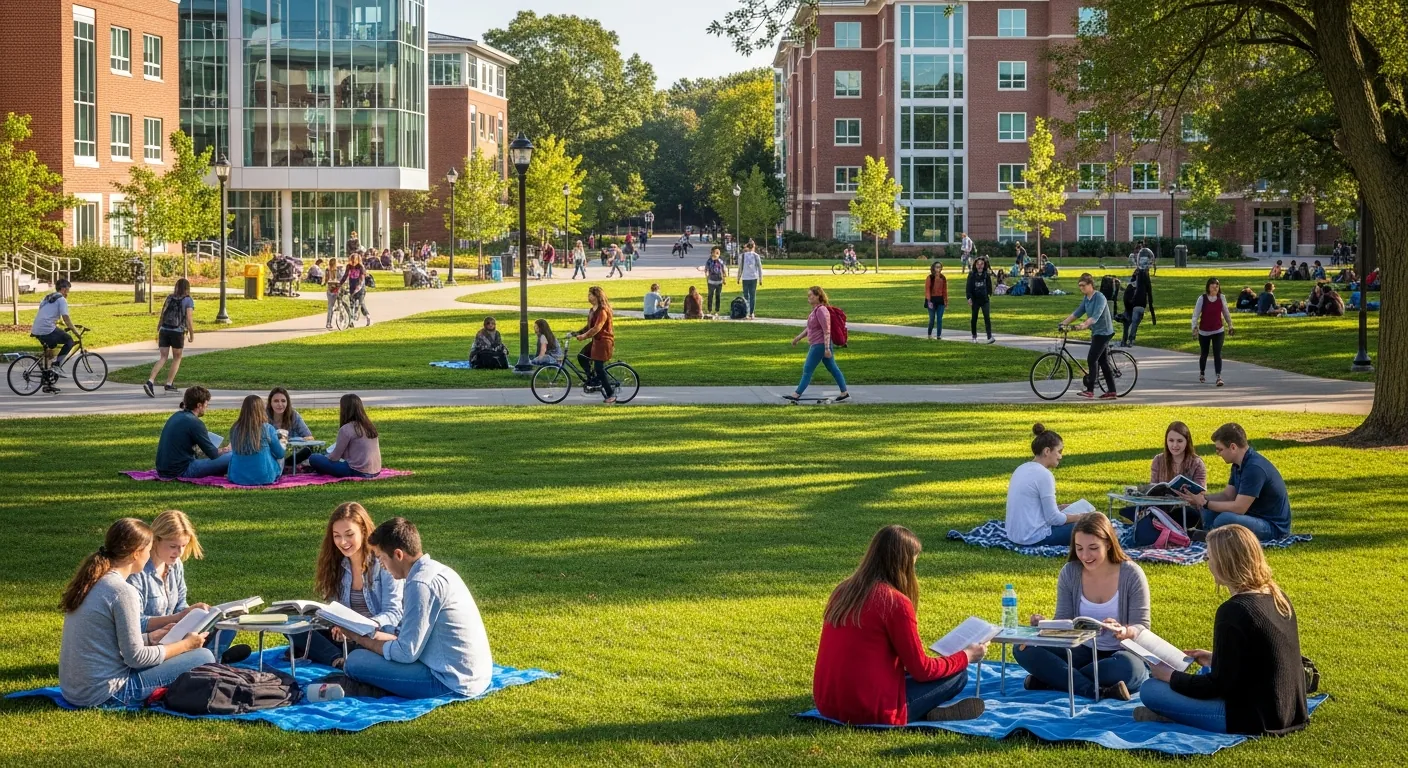
This proximity premium has important implications for the value-add strategy. A renovated property within walking distance of a major university can effectively compete with newer Class A developments that may be located farther from campus. Students will choose a well-renovated, conveniently located property over a brand-new building that requires a bus ride.
In the 76 transactions totaling $3.7 billion that have occurred in the first nine months of 2025, the highest per-bed prices have consistently been achieved by properties closest to campus. Location is the one attribute that can't be renovated or replicated, and it's the most reliable predictor of long-term value in student housing.

Student Housing Transaction Volume ($B, 2019–2026)
Student housing transaction volume has stabilized at healthy levels as institutional investors increasingly recognize the sector's defensive characteristics and reliable cash flows.
Our Investment Thesis
At F6 Partners, student housing value-add is central to our investment strategy for a simple reason: it works. The combination of declining acquisition costs, proven renovation economics, and structural demand from growing universities where pre-leasing hits record velocity creates a repeatable, scalable investment model.
I'll share something personal here. My faith teaches me that stewardship matters — that how we manage what we're given is just as important as what we acquire. In student housing, stewardship means providing clean, safe, well-maintained homes for young people pursuing their education. It means being a responsible operator in university communities. And it means delivering strong returns to our investors by executing a disciplined, data-driven strategy.
The student housing value-add playbook isn't complicated, but it requires discipline, market knowledge, and operational excellence. Those are qualities we pride ourselves on at F6 Partners, and they're exactly what this market rewards.
TL;DR
Class B student housing value-add renovations are driving 15-25% rent increases post-renovation, creating one of the most compelling risk-adjusted return profiles in commercial real estate. The average price per bed has dropped to $98K from $107K in 2024, improving acquisition economics. In the first nine months of 2025, 76 properties traded for $3.7 billion, and properties within 0.5 miles of campus command a 33% valuation premium. The value-add playbook is straightforward — find the diamonds, renovate smart, and let the demand do the rest.
Finding the Diamonds
Not every Class B student housing property is a value-add opportunity. The key is knowing where to look and what separates a diamond in the rough from a money pit.
The ideal value-add target is a 15-25 year old purpose-built student housing property near a Tier 1 university with growing enrollment. The property has functional bones — good location, adequate unit count, solid structural systems — but dated finishes, minimal amenities, and often below-market management. (Don't overlook scattered-site duplexes near campus either — the cap rates are significantly wider than purpose-built.)
At F6 Partners, we evaluate three critical factors before pursuing any student housing value-add opportunity:
- Enrollment trajectory. Is the university growing? Are applications increasing? We want markets where student demand is expanding, not contracting.
- Supply pipeline. What's being built nearby? A market with limited new supply gives renovated Class B properties the best chance to capture rent growth.
- Basis relative to replacement cost. At $98K per bed on average, we're acquiring at a significant discount to the $150K+ per bed cost of new construction. That spread is our margin of safety.
The drop in average price per bed from $107K in 2024 to $98K in 2025 reflects motivated sellers — many of whom are facing loan maturities and need to transact. Their urgency is our opportunity.
Average Student Housing Price per Bed (2019–2026)
Student housing prices per bed have climbed steadily, reflecting strong investor demand for a sector with uniquely reliable pre-lease rates and enrollment-driven demand.
Think you know the facts behind the headlines?
5 questions · ~3 min
The Renovation Math
Here's where the value-add thesis gets exciting. A well-executed renovation program at a Class B student housing property typically costs $8,000-$15,000 per bed and drives rent increases of 15-25%.
Let me put that in concrete terms. Take a 200-bed property acquired at $98K per bed — that's a $19.6 million acquisition. A renovation budget of $10,000 per bed adds $2 million in capital expenditure, bringing total basis to $21.6 million.
If pre-renovation rents are $800 per bed per month and you achieve a 20% increase post-renovation, you're at $960 per bed per month. That $160 per bed increase across 200 beds generates $384,000 in additional annual revenue. At a 5.5% cap rate, that revenue increase creates approximately $7 million in value — on a $2 million investment.
That's the power of the value-add model: modest capital investment generating outsized value creation, supported by genuine demand from students who want quality housing near campus.
Student Housing Effective Rent Growth YoY (2019–2026)
Student housing rents have grown faster than conventional apartments in recent years, benefiting from captive demand and limited new supply near top universities.
Location Location Location
The data on location premiums in student housing is clear and consistent. Properties within 0.5 miles of campus command a 33% valuation premium over comparable properties farther away. This isn't surprising — students want to walk to class, and parents want their children in safe, convenient locations.
This proximity premium has important implications for the value-add strategy. A renovated property within walking distance of a major university can effectively compete with newer Class A developments that may be located farther from campus. Students will choose a well-renovated, conveniently located property over a brand-new building that requires a bus ride.
In the 76 transactions totaling $3.7 billion that have occurred in the first nine months of 2025, the highest per-bed prices have consistently been achieved by properties closest to campus. Location is the one attribute that can't be renovated or replicated, and it's the most reliable predictor of long-term value in student housing.
Student Housing Transaction Volume ($B, 2019–2026)
Student housing transaction volume has stabilized at healthy levels as institutional investors increasingly recognize the sector's defensive characteristics and reliable cash flows.
Our Investment Thesis
At F6 Partners, student housing value-add is central to our investment strategy for a simple reason: it works. The combination of declining acquisition costs, proven renovation economics, and structural demand from growing universities where pre-leasing hits record velocity creates a repeatable, scalable investment model.
I'll share something personal here. My faith teaches me that stewardship matters — that how we manage what we're given is just as important as what we acquire. In student housing, stewardship means providing clean, safe, well-maintained homes for young people pursuing their education. It means being a responsible operator in university communities. And it means delivering strong returns to our investors by executing a disciplined, data-driven strategy.
The student housing value-add playbook isn't complicated, but it requires discipline, market knowledge, and operational excellence. Those are qualities we pride ourselves on at F6 Partners, and they're exactly what this market rewards.
Test Your Knowledge
How well do you know student housing markets?

Andrew LeBaron