TL;DR
Yardi Matrix reports September 2025 student housing occupancy at 95.1% — the second-highest reading since 2019 and a 150 basis point improvement from 93.6% in 2024. Cushman & Wakefield's broader dataset shows 91.6% nationally. Only 73 schools recorded lower year-over-year occupancy. Cap rates remain stable in the 5.25-5.75% range, reflecting institutional confidence in the sector's durability. And the valuation story is equally compelling: price per bed has reached $102,157, up 41.5% since 2019. Student housing isn't just performing well — it's proving structurally recession-proof.
95.1% Is Not a Fluke
Let me put the 95.1% number in the context it deserves. This isn't a one-quarter anomaly driven by temporary factors. It's the culmination of structural trends that have been building for years: growing enrollment at Tier 1 universities, constrained supply pipelines, increasing preference for purpose-built housing over off-campus alternatives, and international student populations recovering to pre-pandemic levels.
The jump from 93.6% in 2024 to 95.1% in 2025 — a 150 basis point improvement — is extraordinary in an asset class where occupancy tends to move in increments of 20-30 basis points per year. Something accelerated in 2025, and our analysis at F6 Partners points to the supply side as the primary catalyst. With only 27,000 new beds delivered nationally (down from 35,000 in 2024), existing properties absorbed demand that had nowhere else to go.
Student Housing Occupancy Through Cycles (2019–2026)
Student housing occupancy has proven remarkably resilient through economic cycles, barely dipping during the pandemic — a testament to the sector's defensive demand characteristics.
Think you know the facts behind the headlines?
5 questions · ~3 min
The 73-School Reality Check
I want to address the 73 schools that recorded lower occupancy because transparency matters more than headline cheerleading. These underperforming markets share common characteristics that every student housing investor should understand.
Schools with declining occupancy tend to have smaller enrollment bases (under 10,000 students), regional rather than national student draw, and in some cases new on-campus housing that competes directly with purpose-built properties. Several also experienced enrollment pressures from demographic shifts affecting their feeder populations.
This is why at F6 Partners we've always emphasized market selection over sector selection. Being "in student housing" is meaningless if you're in the wrong markets. Our focus on Tier 1 universities with enrollment exceeding 20,000 students, robust research funding, and structural student-to-bed ratios has kept our portfolio performance well above the national averages. For investors interested in complementary approaches, we've outlined our thesis on building a residential portfolio from scratch in a recent issue.

$102,157 Per Bed: The Institutional Validation
The price-per-bed metric tells the institutional story. At $102,157 — up 41.5% since 2019 — purpose-built student housing has unequivocally transitioned from a niche play to an institutional-grade asset class. Pension funds, sovereign wealth funds, and major REITs are competing for quality portfolios, and the pricing reflects that demand.
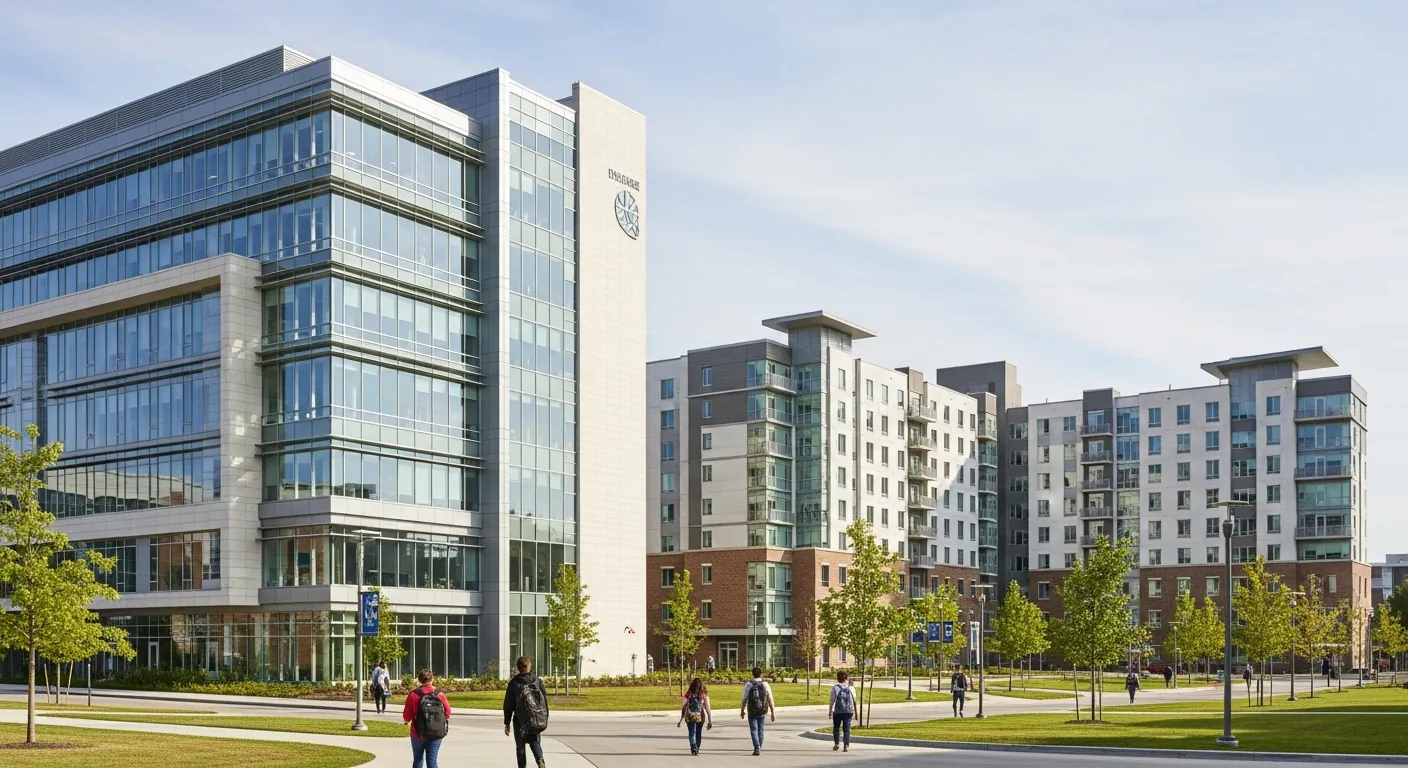
The 41.5% appreciation since 2019 occurred despite — or perhaps because of — the interest rate volatility that suppressed values across most other CRE sectors. Student housing valuations proved more resilient than office, retail, and even conventional multifamily because the occupancy and rent fundamentals never deteriorated to the degree those sectors experienced.
Cap rates remaining stable at 5.25-5.75% in this interest rate environment is another validation signal. Investors aren't demanding the risk premiums they're applying to office (7-9%+) or even conventional multifamily (5.0-5.5%). They're pricing student housing as a low-risk, demographically-supported asset class — and they're right.
Student Housing Price Per Bed (2019–2026)
Student housing prices per bed have risen consistently, reflecting institutional appetite for a sector with uniquely reliable occupancy and enrollment-driven demand.
Recession-Proof Is Not Hyperbole
I don't use the term "recession-proof" lightly, but the data supports it for student housing in a way that few other asset classes can claim. University enrollment historically increases during economic downturns as displaced workers return to school to improve their credentials. The counter-cyclical enrollment pattern creates a natural occupancy floor that other CRE sectors simply don't have.
The 2020-2025 period tested this thesis as severely as any period in modern history — a global pandemic, the fastest rate-hiking cycle in 40 years, elevated inflation, and labor market disruption. Student housing occupancy never dropped below 93% nationally through all of it. For institutional-quality assets near top-tier universities, the floor was even higher.
At F6 Partners, we've built our student housing thesis on this fundamental durability. The 95.1% occupancy, $102,157 per bed, and stable cap rates aren't just good numbers — they're proof that demographic demand creates investment opportunities that transcend economic cycles. For investors evaluating fund structures versus syndications for capital deployment, student housing's recession-proof characteristics make it an ideal anchor asset class for either vehicle.
Student Housing vs Office Cap Rates (2019–2026)
Student housing cap rates have compressed below office, reflecting investors' growing preference for sectors with stronger demand fundamentals and reliable cash flows.
TL;DR
Yardi Matrix reports September 2025 student housing occupancy at 95.1% — the second-highest reading since 2019 and a 150 basis point improvement from 93.6% in 2024. Cushman & Wakefield's broader dataset shows 91.6% nationally. Only 73 schools recorded lower year-over-year occupancy. Cap rates remain stable in the 5.25-5.75% range, reflecting institutional confidence in the sector's durability. And the valuation story is equally compelling: price per bed has reached $102,157, up 41.5% since 2019. Student housing isn't just performing well — it's proving structurally recession-proof.
95.1% Is Not a Fluke
Let me put the 95.1% number in the context it deserves. This isn't a one-quarter anomaly driven by temporary factors. It's the culmination of structural trends that have been building for years: growing enrollment at Tier 1 universities, constrained supply pipelines, increasing preference for purpose-built housing over off-campus alternatives, and international student populations recovering to pre-pandemic levels.
The jump from 93.6% in 2024 to 95.1% in 2025 — a 150 basis point improvement — is extraordinary in an asset class where occupancy tends to move in increments of 20-30 basis points per year. Something accelerated in 2025, and our analysis at F6 Partners points to the supply side as the primary catalyst. With only 27,000 new beds delivered nationally (down from 35,000 in 2024), existing properties absorbed demand that had nowhere else to go.
Student Housing Occupancy Through Cycles (2019–2026)
Student housing occupancy has proven remarkably resilient through economic cycles, barely dipping during the pandemic — a testament to the sector's defensive demand characteristics.
Think you know the facts behind the headlines?
5 questions · ~3 min
The 73-School Reality Check
I want to address the 73 schools that recorded lower occupancy because transparency matters more than headline cheerleading. These underperforming markets share common characteristics that every student housing investor should understand.
Schools with declining occupancy tend to have smaller enrollment bases (under 10,000 students), regional rather than national student draw, and in some cases new on-campus housing that competes directly with purpose-built properties. Several also experienced enrollment pressures from demographic shifts affecting their feeder populations.
This is why at F6 Partners we've always emphasized market selection over sector selection. Being "in student housing" is meaningless if you're in the wrong markets. Our focus on Tier 1 universities with enrollment exceeding 20,000 students, robust research funding, and structural student-to-bed ratios has kept our portfolio performance well above the national averages. For investors interested in complementary approaches, we've outlined our thesis on building a residential portfolio from scratch in a recent issue.
$102,157 Per Bed: The Institutional Validation
The price-per-bed metric tells the institutional story. At $102,157 — up 41.5% since 2019 — purpose-built student housing has unequivocally transitioned from a niche play to an institutional-grade asset class. Pension funds, sovereign wealth funds, and major REITs are competing for quality portfolios, and the pricing reflects that demand.
The 41.5% appreciation since 2019 occurred despite — or perhaps because of — the interest rate volatility that suppressed values across most other CRE sectors. Student housing valuations proved more resilient than office, retail, and even conventional multifamily because the occupancy and rent fundamentals never deteriorated to the degree those sectors experienced.
Cap rates remaining stable at 5.25-5.75% in this interest rate environment is another validation signal. Investors aren't demanding the risk premiums they're applying to office (7-9%+) or even conventional multifamily (5.0-5.5%). They're pricing student housing as a low-risk, demographically-supported asset class — and they're right.
Student Housing Price Per Bed (2019–2026)
Student housing prices per bed have risen consistently, reflecting institutional appetite for a sector with uniquely reliable occupancy and enrollment-driven demand.
Recession-Proof Is Not Hyperbole
I don't use the term "recession-proof" lightly, but the data supports it for student housing in a way that few other asset classes can claim. University enrollment historically increases during economic downturns as displaced workers return to school to improve their credentials. The counter-cyclical enrollment pattern creates a natural occupancy floor that other CRE sectors simply don't have.
The 2020-2025 period tested this thesis as severely as any period in modern history — a global pandemic, the fastest rate-hiking cycle in 40 years, elevated inflation, and labor market disruption. Student housing occupancy never dropped below 93% nationally through all of it. For institutional-quality assets near top-tier universities, the floor was even higher.
At F6 Partners, we've built our student housing thesis on this fundamental durability. The 95.1% occupancy, $102,157 per bed, and stable cap rates aren't just good numbers — they're proof that demographic demand creates investment opportunities that transcend economic cycles. For investors evaluating fund structures versus syndications for capital deployment, student housing's recession-proof characteristics make it an ideal anchor asset class for either vehicle.
Student Housing vs Office Cap Rates (2019–2026)
Student housing cap rates have compressed below office, reflecting investors' growing preference for sectors with stronger demand fundamentals and reliable cash flows.
Test Your Knowledge
How well do you know student housing markets?

Andrew LeBaron