TL;DR
The One Big Beautiful Bill Act (OBBBA) was signed into law in July 2025, extending Low-Income Housing Tax Credit (LIHTC) allocations and delivering the most significant federal boost to affordable housing investment in years. This legislation, combined with aggressive local incentives — NYC's 467-m tax exemption, DC's 20-year tax abatements, Denver's $56 million in gap financing, and Seattle's sales and use tax deferral — creates a layered incentive structure that meaningfully improves project economics for affordable and workforce housing developers.
The Federal Catalyst
Let me start with why the OBBBA matters so much. The Low-Income Housing Tax Credit has been the primary financing mechanism for affordable housing in America since 1986. It's responsible for creating approximately 3.6 million affordable housing units across the country. But LIHTC allocations had been stagnant for years, not keeping pace with construction cost inflation or the growing affordable housing shortage.
The OBBBA changes that trajectory by extending and expanding LIHTC allocations. This means more tax credits available for affordable housing projects, which translates directly into more equity for deals. In the LIHTC world, tax credits are the equity — syndicators package them and sell them to corporate investors who use them to offset their federal tax liability.
More credits mean more equity. More equity means more deals get built. It's that simple, and it's that important.
For investors and developers in the affordable housing space, this legislation removes one of the primary constraints that has been limiting the pipeline. Projects that were marginal under the old allocation caps now pencil with the expanded credits available under OBBBA.

Annual LIHTC Units Placed in Service (2019–2026)
LIHTC production remains flat despite a deepening affordable housing crisis, constrained by limited tax credit allocation and surging construction costs.
Think you know the facts behind the headlines?
5 questions · ~3 min
Local Incentives Stack the Deck
What makes this moment truly special is that the federal LIHTC expansion doesn't exist in isolation. Cities across the country have simultaneously rolled out their own incentive programs, creating a layered structure that can dramatically improve project economics.
In New York City, the 467-m tax exemption provides property tax relief for affordable housing developments, reducing operating costs and improving project returns. For family offices deploying quiet capital into real estate, LIHTC deals offer tax-efficient exposure with built-in social impact. In Washington, DC, 20-year tax abatements creating a blueprint for conversion success provide long-term fiscal certainty for developers and investors. Denver has committed $56 million in gap financing to bridge the difference between what projects cost and what conventional financing can cover. Seattle is offering sales and use tax deferrals on construction materials for affordable housing projects, providing meaningful savings during the most cost-intensive phase of development.
When you layer federal LIHTC credits on top of these local incentives, the project economics shift from marginal to compelling. A project that generates a 6% return on equity under the federal program alone might generate 9-11% when local incentives are included. That's the difference between a deal that attracts capital and one that sits on the shelf.

Cities with Active Housing Incentive Programs (2019–2026)
The number of cities offering housing conversion incentives has grown rapidly as municipalities recognize adaptive reuse as a solution to both office vacancy and housing shortages.
What This Means for Investors
If you're an investor considering the affordable housing space, the policy environment has never been more favorable. The combination of expanded LIHTC allocations and local incentives creates multiple layers of risk mitigation and return enhancement. We've also seen the 2026 adaptive reuse pipeline grow to 70,700 units and counting, driven in large part by these same incentive structures.
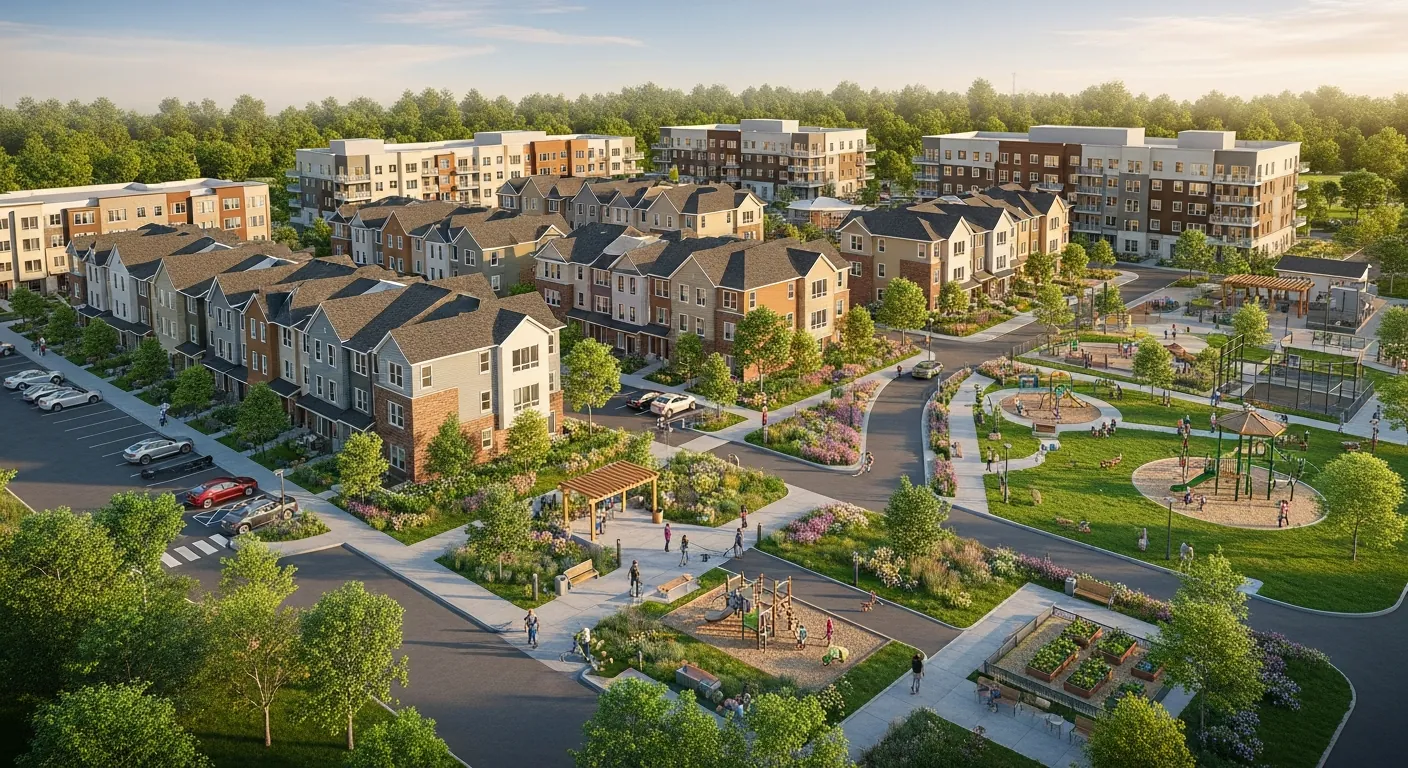
LIHTC investments offer several unique advantages. The tax credits provide a federal guarantee of sorts — they're direct offsets against tax liability, which means the equity return is partially insulated from market fluctuations. The affordable housing developments themselves serve markets with insatiable demand, meaning occupancy risk is minimal. And the growing emphasis on workforce housing ensures that these projects serve populations with stable employment and income.
At F6 Partners, we've been positioning our capital raising efforts to take advantage of exactly this policy environment. We believe affordable and workforce housing represents one of the most attractive risk-adjusted opportunities in commercial real estate, and the OBBBA has only strengthened that conviction.
Affordable Housing Project Returns: Federal vs. Layered (2019–2026)
Layering state and local incentives on top of federal LIHTC credits significantly boosts project returns, making affordable housing increasingly attractive to institutional investors.
The Bigger Picture
I'll share a personal reflection here. Housing affordability isn't just an investment theme for me — it's a calling. My family's story is rooted in hard work and the belief that everyone deserves a stable home. When I see legislation like the OBBBA pass, I see more than policy — I see the potential for real impact in communities that need it most.
The affordable housing crisis requires solutions at every level — federal, state, and local. The OBBBA and the local incentive programs I've described represent the most coordinated effort I've seen in my career. For investors, this coordination creates opportunity. For communities, it creates hope. At F6 Partners, we're committed to being part of both.
TL;DR
The One Big Beautiful Bill Act (OBBBA) was signed into law in July 2025, extending Low-Income Housing Tax Credit (LIHTC) allocations and delivering the most significant federal boost to affordable housing investment in years. This legislation, combined with aggressive local incentives — NYC's 467-m tax exemption, DC's 20-year tax abatements, Denver's $56 million in gap financing, and Seattle's sales and use tax deferral — creates a layered incentive structure that meaningfully improves project economics for affordable and workforce housing developers.
The Federal Catalyst
Let me start with why the OBBBA matters so much. The Low-Income Housing Tax Credit has been the primary financing mechanism for affordable housing in America since 1986. It's responsible for creating approximately 3.6 million affordable housing units across the country. But LIHTC allocations had been stagnant for years, not keeping pace with construction cost inflation or the growing affordable housing shortage.
The OBBBA changes that trajectory by extending and expanding LIHTC allocations. This means more tax credits available for affordable housing projects, which translates directly into more equity for deals. In the LIHTC world, tax credits are the equity — syndicators package them and sell them to corporate investors who use them to offset their federal tax liability.
More credits mean more equity. More equity means more deals get built. It's that simple, and it's that important.
For investors and developers in the affordable housing space, this legislation removes one of the primary constraints that has been limiting the pipeline. Projects that were marginal under the old allocation caps now pencil with the expanded credits available under OBBBA.
Annual LIHTC Units Placed in Service (2019–2026)
LIHTC production remains flat despite a deepening affordable housing crisis, constrained by limited tax credit allocation and surging construction costs.
Think you know the facts behind the headlines?
5 questions · ~3 min
Local Incentives Stack the Deck
What makes this moment truly special is that the federal LIHTC expansion doesn't exist in isolation. Cities across the country have simultaneously rolled out their own incentive programs, creating a layered structure that can dramatically improve project economics.
In New York City, the 467-m tax exemption provides property tax relief for affordable housing developments, reducing operating costs and improving project returns. For family offices deploying quiet capital into real estate, LIHTC deals offer tax-efficient exposure with built-in social impact. In Washington, DC, 20-year tax abatements creating a blueprint for conversion success provide long-term fiscal certainty for developers and investors. Denver has committed $56 million in gap financing to bridge the difference between what projects cost and what conventional financing can cover. Seattle is offering sales and use tax deferrals on construction materials for affordable housing projects, providing meaningful savings during the most cost-intensive phase of development.
When you layer federal LIHTC credits on top of these local incentives, the project economics shift from marginal to compelling. A project that generates a 6% return on equity under the federal program alone might generate 9-11% when local incentives are included. That's the difference between a deal that attracts capital and one that sits on the shelf.
Cities with Active Housing Incentive Programs (2019–2026)
The number of cities offering housing conversion incentives has grown rapidly as municipalities recognize adaptive reuse as a solution to both office vacancy and housing shortages.
What This Means for Investors
If you're an investor considering the affordable housing space, the policy environment has never been more favorable. The combination of expanded LIHTC allocations and local incentives creates multiple layers of risk mitigation and return enhancement. We've also seen the 2026 adaptive reuse pipeline grow to 70,700 units and counting, driven in large part by these same incentive structures.
LIHTC investments offer several unique advantages. The tax credits provide a federal guarantee of sorts — they're direct offsets against tax liability, which means the equity return is partially insulated from market fluctuations. The affordable housing developments themselves serve markets with insatiable demand, meaning occupancy risk is minimal. And the growing emphasis on workforce housing ensures that these projects serve populations with stable employment and income.
At F6 Partners, we've been positioning our capital raising efforts to take advantage of exactly this policy environment. We believe affordable and workforce housing represents one of the most attractive risk-adjusted opportunities in commercial real estate, and the OBBBA has only strengthened that conviction.
Affordable Housing Project Returns: Federal vs. Layered (2019–2026)
Layering state and local incentives on top of federal LIHTC credits significantly boosts project returns, making affordable housing increasingly attractive to institutional investors.
The Bigger Picture
I'll share a personal reflection here. Housing affordability isn't just an investment theme for me — it's a calling. My family's story is rooted in hard work and the belief that everyone deserves a stable home. When I see legislation like the OBBBA pass, I see more than policy — I see the potential for real impact in communities that need it most.
The affordable housing crisis requires solutions at every level — federal, state, and local. The OBBBA and the local incentive programs I've described represent the most coordinated effort I've seen in my career. For investors, this coordination creates opportunity. For communities, it creates hope. At F6 Partners, we're committed to being part of both.
Test Your Knowledge
How well do you know adaptive reuse projects?

Andrew LeBaron