TL;DR
The Federal Reserve delivered three consecutive rate cuts in late 2025, bringing the federal funds rate to 3.50-3.75% and providing the clarity CRE capital markets desperately needed. CRE investment volume surged upward. The private credit market reached $238B in AUM. Alternative lenders now represent 24% of CRE lending volume — nearly double the 10-year average of 14%. Loan extensions hit $384B as lenders and borrowers worked through maturities. Two marquee transactions bookend the year: JPMorgan Chase opened its $4B headquarters at 270 Park Avenue, and SL Green closed a $730M purchase of Park Avenue Tower. 2025 was the year the capital markets turned.
The Fed Delivered
Let me start with the headline that mattered most in 2025: the Federal Reserve cut rates three consecutive times in the back half of the year, landing the federal funds rate at 3.50-3.75%. After two years of the highest rate environment in decades, the pivot was decisive and its impact on CRE capital markets was immediate.
At F6 Partners, we've consistently told our investors that rate clarity matters more than rate levels. The market can underwrite at 4%. It can underwrite at 5%. What it cannot do is underwrite into uncertainty. The three consecutive cuts didn't just lower the cost of capital — they signaled a direction. That directional clarity is what unlocked transaction activity that had been frozen for nearly two years.
The impact showed up across the board. Bid-ask spreads narrowed as buyers and sellers converged on pricing assumptions anchored by a predictable rate trajectory. Construction lenders who had been sitting on the sidelines began quoting new deals. Permanent lenders extended terms to borrowers who had been surviving on short-term extensions.

Federal Funds Rate (2019–2026)
The Federal Funds Rate surged from near-zero to over 5% in the fastest hiking cycle in decades, fundamentally repricing CRE assets and financing costs.
Private Credit: The New Power Center
The private credit story of 2025 deserves its own chapter in CRE history. The market reached $238B in assets under management, cementing alternative lenders as a structural feature of CRE finance rather than a cyclical supplement. This trend is explored in depth in our analysis of new models for CRE capital formation.
Alternative lenders now represent 24% of all CRE lending volume. The 10-year average is 14%. That shift isn't temporary — it reflects a fundamental reallocation of lending activity away from regulated banks and toward private credit funds, debt funds, and specialty lenders that operate with fewer regulatory constraints and greater flexibility.
For operators like F6 Partners, where family office investors and quiet money are an important capital source, the rise of private credit has been transformative. These lenders move faster, structure more creatively, and make decisions locally rather than through committee processes that can take months. In a market where speed and certainty of execution matter enormously, private credit has become the go-to capital source for acquisitions, bridge financing, and recapitalizations.
The $384B in loan extensions that accumulated through 2025 represents both a challenge and an opportunity. Lenders extended rather than foreclosed, buying time for borrowers to refinance into a more favorable rate environment. As the Fed's cuts take hold, many of those extensions will convert into permanent financing — releasing properties from limbo and normalizing the transaction market.

Alternative Lender CRE Market Share (2019–2026)
Alternative lenders have nearly doubled their CRE market share as traditional banks pull back, fundamentally reshaping the real estate capital markets landscape.
CRE Loan Extensions ($B) (2019–2026)
CRE loan extensions have soared as borrowers and lenders choose to 'extend and pretend' rather than face losses from forced refinancing at higher rates.
Think you know the capital raising landscape?
5 questions · ~3 min
270 Park Avenue: A $4B Statement
JPMorgan Chase's opening of its new global headquarters at 270 Park Avenue was the defining physical moment of 2025 for CRE. The $4B project — the largest all-electric commercial building in the world — replaced the firm's prior headquarters with a 60-story, 2.5 million square foot tower that redefines what Class A office space looks like.
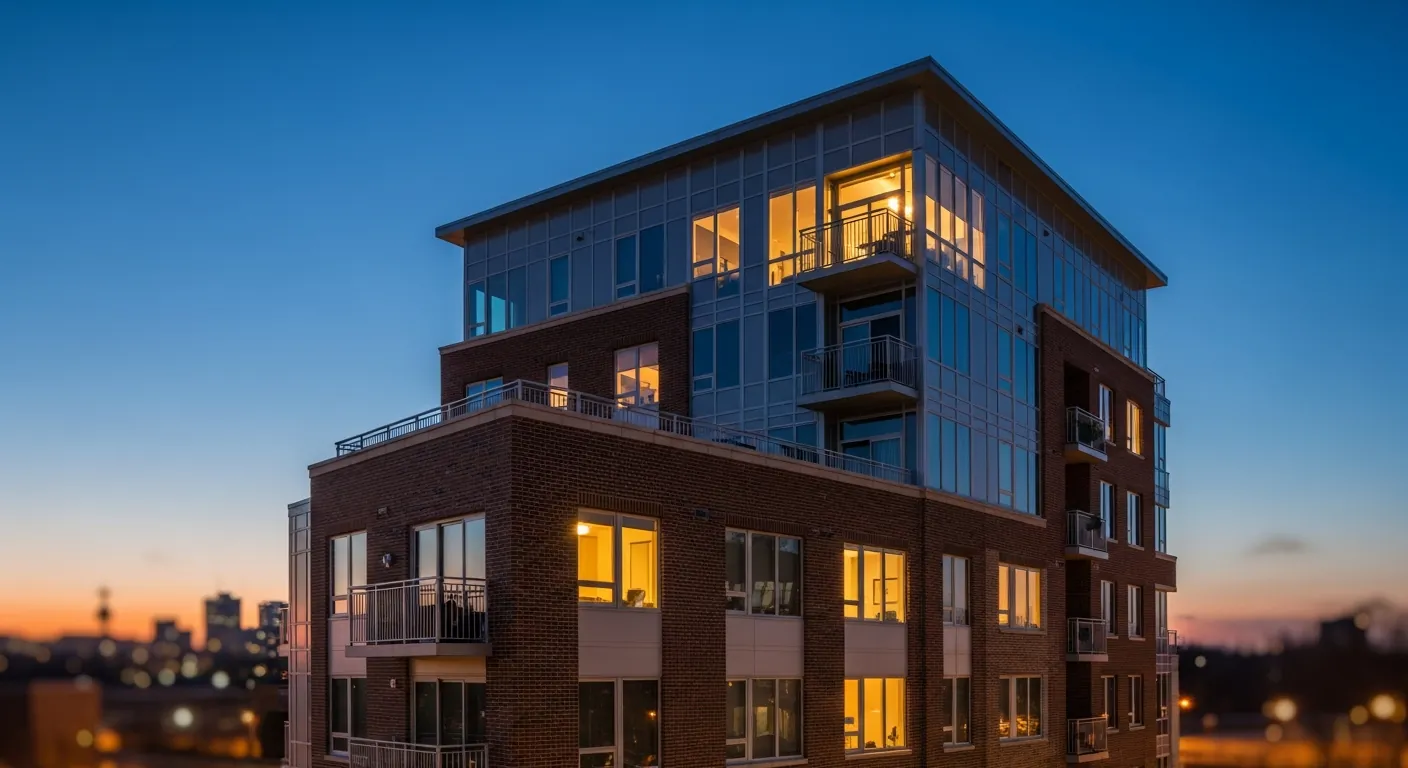
The symbolism matters as much as the square footage. JPMorgan Chase, the largest bank in the United States, bet $4B that the future of work is in-person, in premium space, in the heart of Manhattan. That bet validates the flight-to-quality thesis that has defined the office market's bifurcation and signals to other occupiers that investing in physical workspace is a competitive advantage.
SL Green's $730M Park Avenue Tower
On the investment side, SL Green's $730M acquisition of Park Avenue Tower was the marquee deal of the year. The purchase represented a decisive move by one of Manhattan's most experienced office operators at a time when many investors were still paralyzed by negative headlines about the office sector.
SL Green's willingness to write a check that size for a Manhattan office asset sends a clear message: best-in-class office in gateway cities has bottomed and the smart money is deploying. The firm's track record of buying at moments of maximum pessimism and generating outsized returns through operational excellence is well documented.
Looking Ahead to 2026
At F6 Partners, 2025 validated what we told our investors throughout the downturn: discipline during corrections creates capacity during recoveries. The rate environment has normalized. Capital markets are functioning. Transaction volume is increasing. The operators and investors who maintained their platforms and relationships are positioned to capture the opportunities that 2026 will deliver. For those structuring deals, co-investment strategies that give LPs direct deal access are emerging as a preferred vehicle for deploying recovery capital.
The capital markets have turned. The question for 2026 is no longer whether the recovery is coming — it's how to capture it.
TL;DR
The Federal Reserve delivered three consecutive rate cuts in late 2025, bringing the federal funds rate to 3.50-3.75% and providing the clarity CRE capital markets desperately needed. CRE investment volume surged upward. The private credit market reached $238B in AUM. Alternative lenders now represent 24% of CRE lending volume — nearly double the 10-year average of 14%. Loan extensions hit $384B as lenders and borrowers worked through maturities. Two marquee transactions bookend the year: JPMorgan Chase opened its $4B headquarters at 270 Park Avenue, and SL Green closed a $730M purchase of Park Avenue Tower. 2025 was the year the capital markets turned.
The Fed Delivered
Let me start with the headline that mattered most in 2025: the Federal Reserve cut rates three consecutive times in the back half of the year, landing the federal funds rate at 3.50-3.75%. After two years of the highest rate environment in decades, the pivot was decisive and its impact on CRE capital markets was immediate.
At F6 Partners, we've consistently told our investors that rate clarity matters more than rate levels. The market can underwrite at 4%. It can underwrite at 5%. What it cannot do is underwrite into uncertainty. The three consecutive cuts didn't just lower the cost of capital — they signaled a direction. That directional clarity is what unlocked transaction activity that had been frozen for nearly two years.
The impact showed up across the board. Bid-ask spreads narrowed as buyers and sellers converged on pricing assumptions anchored by a predictable rate trajectory. Construction lenders who had been sitting on the sidelines began quoting new deals. Permanent lenders extended terms to borrowers who had been surviving on short-term extensions.
Federal Funds Rate (2019–2026)
The Federal Funds Rate surged from near-zero to over 5% in the fastest hiking cycle in decades, fundamentally repricing CRE assets and financing costs.
Private Credit: The New Power Center
The private credit story of 2025 deserves its own chapter in CRE history. The market reached $238B in assets under management, cementing alternative lenders as a structural feature of CRE finance rather than a cyclical supplement. This trend is explored in depth in our analysis of new models for CRE capital formation.
Alternative lenders now represent 24% of all CRE lending volume. The 10-year average is 14%. That shift isn't temporary — it reflects a fundamental reallocation of lending activity away from regulated banks and toward private credit funds, debt funds, and specialty lenders that operate with fewer regulatory constraints and greater flexibility.
For operators like F6 Partners, where family office investors and quiet money are an important capital source, the rise of private credit has been transformative. These lenders move faster, structure more creatively, and make decisions locally rather than through committee processes that can take months. In a market where speed and certainty of execution matter enormously, private credit has become the go-to capital source for acquisitions, bridge financing, and recapitalizations.
The $384B in loan extensions that accumulated through 2025 represents both a challenge and an opportunity. Lenders extended rather than foreclosed, buying time for borrowers to refinance into a more favorable rate environment. As the Fed's cuts take hold, many of those extensions will convert into permanent financing — releasing properties from limbo and normalizing the transaction market.
Alternative Lender CRE Market Share (2019–2026)
Alternative lenders have nearly doubled their CRE market share as traditional banks pull back, fundamentally reshaping the real estate capital markets landscape.
CRE Loan Extensions ($B) (2019–2026)
CRE loan extensions have soared as borrowers and lenders choose to 'extend and pretend' rather than face losses from forced refinancing at higher rates.
Think you know the capital raising landscape?
5 questions · ~3 min
270 Park Avenue: A $4B Statement
JPMorgan Chase's opening of its new global headquarters at 270 Park Avenue was the defining physical moment of 2025 for CRE. The $4B project — the largest all-electric commercial building in the world — replaced the firm's prior headquarters with a 60-story, 2.5 million square foot tower that redefines what Class A office space looks like.
The symbolism matters as much as the square footage. JPMorgan Chase, the largest bank in the United States, bet $4B that the future of work is in-person, in premium space, in the heart of Manhattan. That bet validates the flight-to-quality thesis that has defined the office market's bifurcation and signals to other occupiers that investing in physical workspace is a competitive advantage.
SL Green's $730M Park Avenue Tower
On the investment side, SL Green's $730M acquisition of Park Avenue Tower was the marquee deal of the year. The purchase represented a decisive move by one of Manhattan's most experienced office operators at a time when many investors were still paralyzed by negative headlines about the office sector.
SL Green's willingness to write a check that size for a Manhattan office asset sends a clear message: best-in-class office in gateway cities has bottomed and the smart money is deploying. The firm's track record of buying at moments of maximum pessimism and generating outsized returns through operational excellence is well documented.
Looking Ahead to 2026
At F6 Partners, 2025 validated what we told our investors throughout the downturn: discipline during corrections creates capacity during recoveries. The rate environment has normalized. Capital markets are functioning. Transaction volume is increasing. The operators and investors who maintained their platforms and relationships are positioned to capture the opportunities that 2026 will deliver. For those structuring deals, co-investment strategies that give LPs direct deal access are emerging as a preferred vehicle for deploying recovery capital.
The capital markets have turned. The question for 2026 is no longer whether the recovery is coming — it's how to capture it.
Test Your Knowledge
How well do you know capital raising strategies?

Andrew LeBaron