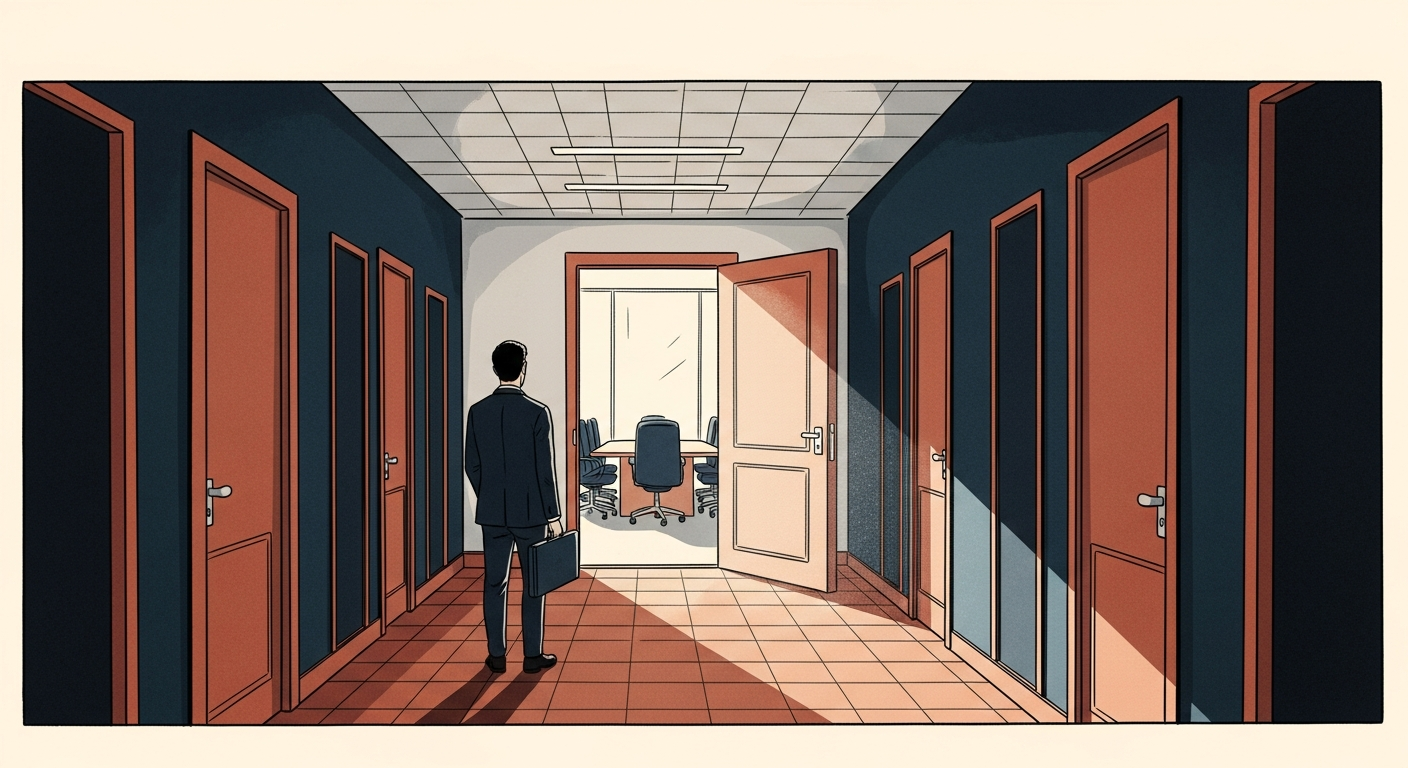
Three of your investors are going to fire you in the next 90 days.
Same fund. Lower fee.
They're not going to tell you why. Their advisor is going to send a redemption notice, they're going to roll the position to the platform version of your fund, and you're going to spend a quarter trying to figure out what went wrong.
Nothing went wrong. You listed.
Three sponsors asked me about iCapital this quarter. Same question every time: "Should we get on?"
The pitch is always the same. Get listed. Plug into Dakota. Open the gates. Reach the 118,000+ financial professionals and $945B+ in platform assets you can't touch from where you sit today.
That part's true.
It's also not the whole picture.
TL;DR
Listing on a wealth platform publishes your fee schedule to the investors you already have. The relationship discount you negotiated in private becomes the public price. The investor who leaves first is the sophisticated one — the one whose advisor noticed. BCG projects $3T of individual capital into private markets by 2030; Bain's longer-horizon estimate runs into the multi-trillions over the decade. The macro tailwind is real. So is the Blue Owl OBDC II reminder from February 2026 — the same channel that's patient on the way up is impatient on the way down. Three questions to answer before you sign, and the math behind each one, below.
The One-Way Door
In February 2026, MLG Capital announced via GlobeNewswire that MLG Private Fund VII and MLG Dividend Fund VII are now available on iCapital Marketplace.
Trade press called it a distribution win. Which it is.
iCapital Marketplace cites more than 118,000 financial professionals and over $945 billion in global platform assets (as of September 30, 2025), with 793+ alternative asset managers, issuers, and insurance carriers on the platform.
That's a real on-ramp.
...it's also a one-way door.
The macro tailwind makes the door even more tempting. BCG's Global Asset Management work projects individual investors will allocate roughly $3 trillion to private markets by 2030. Bain's Global Private Equity Report puts the longer-horizon individual-investor opportunity in the multi-trillions over the next decade. The wealth channel isn't coming. It's here.
Every major sponsor's board is asking the same question.
Here's the part the board doesn't get told.
Once a fund is listed at a published fee, three things happen that don't make it into the platform marketing.
One. Your direct investors who are also clients of any RIA on the platform now see your fund at a transparent fee. Their advisor sees it too. And a fiduciary has exactly one question to ask: Why are we accessing this fund through a direct relationship when the same fund is on the platform with the same fee and a cleaner subscription workflow?
Two. The investor who never met an advisor finds out anyway. Because investors talk. Because the trades cover it. Because their CPA, their estate attorney, their broker — somebody — says "I saw your sponsor on iCapital. Why are you still paying direct?"
Three. The fee you negotiated quietly three years ago — the one that priced in the relationship and the years you spent building it — is now public. It doesn't stay private just because the investor came in before the listing.
The listing reset the market price.
You didn't change your fee. The market changed it for you.
The friction of staying direct, when the platform option exists, starts to feel like a tax for nostalgia.
— Andrew LeBaron
Eight In Ten
This isn't hypothetical. In a 2022 Preqin institutional-investor survey on private-fund fee terms, 59% of LPs said transparency at the fund level needed improvement, and 80% said they'd frequently or occasionally walked away from a private fund because of the terms.
Not the strategy. Not the manager. The terms.
Eight in ten.
And that was the institutional side. The wealth channel is more fee-sensitive than institutions, not less — because the advisor's job is to be fee-sensitive on behalf of the client.
When the platform makes the comparison easy, the comparison gets made.
The Redemption Math
Here's where the cost lands.
A direct investor accepts the fee they negotiated. A platform investor accepts the fee they saw published. When those two cross, the lower-friction investor wins.
Not because the relationship was weak.
Because fee transparency makes the relationship invisible on the statement.
That statement is the only thing your investor sees every quarter. The dinners, the property tours, the quarterly calls — none of those show up. The advisor managing the rest of their portfolio shows up. The platform fee shows up.
The friction of staying direct, when the platform option exists, starts to feel like a tax for nostalgia.
Most direct subscription agreements allow redemption at quarter or year-end with notice. The investor doesn't need a dramatic conversation. They give notice. They roll to the platform version of your fund — or to a different fund entirely.
You don't get a chance to defend the relationship because the conversation never happens in front of you.
The investor who leaves isn't the marginal one. It's the sophisticated one. The one whose advisor noticed first.
The investor who leaves isn't the marginal one. It's the sophisticated one — the one whose advisor noticed first.
— Andrew LeBaron
The Blue Owl Reminder
The wealth channel isn't as forgiving as the deck suggests either.
In February 2026, Blue Owl Capital announced it would restrict redemptions from its retail-focused private-credit fund OBDC II — switching from quarterly tender offers to quarterly return-of-capital distributions, meaning shareholders can no longer request additional redemptions. Redemption requests had run roughly $150 million in the first nine months of 2025, up 20% from the prior year. Shareholders filed a lawsuit earlier in 2026 alleging Blue Owl failed to disclose pressure on its asset base caused by redemptions.
Why does that matter to a sponsor weighing iCapital?
Because the capital that floods in during good quarters demands liquidity in bad ones.
Patient on the way up. Impatient on the way down.
At PEI Nexus this year, the consensus was direct: the industry has done a poor job educating financial advisors and individual investors on how private-markets products actually work — let alone the risks attached to them.
Funds marketed as "evergreen" or "semi-liquid" are illiquid. The advisors who placed the capital don't always know that. Their clients almost never do.
When the redemption call comes and the gate has to drop, the advisor who was a champion becomes a critic. And the critic has the platform's full distribution power working against you.
What's Actually Happening To The Cap Stack
Sit with this for a second.
The same advisor channel that's opening up to private real estate — the multi-trillion-dollar one, the millions-of-households one — is the same channel repricing your direct book and demanding liquidity terms you can't honor without restructuring the fund.
It can't do one without the other.
The distribution, the repricing, and the liquidity demand are the same event.
You can't have the upside of the channel without the downside becoming the new pricing standard for your existing investors and the new liquidity standard for your existing fund.
Some sponsors will run the math and decide the trade is worth it. Listing expands the funnel by 10x. Losing 15% of the existing book to fee compression is acceptable. The math works at scale.
Others will run the math and realize their existing book is the firm. Losing the relationships that anchored everything to chase a channel that mostly competes with them on fee isn't a distribution upgrade.
It's the firm changing its business model without saying so out loud.
Both decisions can be right.
The mistake is making the decision without doing the math.
Three Questions Before You Sign
If you're weighing this in the next 60 days, answer these before you sign.
1) What's the gap between your platform fee and your current direct fee?
If it's materially lower, your direct investors will find out. Decide now whether you want to publish that gap or close it. The conversation about closing it is easier on your timeline than theirs.
2) How many of your direct investors are clients of RIAs that operate on the major platforms?
You can find this out. Have your IR team map the investor base against the advisor population. The overlap is almost always higher than sponsors assume — especially for funds that have been raising for more than three years.
3) What do your redemption windows look like in the next four quarters?
If you list in Q2 and your soft lockups roll off in Q3 and Q4, the pressure lands inside a six-month window. Plan for it before the listing goes live. Not after.
The advisors won't stop coming. The capital won't stop wanting access. The question isn't whether to engage the channel.
The question is what you do to your existing book in the process.
The Quieter Version
There's a quieter version of this same lesson that has nothing to do with platforms.
The relationships you build directly — the ones that take years and dinners and the willingness to tell an investor what went wrong before you tell them what went right — those survive the next cycle.
The platforms can move billions. They can't replace what one honest conversation with one investor does over time.
That's not nostalgia. That's operator math.
If you're working through this trade right now and want a second set of eyes on the overlap math, book a 30-minute working session. I do them every week with sponsors who are exactly at this inflection point.
— Andrew
The platforms can move billions. They can't replace what one honest conversation with one investor does over time. That's not nostalgia. That's operator math.
— Andrew LeBaron
Three of your investors are going to fire you in the next 90 days.
Same fund. Lower fee.
They're not going to tell you why. Their advisor is going to send a redemption notice, they're going to roll the position to the platform version of your fund, and you're going to spend a quarter trying to figure out what went wrong.
Nothing went wrong. You listed.
Three sponsors asked me about iCapital this quarter. Same question every time: "Should we get on?"
The pitch is always the same. Get listed. Plug into Dakota. Open the gates. Reach the 118,000+ financial professionals and $945B+ in platform assets you can't touch from where you sit today.
That part's true.
It's also not the whole picture.
TL;DR
Listing on a wealth platform publishes your fee schedule to the investors you already have. The relationship discount you negotiated in private becomes the public price. The investor who leaves first is the sophisticated one — the one whose advisor noticed. BCG projects $3T of individual capital into private markets by 2030; Bain's longer-horizon estimate runs into the multi-trillions over the decade. The macro tailwind is real. So is the Blue Owl OBDC II reminder from February 2026 — the same channel that's patient on the way up is impatient on the way down. Three questions to answer before you sign, and the math behind each one, below.
The One-Way Door
In February 2026, MLG Capital announced via GlobeNewswire that MLG Private Fund VII and MLG Dividend Fund VII are now available on iCapital Marketplace.
Trade press called it a distribution win. Which it is.
iCapital Marketplace cites more than 118,000 financial professionals and over $945 billion in global platform assets (as of September 30, 2025), with 793+ alternative asset managers, issuers, and insurance carriers on the platform.
That's a real on-ramp.
...it's also a one-way door.
The macro tailwind makes the door even more tempting. BCG's Global Asset Management work projects individual investors will allocate roughly $3 trillion to private markets by 2030. Bain's Global Private Equity Report puts the longer-horizon individual-investor opportunity in the multi-trillions over the next decade. The wealth channel isn't coming. It's here.
Every major sponsor's board is asking the same question.
Here's the part the board doesn't get told.
Once a fund is listed at a published fee, three things happen that don't make it into the platform marketing.
One. Your direct investors who are also clients of any RIA on the platform now see your fund at a transparent fee. Their advisor sees it too. And a fiduciary has exactly one question to ask: Why are we accessing this fund through a direct relationship when the same fund is on the platform with the same fee and a cleaner subscription workflow?
Two. The investor who never met an advisor finds out anyway. Because investors talk. Because the trades cover it. Because their CPA, their estate attorney, their broker — somebody — says "I saw your sponsor on iCapital. Why are you still paying direct?"
Three. The fee you negotiated quietly three years ago — the one that priced in the relationship and the years you spent building it — is now public. It doesn't stay private just because the investor came in before the listing.
The listing reset the market price.
You didn't change your fee. The market changed it for you.
The friction of staying direct, when the platform option exists, starts to feel like a tax for nostalgia.
— Andrew LeBaron
Eight In Ten
This isn't hypothetical. In a 2022 Preqin institutional-investor survey on private-fund fee terms, 59% of LPs said transparency at the fund level needed improvement, and 80% said they'd frequently or occasionally walked away from a private fund because of the terms.
Not the strategy. Not the manager. The terms.
Eight in ten.
And that was the institutional side. The wealth channel is more fee-sensitive than institutions, not less — because the advisor's job is to be fee-sensitive on behalf of the client.
When the platform makes the comparison easy, the comparison gets made.
The Redemption Math
Here's where the cost lands.
A direct investor accepts the fee they negotiated. A platform investor accepts the fee they saw published. When those two cross, the lower-friction investor wins.
Not because the relationship was weak.
Because fee transparency makes the relationship invisible on the statement.
That statement is the only thing your investor sees every quarter. The dinners, the property tours, the quarterly calls — none of those show up. The advisor managing the rest of their portfolio shows up. The platform fee shows up.
The friction of staying direct, when the platform option exists, starts to feel like a tax for nostalgia.
Most direct subscription agreements allow redemption at quarter or year-end with notice. The investor doesn't need a dramatic conversation. They give notice. They roll to the platform version of your fund — or to a different fund entirely.
You don't get a chance to defend the relationship because the conversation never happens in front of you.
The investor who leaves isn't the marginal one. It's the sophisticated one. The one whose advisor noticed first.
The investor who leaves isn't the marginal one. It's the sophisticated one — the one whose advisor noticed first.
— Andrew LeBaron
The Blue Owl Reminder
The wealth channel isn't as forgiving as the deck suggests either.
In February 2026, Blue Owl Capital announced it would restrict redemptions from its retail-focused private-credit fund OBDC II — switching from quarterly tender offers to quarterly return-of-capital distributions, meaning shareholders can no longer request additional redemptions. Redemption requests had run roughly $150 million in the first nine months of 2025, up 20% from the prior year. Shareholders filed a lawsuit earlier in 2026 alleging Blue Owl failed to disclose pressure on its asset base caused by redemptions.
Why does that matter to a sponsor weighing iCapital?
Because the capital that floods in during good quarters demands liquidity in bad ones.
Patient on the way up. Impatient on the way down.
At PEI Nexus this year, the consensus was direct: the industry has done a poor job educating financial advisors and individual investors on how private-markets products actually work — let alone the risks attached to them.
Funds marketed as "evergreen" or "semi-liquid" are illiquid. The advisors who placed the capital don't always know that. Their clients almost never do.
When the redemption call comes and the gate has to drop, the advisor who was a champion becomes a critic. And the critic has the platform's full distribution power working against you.
What's Actually Happening To The Cap Stack
Sit with this for a second.
The same advisor channel that's opening up to private real estate — the multi-trillion-dollar one, the millions-of-households one — is the same channel repricing your direct book and demanding liquidity terms you can't honor without restructuring the fund.
It can't do one without the other.
The distribution, the repricing, and the liquidity demand are the same event.
You can't have the upside of the channel without the downside becoming the new pricing standard for your existing investors and the new liquidity standard for your existing fund.
Some sponsors will run the math and decide the trade is worth it. Listing expands the funnel by 10x. Losing 15% of the existing book to fee compression is acceptable. The math works at scale.
Others will run the math and realize their existing book is the firm. Losing the relationships that anchored everything to chase a channel that mostly competes with them on fee isn't a distribution upgrade.
It's the firm changing its business model without saying so out loud.
Both decisions can be right.
The mistake is making the decision without doing the math.
Three Questions Before You Sign
If you're weighing this in the next 60 days, answer these before you sign.
1) What's the gap between your platform fee and your current direct fee?
If it's materially lower, your direct investors will find out. Decide now whether you want to publish that gap or close it. The conversation about closing it is easier on your timeline than theirs.
2) How many of your direct investors are clients of RIAs that operate on the major platforms?
You can find this out. Have your IR team map the investor base against the advisor population. The overlap is almost always higher than sponsors assume — especially for funds that have been raising for more than three years.
3) What do your redemption windows look like in the next four quarters?
If you list in Q2 and your soft lockups roll off in Q3 and Q4, the pressure lands inside a six-month window. Plan for it before the listing goes live. Not after.
The advisors won't stop coming. The capital won't stop wanting access. The question isn't whether to engage the channel.
The question is what you do to your existing book in the process.
The Quieter Version
There's a quieter version of this same lesson that has nothing to do with platforms.
The relationships you build directly — the ones that take years and dinners and the willingness to tell an investor what went wrong before you tell them what went right — those survive the next cycle.
The platforms can move billions. They can't replace what one honest conversation with one investor does over time.
That's not nostalgia. That's operator math.
If you're working through this trade right now and want a second set of eyes on the overlap math, book a 30-minute working session. I do them every week with sponsors who are exactly at this inflection point.
— Andrew
The platforms can move billions. They can't replace what one honest conversation with one investor does over time. That's not nostalgia. That's operator math.
— Andrew LeBaron

Andrew LeBaron